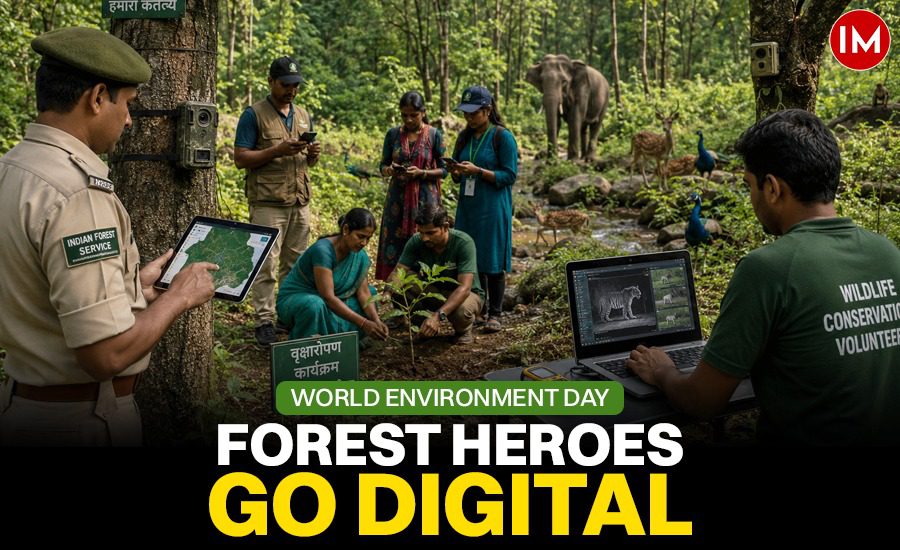
A tiger moving silently through a dense forest. An elephant approaching a village under the cover of darkness. A spark in dry undergrowth that could become a raging forest fire. A poacher slipping into protected land. For decades, protecting India’s forests and wildlife depended largely on human vigilance, field experience and manpower.
Today, a new ally has entered the forests.
Artificial intelligence is tracking elephant movement before tragedy strikes. Satellites are detecting deforestation in near real time. Drones are flying over difficult terrain to monitor wildlife and assess threats. Camera traps are helping conservationists understand animal behaviour with unprecedented accuracy. Mobile applications are predicting forest fires before they spread.
Across India, a growing number of forest officers are proving that technology is not replacing conservation; it is strengthening it. By combining digital tools with local knowledge and community participation, they are creating smarter ways to safeguard ecosystems under increasing pressure from climate change, habitat loss and human-wildlife conflict.
This World Environment Day, Indian Masterminds brings together the stories of officers who are redefining conservation for the digital age. Their work stretches from the forests of Chhattisgarh and Odisha to the grasslands of Madhya Pradesh and the tiger reserves of central India. Different landscapes, different challenges, but one shared belief: the future of conservation lies in using every tool available to protect nature.
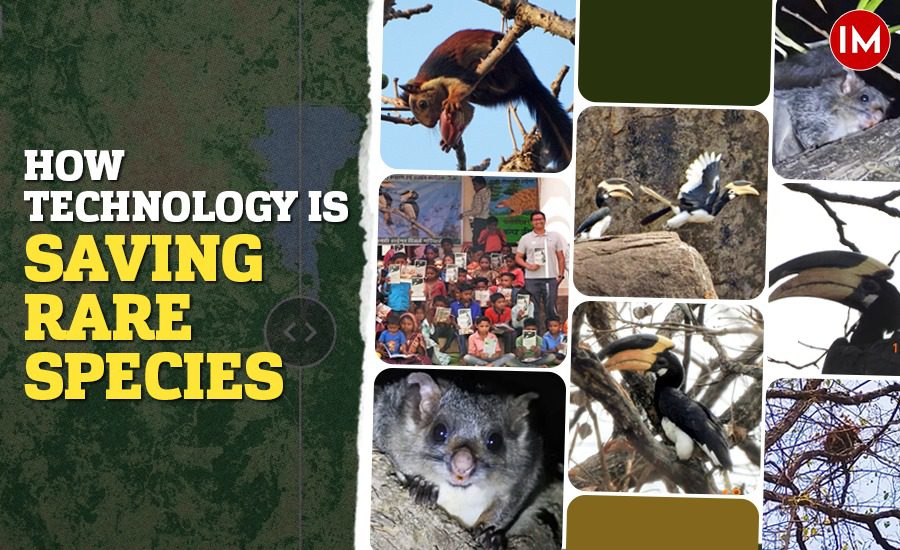
AI, FOREST WISDOM AND COMMUNITY ACTION REVIVE RARE WILDLIFE IN CHHATTISGARH’S UDANTI-SITANADI TIGER RESERVE
When IFS officer Varun Jain took charge of Udanti-Sitanadi Tiger Reserve in Chhattisgarh, he inherited a landscape facing multiple challenges – declining wildlife populations, habitat degradation and increasing pressure on forest resources. Instead of relying solely on traditional conservation methods, he brought together technology, science and community participation.
Under his leadership, artificial intelligence became an important conservation tool. AI-enabled systems helped monitor wildlife movement and identify patterns that would have been difficult to detect through conventional methods. Satellite imagery and drone-based mapping offered a clearer picture of habitat conditions, allowing officials to make informed decisions about restoration efforts.
What makes this initiative remarkable is that technology was never treated as a standalone solution. Local communities were made active participants in conservation efforts. Habitat restoration, water conservation measures and wildlife monitoring worked alongside community engagement programmes.
The result was a more connected and informed conservation strategy. Wildlife habitats improved, monitoring became more effective and the reserve emerged as an example of how modern technology can complement field knowledge. The story demonstrates that conservation is no longer limited to boots on the ground; it increasingly depends on data, analysis and innovation working together with people who call these forests home.
Read the complete story here: AI, Forest Wisdom and Community Action Revive Rare Wildlife in Chhattisgarh’s Udanti-Sitanadi Tiger Reserve
THE CONTROL ROOM THAT HELPED TACKLE FOREST FIRES IN MADHYA PRADESH
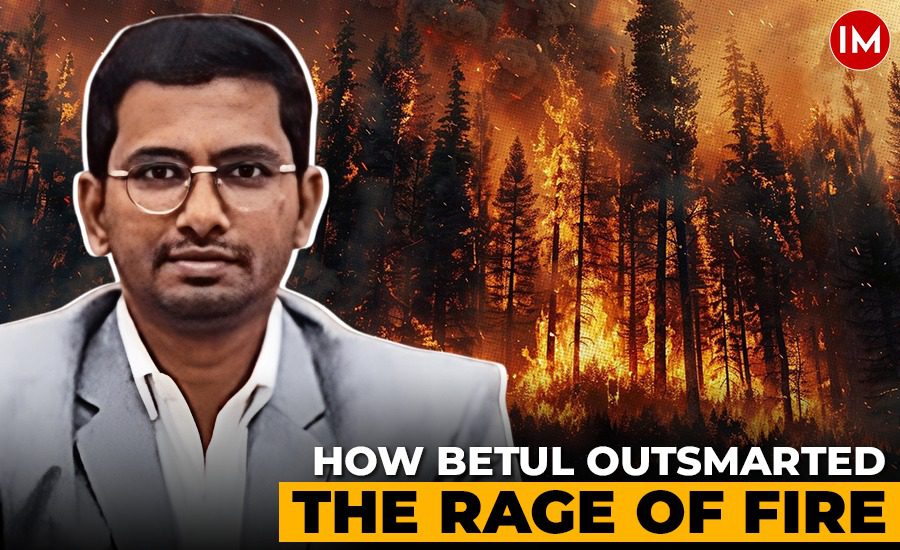
Forest fires can destroy years of conservation work within hours. For IFS officer Vejayanantham TR, reducing this threat required a completely new approach.
Posted in Madhya Pradesh’s Betul region, he established a sophisticated forest fire control room designed to monitor incidents in real time. The system created a centralised command structure capable of receiving alerts, coordinating responses and tracking fire-prone areas more efficiently than traditional methods.
Technology became the backbone of the operation. Digital monitoring systems enabled officials to identify risks early, while faster communication helped field teams respond quickly. Information that once travelled through multiple layers could now reach decision-makers almost instantly.
The impact was significant. Forest fire incidents reduced sharply, protecting large stretches of forest and preventing ecological damage. More importantly, the initiative demonstrated how strategic use of technology can transform disaster management in conservation.
Rather than reacting after fires spread, officials could anticipate threats and mobilise resources faster. In a country where rising temperatures and changing weather patterns are increasing fire risks, the model offers important lessons for forest departments across India.
Read the complete story here: How IFS Officer Vejaynantham TR Curbed Forest Fires by 69% in Just One Year
FROM CODE TO CONSERVATION: USING AI AND SATELLITES TO FIGHT DEFORESTATION
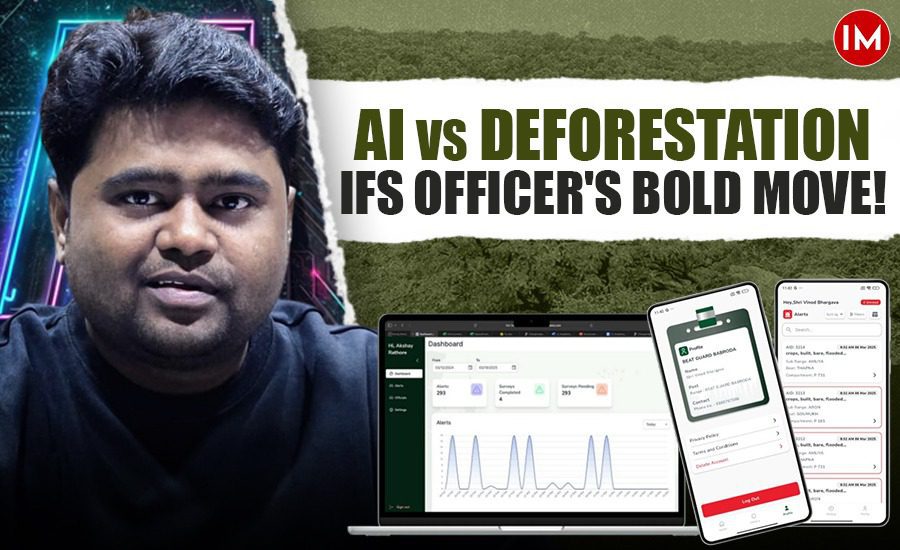
For many people, artificial intelligence is associated with technology companies and urban innovation. IFS officer Akshay Rathore saw its potential in forests.
Working in Madhya Pradesh, he developed an approach that combines AI with satellite imagery to monitor forests and identify signs of deforestation. The system analyses vast amounts of data that would otherwise require enormous human effort to process.
Instead of waiting for reports from the field, officials can receive alerts generated through satellite monitoring and machine-learning models. This allows quicker intervention against encroachment and illegal activities that threaten forest cover.
The initiative reflects a larger shift in conservation. Forest protection is increasingly becoming a data-driven exercise where decisions are supported by technology capable of detecting changes invisible to the naked eye.
Rathore’s work illustrates how digital tools can strengthen governance by making monitoring faster, more accurate and more proactive. At a time when forests are under pressure from multiple sources, such innovations provide authorities with valuable information that can help prevent damage before it becomes irreversible.
Read the complete story here: From Code to Conservation: How This IFS Officer is Using AI & Satellite Data to Fight Deforestation in MP
REVOLUTIONISING FORESTRY IN ODISHA THROUGH TECHNOLOGY
IFS officer Nitish Kumar has shown how a combination of technologies can improve wildlife conservation and forest management.
In Odisha, he introduced systems that integrate drones, GIS mapping, AI-enabled monitoring and digital forest management platforms. Together, these tools created a more comprehensive picture of forest conditions and wildlife movement across vast areas.
Drones provided aerial perspectives of difficult terrain. GIS mapping enabled detailed spatial analysis, helping officials identify vulnerable zones and plan interventions. AI-supported monitoring added another layer of intelligence by improving the interpretation of field data.
The initiative highlights how modern forestry is evolving. Forest departments are increasingly moving from isolated interventions to integrated systems where multiple technologies work together.
For conservation teams, this means better planning, faster responses and more efficient use of resources. For wildlife, it means habitats that can be monitored and protected with greater precision. Nitish Kumar’s work demonstrates that technology is becoming an essential part of managing complex ecosystems in the twenty-first century.
Read the complete story here: Revolutionizing Forestry: How IFS Officer Nitish Kumar is Using Technology to Save Odisha’s Wildlife
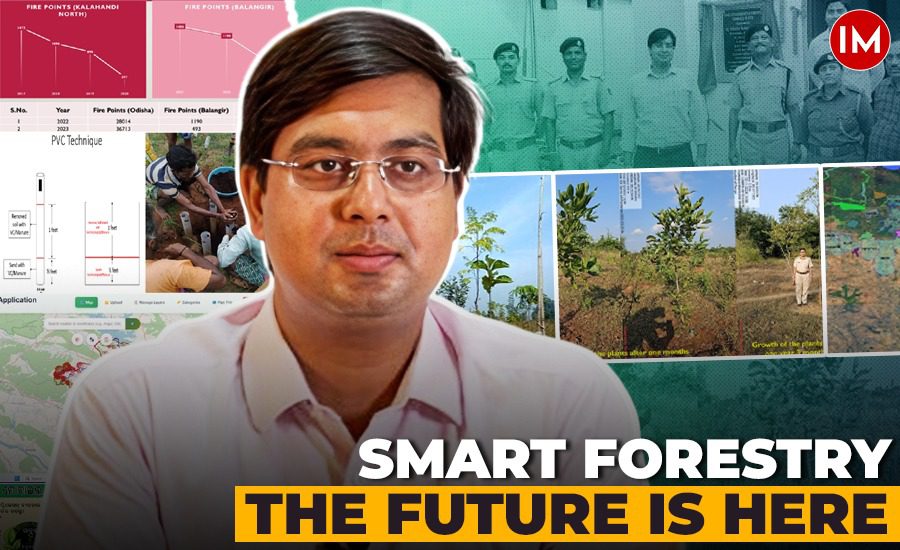
CAMERA TRAPS: THE SILENT WATCHERS OF INDIA’S FORESTS
Long before artificial intelligence became a conservation buzzword, camera traps were quietly transforming wildlife monitoring.
Senior IFS officer S.P. Yadav, currently posted as the Director General of the International Big Cat Alliance (IBCA) shares details about these motion-sensitive devices that have become indispensable tools for forest departments and conservationists across India. Positioned deep inside forests, they capture images of animals that are rarely seen by humans, creating an invaluable record of biodiversity.
The technology has played a crucial role in tiger censuses, wildlife research and anti-poaching efforts. By generating photographic evidence, camera traps provide accurate information about animal populations, movement patterns and habitat use.
Their contribution goes beyond data collection. Camera trap images often reveal surprising insights about elusive species, helping scientists and managers make better conservation decisions.
As newer technologies such as AI become integrated with camera-trap networks, their value continues to grow. Today, they form one of the most important foundations of wildlife monitoring, offering conservationists a window into ecosystems that would otherwise remain hidden from view.
Read the complete story here: https://indianmasterminds.com/news/camera-traps-a-key-conduit-to-wildlife-conservation/

BUILDING PEACE BETWEEN PEOPLE AND ELEPHANTS IN CHHATTISGARH
Human-wildlife conflict remains one of the biggest challenges facing conservation. In Chhattisgarh, IFS officer Kumar Nishant adopted a technology-enabled approach to address this issue.
Working in regions affected by elephant movement, he focused on improving coexistence rather than treating conflict as an unavoidable reality. Monitoring systems and early-warning mechanisms helped communities receive timely information about elephant presence, reducing the risk of dangerous encounters.
The initiative recognised a critical reality: successful conservation depends on protecting both wildlife and people. Technology became a bridge between the two.
By combining monitoring tools with community engagement, awareness programmes and local participation, the effort created a more balanced relationship between humans and wildlife. Villagers gained greater confidence in managing encounters, while elephants faced fewer threats arising from panic or conflict.
The story highlights how innovation can support conservation goals while also addressing social concerns, making coexistence a practical possibility rather than an abstract ideal.
Read the complete story here: Guardians of the Green: How IFS Kumar Nishant Transformed Human-Wildlife Conflict into Coexistence in Chhattisgarh

PREDICTING FOREST FIRES BEFORE THEY SPREAD
Among the most innovative examples of technology-driven conservation is the work of IFS officer Dr Abdul Qaiyum.
Recognising the devastating impact of forest fires, he developed a mobile application capable of predicting potential fire incidents. The platform uses data and analytics to identify vulnerable areas, helping authorities act before small incidents escalate into large-scale disasters.
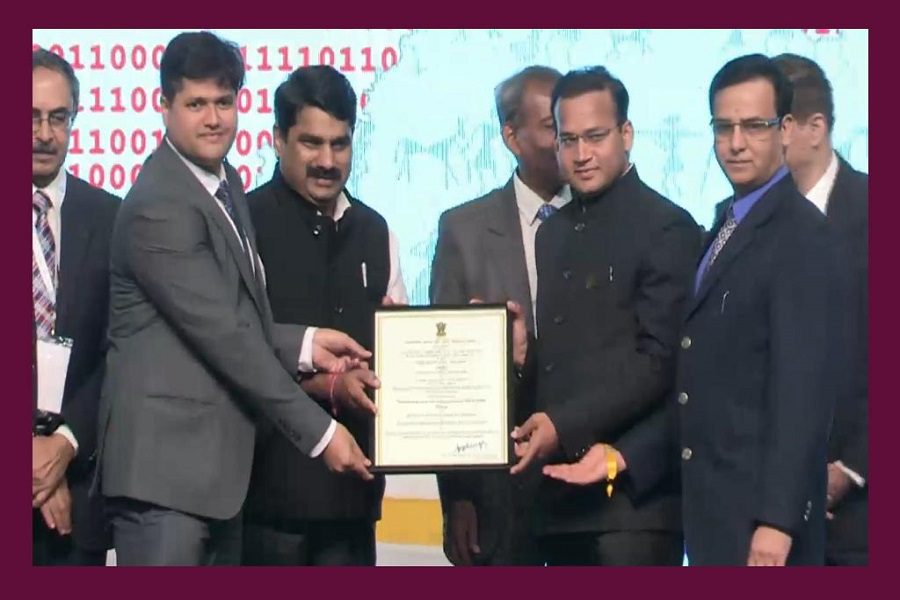
The innovation earned national recognition and demonstrated how digital solutions can strengthen environmental protection. Instead of relying solely on post-incident responses, forest departments can use predictive tools to improve preparedness and resource allocation.
The significance of the initiative lies in its preventive approach. Conservation efforts often focus on responding to crises, but predictive technology allows authorities to anticipate problems and intervene earlier.
As climate change increases the frequency and intensity of forest fires, such tools are becoming increasingly important. Dr Qaiyum’s work shows how technology can move conservation from reaction to prediction, helping protect forests before damage occurs.
Read the complete story here: IFS Officer’s Mobile App for Predicting Forest Fire Gets National E-Governance Award
THE FUTURE OF CONSERVATION IS ALREADY HERE
The image of a forest officer patrolling through dense wilderness remains central to conservation. But alongside that image today stands another: a satellite map on a computer screen, a drone hovering above a forest canopy, an AI model analysing wildlife movement, a camera trap capturing a tiger in the darkness, and a mobile application predicting the next fire risk.
The officers featured in these stories are working in different corners of India, facing different environmental challenges. Yet their efforts point in the same direction. Conservation is no longer only about protecting nature from immediate threats. It is about understanding ecosystems through data, anticipating risks before they emerge and using technology to make every conservation decision smarter and more effective.
As India balances development with environmental protection, these innovations offer a glimpse into what the future may look like: a future where technology and ecology work side by side, helping forests thrive and wildlife survive in an increasingly complex world.
And perhaps that is the most encouraging story of all. The tools may be changing, but the mission remains the same: protecting the natural heritage that sustains us all.