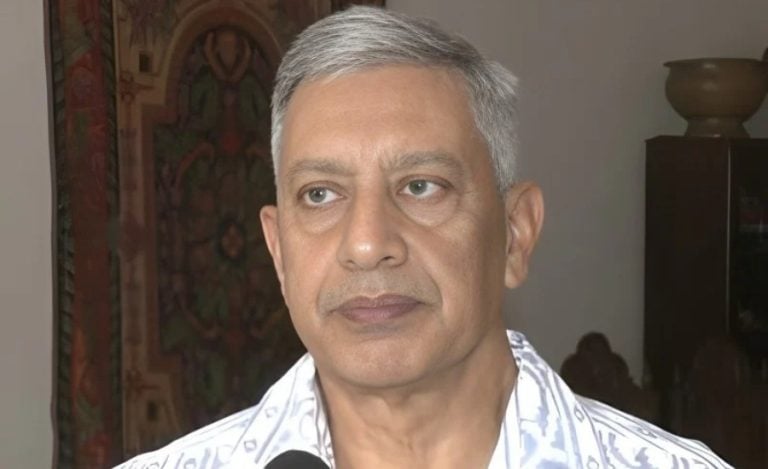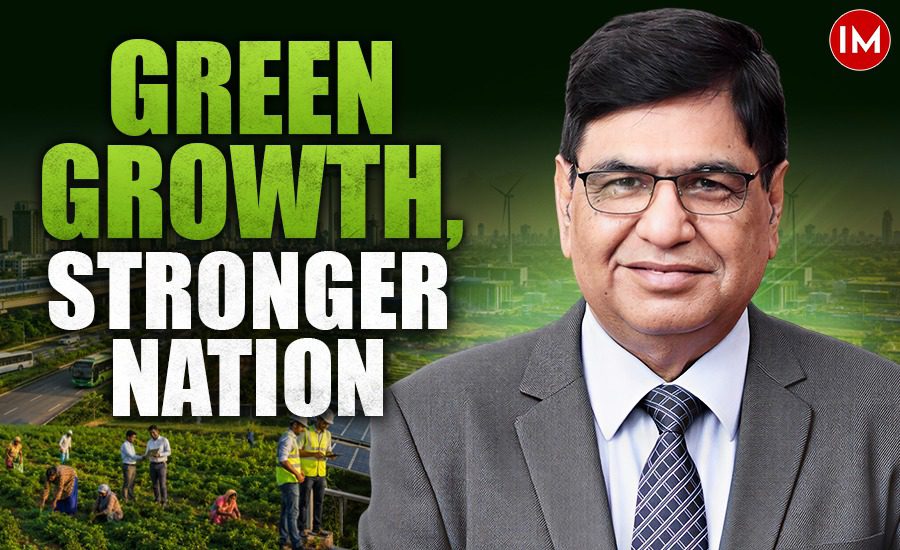
As India accelerates towards the vision of Viksit Bharat and net-zero commitments, public sector enterprises are emerging as critical drivers of sustainable industrial transformation. From green energy adoption and decarbonisation to ESG governance and climate-conscious leadership, CPSEs are increasingly aligning business priorities with environmental responsibility. Under the leadership of Atul Sobti, the Standing Conference of Public Enterprises (SCOPE) has been actively working to create awareness, build institutional capacity, and promote sustainability-focused collaboration across the public sector ecosystem. In this conversation, he shares insights on the evolving role of PSUs in India’s green transition and the roadmap ahead.
In the context of India’s net-zero goals and Viksit Bharat vision, how do you see the role of public sector enterprises evolving in the country’s green transition journey?
Today India is amongst the top three major economies not only moving steadfast towards development but also defining the global growth especially in times of geo-political crisis. It is infact amongst the very few countries which provides the world necessary stability and positive momentum in light of uncertainties and dynamism. While the country generates approximately 7–8% of global greenhouse gas (GHG) emissions and is the world’s third-largest emitter in absolute terms, however, if we look at its per capita emission, it remains well below the global average. This is a clear reflection of the development needs and large population but this does not absolve India from taking defined actions for mitigating GHGs. Hence, India needs to be, and is at the forefront of global climate action, balancing the twin imperatives of economic growth and environmental sustainability. For this purpose, India has set a net -zero emission target of 2070 by expanding renewable energy capacity, promoting green hydrogen, and advancing sustainable lifestyles through Mission LiFE. Hence, country’s green transition is not merely an environmental necessity but a strategic pillar of the Viksit Bharat vision.
In this, Public Sector Enterprises are definitely going to play a leading role. In many ways, they already are. While these 292 enterprises provide the necessary economic stability to the country by contributing nearly 12% to the Indian economy and clocking a gross revenue of over 37 lakh crore rupees, their presence in strategic yet hard to abate sectors of energy, steel, mining, transport, heavy engineering, power generation or infrastructure, makes them significant emitters. Therefore, India’s journey towards net-zero and the vision of Viksit Bharat cannot happen without their support.
And in fact PSEs have already embarked on this journey with nearly 30 PSEs declaring net zero target well before 2070, infact most of them have declared a net zero target by 2047, on the eve of India’s 100 years of independence.
Further, what is the most encouraging sign today is that sustainability is no longer seen as a separate activity but as integral to long-term business plans. For example, they have started to expand renewable energy sources, producing green hydrogen, practicing energy efficiency and circular economy practices, engaging in responsible mining, and taking up afforestation initiatives.
But while, PSEs take positive steps towards contributing to India’s emission goal, they also need to acknowledge the responsibility before them. They are not only commercial entities but they are also businesses that serve a purpose of being nation builders. Hence, this makes the green transition particularly important as India’s pathway has to be balanced and inclusive. Where we save the environment, we have to prioritise development with energy security. While, Public enterprises are uniquely placed to manage this balance because they combine commercial capability with a larger public purpose but for this purpose, they need to evolve their role from being participants in the green transition to becoming architects of India’s sustainable industrial future.
Also Read – Ravada A. Chandrasekhar: The Intelligence Strategist Now Steering Kerala Police
As the apex body representing public enterprises, how has SCOPE realigned its institutional priorities and strategies to align with theseemerging sustainability, ESG, and climate expectations?
A few years ago, sustainability discussions in many enterprises were still viewed as specialised or sector-specific concerns. But today, the conversation has moved closer to mainstream business planning, governance and long-term risk management. SCOPE recognised this shift early on and began aligning its organisational priorities to help public enterprises prepare for the changing global and domestic environments.
Hence, our approach has been to create greater awareness at the executive level while also encouraging practical preparedness within enterprises. This includes helping PSEs engage in emerging areas of sustainability including pathways to decarbonisation, green technologies and sustainable finance. We have also been creating opportunities where enterprises can learn through peer learning and exchanges while also engaging with experts, policymakers and international institutions in a more structured manner. Not only building capacities and preparedness, SCOPE recognises that this discussion has to be steered from the top and hence, to increase board level engagement, SCOPE has formed a Board level Sustainable Development & Climate Change Committee (SD&CC) to give a wholesome solution to PSEs from incorporating environment sustainability in strategy and action.
Besides, SCOPE firmly believes in collaborative benchmarking and hence, we explore the best possible partnerships that can add value to our work and PSEs. In this regard, we are working closely with GIZ, Germany, primary federal enterprise for international development and sustainable cooperation as part of the Indo-German partnership since 2019 on various projects of awareness creation, handholding, devising solutions, developing capacities in nature-based solutions etc. Through these engagements, Indian PSEs are getting exposure to international best practices, technology discussions, industrial decarbonisation models and global sustainability thinking. We are also facilitating dialogue with Ministry of Environment Forest and Climate Change (MoEFCC) through platforms such as LeadIT thereby giving an opportunity for open discussion between PSEs and the Ministry.
SCOPE has organized numerous workshops, dialogues, and collaborative initiatives focused on ESG, decarbonisation, and green transformation. Could you highlight some of the major initiatives and the kind of response they have received from CPSEs?
While SCOPE has been undertaking many programs to build capacities in PSEs in the area of environment and climate change, our approach has become more structured with time and growing global concern/ importance of this area. Our objective is not just to hold discussions, but to help enterprises practically prepare for the transition that is already underway globally.
One of our key focus areas has been on capacity building. In collaboration with GIZ under the Indo-German partnership framework, SCOPE’s partnership has moved from awareness creation to capacity building and now solutions provision. In this regard many national and regional workshops have been organised on themes such as new technologies, industrial decarbonisation, circular economy, climate finance, policy frameworks etc. These workshops have not only focussed on middle management but also brought together senior leadership, sustainability professionals and operational teams, etc., from a large number of CPSEs across sectors.
We have also undertaken action-oriented initiatives to provide solutions to PSEs in areas of their interest. In this regard, SCOPE and GIZ has supported SAIL and GAIL for determining Internal Carbon Pricing mechanisms thereby helping them reporting their sustainability practices. Further, we have created a tool on climate co-benefit methodologies and its quantification to measure the impact of afforestation/ urban forestry on carbon emissions. Another area that we have been working on is bringing PSEs closer to the global practices by helping them deliberate with MoEFCC on LeadIT platform for hard-to-abate industries. Leadership Group for Industry Transition or LeadIT is a global initiative launched by the Governments of India and Sweden to accelerate low-carbon industrial transition, through theseinteraction we are giving access to PSEs to explore the opportunities of collaboration with Swedish companies and Government. Also, we facilitated an Indo-German exchange visit on industrial decarbonisation where senior officials from Indian PSEs visited companies, think tanks and German policy makers and interacted with them on low-carbon industrial transformation.
Here, I would also like to mention about the launch of an online certification course on Climate Change and Climate Action for PSE executives wherein the executives can complete a time defined five detailed module course on climate change and action. I am happy to share that through this course, SCOPE, GIZ and German Government have certified more than 600 people across the fraternity in the said domain.
It is a pleasure to share that the response to all our programs and initiatives has been very encouraging, with participation steadily increasing across enterprises. This indicates that sustainability conversations are no longer restricted to a few specialised departments and that there is overall interest from management perspective as transition represents a bigger shift that is occurring within the overall public sector ecosystem.
SCOPE has actively engaged with international organizations and global sustainability platforms. How important are these collaborations in helping Indian PSUs adopt best practices, access green finance, and fast-track their transition?
I believe in today’s world, no country or organisation can deal with climate change in isolation. The scale of the challenge is just simply too large and the technologies, financing models and regulatory frameworks are evolving very rapidly and is also complex. The need for international cooperation is therefore critical for any industry and especially for sectors that are energy-intensive and difficult to decarbonise.
Partnerships with other countries are an excellent way for PSEs in India to learn from peer countries while developing a solution that is appropriate for India. In this regard, SCOPE has been actively engaging with international organisations, development partners and sustainability platforms to ensure that Indian PSEs are not left behind in this transition.
Our collaboration with GIZ is one such example where the focus has gone beyond dialogue to practical engagement. Through workshops, exchange visits, technical interactions and joint studies, Indian PSEs have been able to directly interact with global experts, research institutions and industry leaders.
Similarly, we are also exploring working with institutions like International Institute for Sustainable Development (IISD) where we are developing peer-to-peer collaboration and knowledge through programs such as PSUs for PLANET – Practitioners’ Learning and Action Network on Energy Transition (PLANET). These types of platforms are extremely helpful in encouraging organisations to share their experiences with energy transition. Often, one enterprise’s successful model can become a valuable reference point for many others.
Accessing green finance and sustainable frameworks is another key focus area which we are trying to build upon. Increasingly, global financial institutions and investors evaluate ESG, climate disclosure and transition readiness when making investment decisions. Indian enterprises will be able to understand these expectations better if they work collaboratively with global partners, and such collaborations provide avenues for technology partnerships, pilot projects and future investment opportunities. We are also exploring working closely with think tanks like CEEW, Climate & Sustainability Initiative and Energiva to empower Public Sector with gamut of options available for not only decarbonisations but also technological collaborations or development, accessing finance, risk assessment and many more areas.
From these engagements, what notable mindset shifts, cultural changes, or operational transformations are you witnessing within public sector enterprises towards sustainability and climate accountability?
Well, in a nutshell, a lot of change is being seen – not only in action but mindset also. Sustainability is becoming increasingly integrated into the day-to-day operational and management decisions of public enterprises. A few years ago, these discussions were often limited to sustainability reports or specialised teams, but today, they are increasingly finding place in project planning, procurement decisions and long-term investment discussions.
Organizations are also showing an increasing trend towards taking a more data-centric and analytics driven approach to sustainability. There is growing emphasis on emissions tracking, resource efficiency, water management, renewable integration and measurable ESG outcomes. Many companies are now working across functional areas on sustainability-related initiatives rather than treating them as individual projects.
Another important shift is the growing willingness to experiment and pilot new approaches. Whether it is green hydrogen, digital monitoring systems, circular economy practices or climate co-benefit assessment tools, enterprises are showing greater openness towards innovation and future-oriented technologies. Then there is the growing culture of collaboration and knowledge-sharing among CPSEs. Through various platforms and engagements, enterprises are becoming more open to learning from each other’s experiences instead of working in silos. This is helping accelerate adoption of good practices.
Importantly, younger professionals entering public enterprises are also bringing fresh perspectives on sustainability, technology and climate responsibility. There is greater awareness today that environmental responsibility and economic growth are not opposing goals; in fact, the future will increasingly require both to move together. Of course, transitions of this scale take time, but the intent is clear.
Despite growing intent, public enterprises face real operational and commercial realities. What do you see as the biggest challenges for PSUs in achieving ambitious sustainability goals while remaining globally competitive and financially viable?
Well it’s true that PSEs today are at the forefront of India’s development journey, balancing multiple priorities including economic growth, energy security, affordability, social responsibility, and sustainability. But when we talk about matching intent with realities for achieving same for all whether public sector or private sector. So, here I would like to take the director of addressing challenges for all corporates, irrespective of their ownership.
The challenge lies in advancing ambitious climate and sustainability goals while maintaining operational efficiency, commercial viability, and global competitiveness while meeting national priorities. Specifically, to highlight, one of the key challenges is the scale of investment required for decarbonisation and technology transition, particularly in hard-to-abate sectors such as power, steel, mining, petroleum, and heavy manufacturing. Many low-carbon technologies are still evolving and require substantial capital investments, supportive infrastructure, and longer implementation timelines. Another challenge is the pace of technological change. While emerging solutions such as green hydrogen, CCUS, and industrial electrification offer immense potential, many technologies are still evolving not only in India but globally and require supportive ecosystems for large-scale deployment. Additionally, the rapidly changing global regulatory and market landscape is placing increasing emphasis on ESG performance, green products, sustainable supply chains, and climate disclosures. This requires enterprises to continuously adapt while remaining competitive in domestic and international markets. Access to affordable green finance, technology partnerships, capacity building, and a robust innovation ecosystem will therefore be critical.
However, I see these challenges as opportunities for transformation and cross learning. Given their scale, strategic importance, and long-term outlook, Indian PSEs are uniquely positioned to lead the transition towards a more sustainable, resilient, and globally competitive economy while creating sustainable value for the nation.
What policy enablers or additional government support do you believe are still required to help public sector enterprises effectively lead India’s green industrial transformation?
India has created strong momentum through initiatives on renewable energy, green hydrogen, energy efficiency, and sustainable finance and PSEs are uniquely positioned to become anchors of India’s green industrial transformation. However, considering the scale and strategic importance of Public Sector Enterprises in India’s industrial ecosystem and GDP, the focus must now shift towards accelerating implementation at scale.
Firstly, long-term policy certainty and sector-specific transition roadmaps are extremely important, especially for hard-to-abate sectors such as steel, power, oil & gas, mining, and heavy manufacturing. Many PSEs manage strategic infrastructure with long investment cycles, and therefore require predictable regulatory and financial frameworks to confidently invest in low-carbon technologies.
Secondly, there is a need to strengthen access to affordable green finance and blended financing mechanisms. Large-scale decarbonisation projects often involve high upfront investments and longer payback periods. Dedicated financial instruments, transition financing frameworks, viability gap support, and incentives for adoption of emerging technologies such as CCUS, green hydrogen, storage systems, and industrial decarbonisation solutions can significantly improve implementation capacity.
Equally important is policy support for green skilling and institutional capacity building. Sustainability today is no longer limited to environmental compliance; it is becoming central to competitiveness, governance, supply chains, and investor confidence. Therefore, strengthening technical capabilities and leadership readiness across sectors will be critical.
You have often emphasized the importance of “green skilling” and future-ready leadership. What new competencies, skills, and leadership capabilities will be essential for PSU executives and board members in the coming decade?
The transition towards a low-carbon and sustainable economy will require a significant shift not only in technologies and business models, but also in leadership thinking and workforce capabilities. In the coming decade, sustainability will increasingly become a core strategic function rather than a peripheral compliance requirement. Hence, future-ready PSU leadership will need a strong understanding of climate risks, ESG frameworks, sustainable finance, resource efficiency, circular economy principles, and emerging global disclosure standards. Decision-making at the board and executive level will increasingly require integrating sustainability into long-term business strategy, investment planning, operational efficiency, and risk management. At the same time, leadership capabilities such as systems thinking, adaptability, innovation management, stakeholder engagement, and interdisciplinary collaboration will become equally important as industries adopt technologies such as AI, automation, green hydrogen, smart energy systems, and data-driven sustainability monitoring, executives must be equipped to navigate rapidly evolving technological and regulatory landscapes.
Capacity building is one of the four core pillars of SCOPE, and accordingly, we are not only taking conventional initiatives of workshops, leadership dialogues, peer-learning platforms, and collaborations for building capacities but also looking at innovative ways of self paced programs, hands on learning, exchange programs and feasibility studies with national and international institutions to build capabilities benchmarked to global standards
What role do you envision for innovation, R&D, and emerging technologies — such as AI, CCUS, hydrogen, and renewable integration — in accelerating the green transformation of public sector enterprises?
Innovation and technology will be the defining drivers of industrial sustainability and decarbonisation in the coming decades. For Public Sector Enterprises, emerging technologies are not merely operational tools, but strategic enablers for achieving long-term competitiveness, resilience, and climate goals. Technologies such as green hydrogen, Carbon Capture, Utilization and Storage (CCUS), renewable integration, battery storage, smart grids, industrial electrification, and circular resource recovery solutions have the potential to fundamentally transform energy-intensive sectors such as steel, power, petroleum, mining, and heavy manufacturing, where many PSEs play a critical role.
At the same time, Artificial Intelligence and digital technologies can significantly improve energy efficiency, predictive maintenance, energy optimization, supply-chain transparency, and data-driven sustainability management. These innovations will be essential for enhancing operational performance while reducing environmental footprints.
However, large-scale transformation will require stronger investments in R&D, pilot projects, innovation ecosystems, and industry-academia collaboration. PSEs possess the scale, institutional strength, and strategic presence to act as early adopters and demonstration leaders for low-carbon technologies in India.
How prepared are CPSEs for enhanced sustainability reporting and disclosure frameworks, including BRSR Core and global standards like ISSB? What progress have you observed in this area?
Over the past few years, there has been a visible and encouraging shift among PSEs towards strengthening sustainability governance, ESG integration, and disclosure practices.
Sustainability reporting is increasingly being viewed not merely as a compliance requirement, but as an important tool for enhancing transparency, stakeholder trust, investor confidence, and long-term business resilience. Many leading PSEs have already made significant progress in aligning with frameworks such as BRSR, and there is growing awareness regarding evolving global disclosure standards. Several PSEs are already integrating ESG indicators into their governance and reporting systems and are adopting more structured approaches towards climate risk assessment, emissions monitoring, and sustainability performance tracking.
At the same time, preparedness levels vary across sectors and enterprises depending on operational complexity, resource availability, and institutional capacity. Capacity building therefore becomes extremely important. PSEs will require enhanced technical understanding, data management systems, internal governance mechanisms, and skilled professionals capable of managing evolving reporting expectations. SCOPE recognises this aspect and is in the process of developing specialised programs in this regard.
Looking ahead, what is your long-term vision for SCOPE’s role in shaping environmentally responsible, technologically advanced, and globally competitive public sector enterprises for a developed India?
Public Sector Enterprises have been instrumental in India’s nation-building journey and will remain central to realizing the vision of Viksit Bharat and India’s long-term sustainability goals. As the apex body representing PSEs, SCOPE’s long-term vision is to strengthen its role as a strategic facilitator, knowledge partner, and collaborative platform that supports enterprises throughout their sustainability transformation journey, from awareness creation and capacity building to on-ground implementation and achievement of climate and sustainability targets.
Going forward, SCOPE will continue to play an active role in enabling policy dialogue between industry, government, and other stakeholders to help create an enabling ecosystem for sustainable industrial growth. Our focus will continue to deepen in areas such as climate action, ESG integration, decarbonisation, circular economy, sustainability reporting, compliance, and future-ready leadership development. While, capacity building, one of the core pillars of SCOPE, will remain at the heart of our efforts, wWe also envisage creating a technology and knowledge platform that can serve as a central repository of globally available Best Available Technologies (BATs), emerging low-carbon solutions, and sector-specific decarbonisation pathways, including support in developing and implementing net-zero roadmaps. Alongside, through partnerships with government, industry, research institutions, and international organizations, SCOPE is exploring ways to promote peer learning, innovation, and knowledge exchange.
Well, as I said, intent is certainly there, direction is being mapped.
(Mr. Atul Sobti is the Director General of SCOPE, an apex body of Public Sector Enterprises, and Titular Member of Governing Body of International Labour Organisation (ILO), Geneva. Before leading, he was Chairman & Managing Director of Bharat Heavy Electricals Limited (BHEL). Under his leadership SCOPE has taken many endeavours in areas of policy advocacy, leadership, women empowerment, digital transformation, financial management, project management, optimal HR practices, brand building, research etc.)