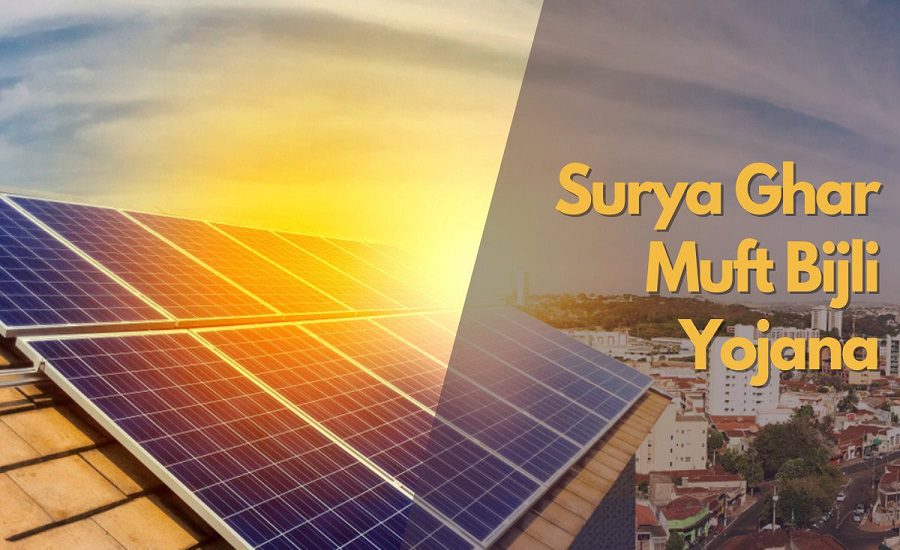
New Delhi: India’s ambitious PM Surya Ghar: Muft Bijli Yojana has crossed a major milestone, with over 50.06 lakh households installing rooftop solar systems in just over two years. The achievement reflects India’s rapidly growing adoption of clean energy and the success of the world’s largest rooftop solar programme.
Implemented by the Ministry of New and Renewable Energy (MNRE) with an outlay of ₹75,021 crore, the scheme is helping families cut electricity bills while creating jobs, expanding renewable energy capacity and strengthening the country’s energy security.
Growth Far Faster Than Previous Decade
The pace of rooftop solar adoption under the scheme has been significantly faster than earlier years. In the decade before the launch of PM Surya Ghar, only 7.94 lakh rooftop solar installations had been completed nationwide.
Today, the scheme is adding one lakh beneficiary households every six days, reflecting an unprecedented expansion in rooftop solar adoption.
Installation speed has also increased sharply over the past nine months.
- Daily installations have grown from 5,038 per day in October 2025 to nearly 16,328 per day in July 2026.
- July 2026 alone recorded 5.06 lakh rooftop solar installations, the highest monthly figure since the scheme began.
The numbers indicate growing public participation as well as improved implementation mechanisms across states and distribution companies.
Nearly 19 Lakh Families Now Have Zero Electricity Bills
One of the biggest impacts of the scheme has been the reduction in household electricity expenses.
The government has released ₹28,024 crore directly into beneficiaries’ bank accounts through the Direct Benefit Transfer (DBT) system to support rooftop solar installations.
As a result:
- Nearly 19 lakh households are now reporting zero electricity bills.
- More than 12 lakh households earned a combined ₹421 crore by selling surplus electricity to the power grid during FY 2024-25.
- On average, participating households exporting electricity earned about ₹3,500 annually as additional income.
Besides lowering monthly expenses, the scheme is enabling families to generate income from clean energy production.
Special Focus on Low-Income Households
The government has also expanded rooftop solar access to economically weaker sections through the Utility Led Aggregation Model.
Under this initiative:
- Around 1.6 lakh rooftop solar installations have been completed for PMAY beneficiaries, Below Poverty Line (BPL) families and SC/ST households across four states.
- The model has now been approved for rollout in 12 states.
The scheme is making rooftop solar more accessible for low-income families while helping states reduce electricity subsidy costs. To support wider adoption, concessional loans at 5.75% interest have been sanctioned for 21.87 lakh applicants, with 17.5 lakh installations already completed through the Jan Samarth digital platform.
Employment and Solar Ecosystem Continue to Expand
The rapid scale-up has also created new employment opportunities across the renewable energy sector.
According to the government:
- 34,219 vendors have been registered under the scheme.
- 29,469 vendors are currently active.
- More than 2.32 lakh people have received skill training under rooftop solar capacity-building programmes.
The programme has now commissioned a cumulative 14.8 GW of rooftop solar capacity, strengthening India’s distributed renewable energy infrastructure.
Digital Platform Simplifies the Entire Process
A major reason behind the scheme’s rapid progress has been its fully digital implementation model.
Consumers can complete the entire process online—from application and approval to subsidy release—without visiting government offices or submitting physical documents.
The digital ecosystem includes:
- Jan Samarth integration for paperless loan approvals.
- PFMS-enabled subsidy transfer within 15 days.
- API integration with over 80 DISCOMs for faster processing.
- Digital Net Metering Agreement through the National Portal.
- Vendor star-rating system to improve service quality.
- Integration with the Domestic Content Requirement (DCR) portal to ensure compliance.
These measures have reduced delays while improving transparency and ease of access for consumers.
States Simplify Rooftop Solar Adoption
Several policy reforms have also made rooftop solar easier to install.
Approval requirements have been relaxed through a deemed approval and feasibility waiver for systems up to 10 kW. Additionally, 32 States and Union Territories have removed application and net-metering charges for rooftop solar consumers.
To improve implementation:
- ₹3,807.6 crore has been released as incentives to DISCOMs.
- Around ₹104 crore has been provided to Urban Local Bodies.
- A City Accelerator Programme has been launched in 46 cities.
- Nearly 23,000 third-party quality inspections have been conducted to maintain installation standards.
Government Buildings Also Shifting to Solar Power
The solar push is also expanding to government infrastructure. So far, 1.06 lakh government buildings have been solarised, including 25,255 Central government buildings and 81,329 State government buildings. The government has also introduced a Payment Security Mechanism to encourage RESCO participation by ensuring timely payments and reducing financial risks.
A Major Step Towards India’s Clean Energy Future
Crossing the 50 lakh household mark demonstrates how rooftop solar is becoming an important part of India’s energy transition. The scheme is not only helping families reduce electricity expenses but is also encouraging income generation, expanding green jobs, improving digital governance and strengthening domestic renewable energy infrastructure.
With installations continuing to rise and implementation becoming faster, PM Surya Ghar: Muft Bijli Yojana is expected to play an increasingly important role in achieving India’s energy security, reducing dependence on conventional power sources and supporting the country’s long-term sustainable development goals.
Read Also: PSBs Sanction Over 5.79 Lakh Loans Worth ₹10,907 Crore Under PM Surya Ghar Muft Bijli Yojana