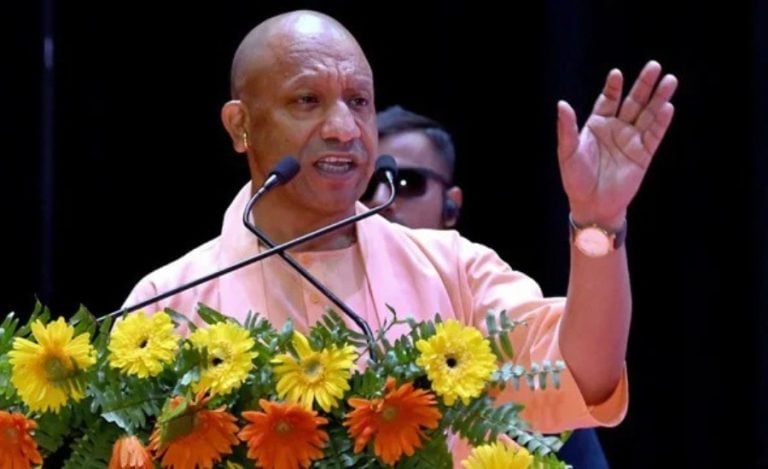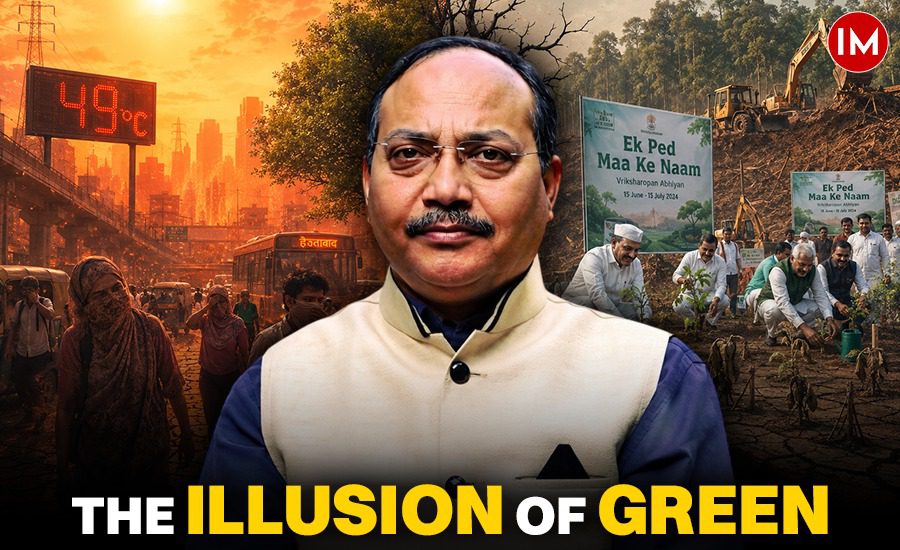
As India marks World Environment Day in 2026, temperatures continue to hover above 45°C in many regions, with some areas nearing 50°C. This early and intense heatwave has broken records, strained power grids, triggered deaths, and exposed millions to dangerous conditions. Climate change has roughly tripled the likelihood of such pre-monsoon extremes. The solution is to plant as many trees as possible. The government proudly touts having planted several hundred crores of saplings under campaigns like Ek Ped Maa Ke Naam. The numbers sound impressive — over 262 crore saplings nationwide, with Uttar Pradesh alone planting 137 crore trees since these drives began a couple of years ago. But for the poor survival rate of these saplings, our Earth, especially India, would have been much greener and more livable than it is now.
The Survival Rate Crisis
The numbers deceive. Between 2019-2024, Madhya Pradesh claimed 217.8 million (21.78 crore) saplings planted, yet the state lost 612.41 km² of forest cover since 2019, as per official figures. Survival rates tell the real story: lack of water to saplings within the first two years lowers survival to less than half. At 50% survival with 250 trees per hectare, UP’s 137 crore saplings cover approximately 27 lakh hectares, as per a report in Down To Earth —impressive until you realize most are roadside plantations, not ecological forests.
Delhi’s case is instructive: 18 of 20 afforestation agencies failed to submit mandatory third-party audits for plantation in 2016-2018. Where audits exist, they’re revealing—DDA reported 80-95% survival for 2018-19, an outlier in a landscape where most plantation drives see opposite outcomes. The systemic failure is reflected in trees planted inappropriately, in unsuitable locations and without local community cooperation.
Former PCCF of Maharashtra Mr Anoop Badhwa, claims survival rate to be mere 5 per cent. “There are patches are land which become part of afforestation drive, year after year because of less than 5 per cent rate of survival”. He also goes on to say that had all the afforestaion drives had even 40 per cent survival rate, country could have achieved 33 per cent afforestation target within just three years”.
Also Read – World Environment Day Special: Using AI, Drones & Digital Innovation to Protect Wildlife and Forests
The Invisible Catastrophe
While officials plant saplings, aquifers collapse beneath them. India extracts 247 billion cubic meters annually, rivaling US and China combined. Punjab extracts over 150% of annual recharge, with 26% of India’s 6,762 groundwater blocks classified as over-exploited, critical, or semi-critical in 2025. In Punjab, Haryana, Rajasthan, Karnataka, and Tamil Nadu, water tables plummet despite above-normal rainfall.
The cooling impact is direct: depleted groundwater reduces soil moisture and evaporative cooling—the natural air conditioning that forests and wetlands provide. Excessive extraction lowers water tables, increasing vadose zone thickness, turning landscapes into heat traps. Delhi, Mumbai, Kolkata, Bengaluru, and Chennai face land subsidence linked to groundwater depletion, affecting 80 million residents.
Forest Quality Collapse
India’s forest story is one of quality erosion masked by area gains. Between 2001-2024, India lost 2.31 million hectares tree cover—a 7.1% decline emitting 1.29 gigatonnes CO₂ .. Forest cover declined in biodiversity-rich areas including the Western Ghats, Himalayan states, and Andaman-Nicobar Islands last year.
Dense natural forests provide exponentially more cooling than plantation monocultures. They regulate microclimates through evapotranspiration, retain moisture, and maintain ecosystem functions that no roadside sapling campaign replicates. Yet Karnataka lost 459 km² overall, with Bengaluru consuming 1,200 hectares of Western Ghats forests annually for IT parks.
The Urban Heat Trap
India’s cities amplify heat catastrophically. Urban heat island effects create temperature differences ranging from 2°C to 8°C versus rural areas. City centers experience temperature rises over 3-4°C above surrounding areas.
Urban expansion enhanced warming in Indian cities by 60% compared to non-urban areas. By 2030, India expects to lose 5.8% daily working hours to rising temperatures —an economic crisis in making. Yet urban greening remains cosmetic. Trees planted in concrete-locked strips without soil depth, water access, or canopy space cannot counter the heat absorbed by expanding asphalt and glass.
Beyond Performative Planting
26% of groundwater blocks critically depleted. Western Ghats losing 58 km² forest per decade. 2.31 million hectares tree cover lost since 2001. Against this, plantation drives offering uncertain survival on degraded lands prove insufficient. Campaigns like Ek Ped Maa Ke Naam and state-level mega-drives generate impressive statistics. At a theoretical density of 800 trees per hectare, 262 crore saplings might suggest around 33 lakh hectares of new “green cover.” This is almost equal to entire Western Ghat forest cover area but falls short in practice.
Many plantations occur on farmlands, roadsides, or degraded lands rather than restoring dense natural forests. Survival rates often remain low due to poor species selection (non-native or unsuitable varieties), inadequate aftercare, grazing, drought, and lack of community ownership. Reports frequently highlight the gap between saplings planted and trees that mature into functional ecosystems. Monoculture or low-diversity plantations provide limited cooling, biodiversity, or carbon benefits compared to complex natural forests they aim to supplement.
The result is a misleading narrative: governments celebrate numbers while natural forests in ecologically vital areas like the Western Ghats continue to decline, groundwater vanishes, and cities bake under concrete. Heatwaves intensify because these drives rarely address root causes — unchecked land-use change, over-extraction of resources, weak enforcement of environmental laws, and insufficient focus on conservation and restoration over mere planting.
A Call for Change
On this World Environment Day, India must move beyond the fallacy of “plant and forget.” Effective action requires prioritizing protection of existing natural forests, especially in hotspots. Plantation drives have a role if executed with sincerity — right species, right places, right care — but they cannot substitute for systemic change.
Until survival rates improve dramatically and broader ecological degradation halts, India will keep facing deadlier summers. Its always better to plant fewer saplings and ensure survival of the maximum than planting maximum without caring for survival of the minimum saplings. The trees we plant today must deliver real cooling, not just headlines. The heat is not just a weather event; it is feedback from a neglected environment. The question is whether we will finally listen.
Also Read – “PSUs Must Evolve from Participants to Architects of India’s Sustainable Future”: Atul Sobti