“Alone we can do so little; together we can do so much.” – Helen Keller
Success stories in competitive examinations often speak of discipline, sacrifice, and resilience. But sometimes, they also reveal something deeper — the extraordinary power of companionship within a family. In an examination ecosystem where lakhs compete and only a few succeed, two women from one household turned mutual trust into their biggest strength and rewrote what collective preparation can achieve.
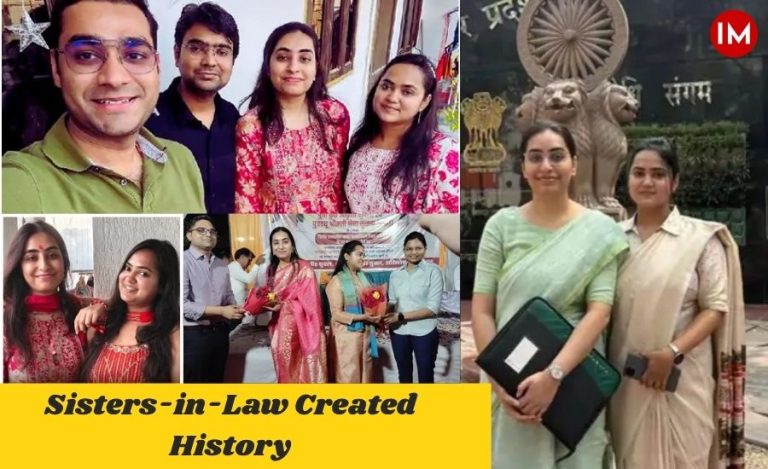
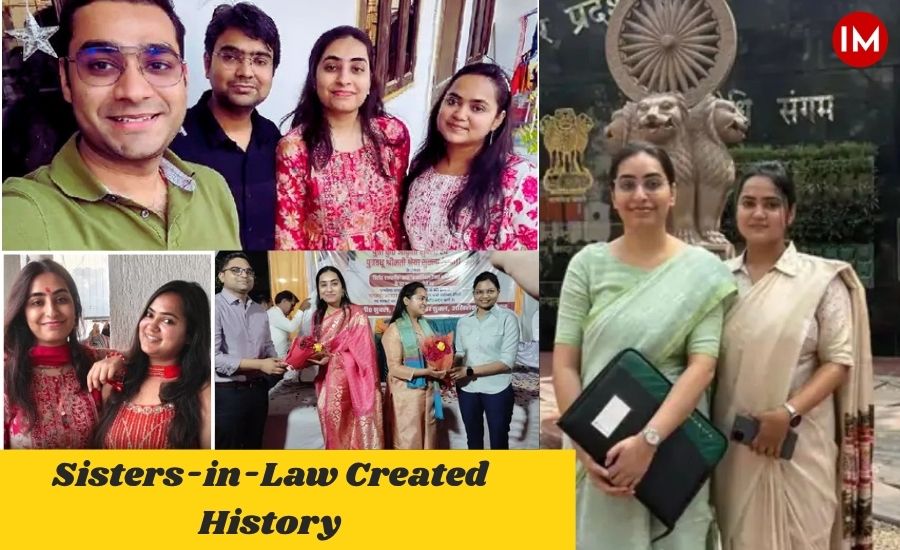
From long hours of study and repeated setbacks to emotional breakdowns and renewed determination, Akriti Shukla and Shreya Shukla Sharma transformed their home into a space of ambition, encouragement, and disciplined preparation. Their success in the Uttar Pradesh Public Service Commission Examination (UP PCS) has now become an inspiring example for aspirants across the state: Akriti secured the post of Deputy Superintendent of Police (DSP), while Shreya earned selection as Commercial Tax Officer (CTO).
Their achievement was celebrated not only in their home in Prayagraj, but also in their ancestral village Barji Kala, Jaunpur where villagers welcomed the duo with pride and joy.
A Success Story Built Inside One Household
The Shukla family lives in the Mumfordganj locality of Prayagraj, where Akriti and her family have long nurtured academic aspirations. The family’s ancestral roots, however, remain in Barji Kala, under the Sujanganj region, where the news of the two women’s success spread rapidly and became a matter of local pride.
Akriti’s father, Akhilesh Shukla, served as a senior auditor in the defence accounts establishment and built his life in Prayagraj. The family environment had always valued education and public service. Yet no one anticipated that two daughters of the same household — one daughter and one daughter-in-law — would crack one of the toughest state examinations together.
The turning point came after Akriti’s brother Amit married Shreya Sharma. What began as two women preparing separately soon evolved into a disciplined partnership.
Her Background: Two Different Academic Journeys, One Common Goal
Akriti Shukla comes from an academically grounded family in Prayagraj. She completed her schooling at St. Mary’s Convent Inter College, followed by a B.Sc. from University of Allahabad. Alongside her civil services preparation, she also pursued law studies from a state university.
Shreya Sharma’s background reflects a different but equally strong academic journey. Originally from Ashiana in Lucknow, she completed her schooling at La Martinière College and later earned a degree in Electrical Engineering from Dr. A.P.J. Abdul Kalam Technical University.
After graduating in 2019, Shreya made a firm decision: she would prepare for civil services.
Before marriage, she worked as an auditor in the CGA office. Later, she continued in government service and is currently posted in Bengaluru at the PAG office, balancing work and preparation with remarkable consistency.
Journey So Far: Failures That Became the Foundation of Success
Akriti’s journey was marked by repeated disappointments before her breakthrough.
She had appeared for the UP PCS examination earlier but failed to clear even the preliminary stage on previous attempts. Each failure tested her confidence deeply.
For Shreya, too, success did not come immediately. She first focused on Union Public Service Commission Civil Services Examination and appeared twice, but could not secure selection.
After that, she shifted her focus to UP PCS.
In 2023, she cleared prelims and reached mains, but failed to move ahead. Yet that attempt gave her something crucial — proof that she belonged in the competition.
By the time UP PCS 2024 arrived, both women carried lessons from earlier disappointments, and this time, they approached preparation differently.
The Turning Point: Marriage Created a Study Partnership
Shreya married Amit Shukla on February 20, 2025.
For many aspirants, marriage is seen as a disruption in preparation. But in this case, marriage unexpectedly became a source of academic momentum.
When Shreya entered the Shukla household, she found that Akriti was already deeply immersed in preparation. Instead of pursuing separate schedules, they decided to combine their efforts.
Soon, their relationship moved beyond formal family roles.
They became study partners.
They sat together daily, compared notes, discussed topics, corrected answer writing, and solved one another’s weak areas.
Where Akriti struggled in one subject, Shreya stepped in.
Where Shreya felt uncertain, Akriti filled the gap.
This steady exchange gradually created a disciplined rhythm that neither had experienced before.
The Biggest Struggle: When Akriti Almost Gave Up
Among the most difficult phases came when Akriti suffered emotional exhaustion after repeated setbacks.
There was a point when she became so disheartened that she considered ending her preparation altogether.
That was when her paternal uncle, Sheshdhar Shukla, who had retired as a PCS officer, stepped in as mentor.
His intervention proved decisive.
He reminded her that civil services preparation demands endurance more than speed. He guided her through the structure of the examination, answer writing discipline, and mindset required for long-term success.
At the same time, Shreya’s arrival in the household gave Akriti renewed emotional strength.
What mentorship offered intellectually, companionship offered emotionally.
That combination changed everything.
Preparation Strategy: Study Together, Improve Together
The duo followed a preparation strategy rooted in consistency rather than dependence on expensive coaching.
They did not rely heavily on external coaching institutions.
Instead, they built their own ecosystem of preparation:
- Shared handwritten notes
- Daily answer-writing practice
- Subject-wise discussions
- Mock interview conversations
- Revision through mutual questioning
- Weak-area correction through peer teaching
Amit Shukla explained that during mains preparation, both women prepared study material together and often discussed complex topics late into the evening.
This method helped them develop clarity and retention.
Most importantly, studying together reduced isolation — one of the biggest challenges in long-term competitive exam preparation.
A Family That Removed Pressure Instead of Adding It
One of the strongest pillars behind their success was the environment at home.
The family consciously ensured that neither Akriti nor Shreya was burdened by household expectations.
Their mother and elders managed domestic responsibilities in ways that protected study time.
Amit said that Shreya was never treated as an outsider after marriage. She was given exactly the same freedom as Akriti.
His father repeatedly encouraged both to focus entirely on studies.
This absence of pressure allowed them to treat preparation as a full-time mission.
For many aspirants, this aspect of their story may be as important as academic strategy itself.
Interview Questions and Mental Readiness
By the time interviews arrived, they had already developed a habit of discussing issues aloud – governance, current affairs, administration, taxation, law, policing, and state issues.
This habit naturally strengthened articulation.
The fact that they constantly explained concepts to each other likely improved interview performance significantly.
The Result Night That Changed Everything
The UP PCS result declared on March 29 transformed months of hard work into celebration.
Akriti Shukla secured selection as Deputy SP and achieved the third rank within the Deputy SP category.
Shreya Sharma secured selection as Commercial Tax Officer, ranking 37th in her category.
For the Shukla family, this was historic.
For the first time, two women from the same household had entered key administrative services together.
Celebrations began immediately in Prayagraj and spread to their ancestral village in Jaunpur, where villagers welcomed them with pride.
Message for Aspirants: Success Is Easier When You Refuse to Walk Alone
The biggest lesson from Akriti and Shreya’s story is that preparation need not always be solitary.
Competitive examinations are often described as lonely journeys.
But their success proves that collaboration, emotional honesty, and shared discipline can become powerful tools.
They did not simply compete with others.
They helped each other become better than yesterday.
And that, ultimately, made all the difference.
Their story is not only about clearing an examination – it is about how support, trust, and family can quietly build extraordinary outcomes.