Jaldapara National Park, West Bengal — The very first days of 2026 delivered a heartening sight from one of India’s major biodiversity hotspots.
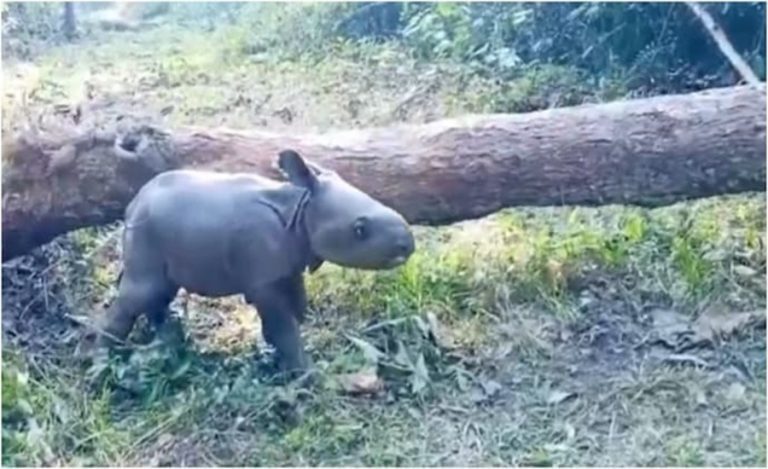
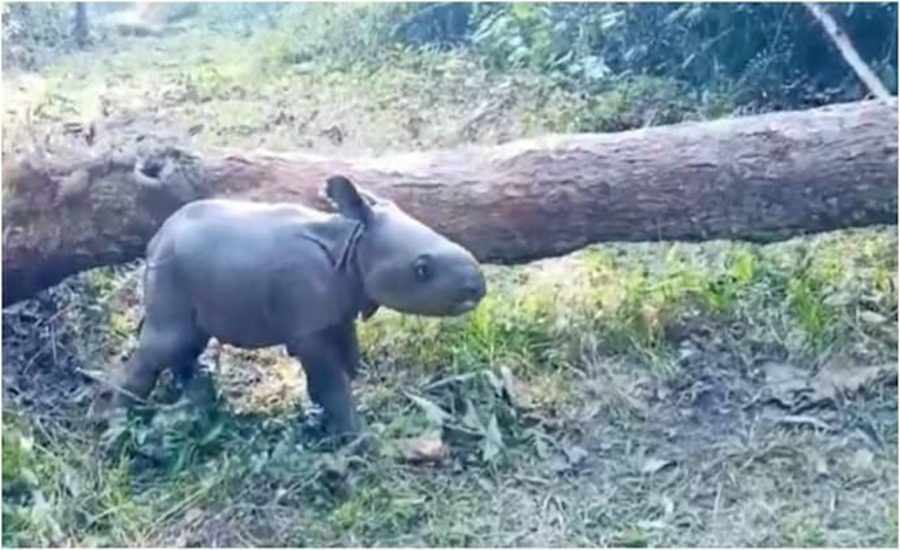
On January 1, an Indian one-horned rhinoceros calf was born within Jaldapara National Park, capturing attention across social platforms and wildlife circles alike. The moment, shared widely by IFS officer Parveen Kaswan, has ignited renewed optimism for rhino conservation efforts in the region.
One-Horned Rhino Calf Marks Hopeful New Year for Conservation
The newborn one-horned rhino calf—believed to be the first of 2026 in Jaldapara—was sighted by an elephant-mounted patrolling team conducting regular monitoring.
The birth comes as a symbol of hope and recovery for the greater one-horned rhinoceros (Rhinoceros unicornis), a species listed as Vulnerable on the IUCN Red List.
In a post on X (formerly Twitter) and Facebook, IFS officer Parveen Kaswan highlighted the importance of this sighting and detailed the park’s diligent conservation protocols observing each newborn rhino.
Born in 2026. One day he will walk and earth will shake.
— Parveen Kaswan, IFS (@ParveenKaswan) January 2, 2026
Do you know in our National Park every new born rhino is recorded, counted and monitored. pic.twitter.com/tROV81UJtw
These include documented recording, counting, and close monitoring of both calf and mother during the early, crucial days after birth.
Kaswan wrote an uplifting caption alongside the shared footage that underscored anticipation for the calf’s future growth, capturing the imagination of wildlife enthusiasts across India.
Behind the Scenes of One-Horned Rhino Calf
At Jaldapara, routine monitoring plays a pivotal role in identifying and protecting newborn wildlife. Elephant patrols—conducted by trained forest teams—are especially effective in traversing dense grasslands and spotting vulnerable young animals shortly after birth.
According to Kaswan’s posts, greater one-horned rhino calves typically stand and take their first steps within a few hours of being born.
This early ability to walk is critical to staying close to the mother for protection and survival in the wild environment.
These hands-on protocols signify how modern conservation efforts are not just reactive but proactive, ensuring every individual rhino is given the best possible start in life.
Jaldapara National Park: A Rhino Stronghold in Eastern India
Located in the Alipurduar district of northern West Bengal, Jaldapara National Park spreads across vast grasslands at the foothills of the Eastern Himalayas and on the banks of the Torsa River. It stands today as one of India’s key protected areas for the Indian one-horned rhino, second in importance only to Assam’s famous Kaziranga National Park.
The park’s grassland and riverine forests support a host of wildlife including Indian elephants, leopards, deer, and gaur—contributing to its recognition as a biodiversity hotspot in eastern India.
In contrast to the sprawling landscapes of Kaziranga in Assam, Jaldapara’s terrain offers a unique setting for rhino populations to stabilize and expand through careful management practices by forest staff and wildlife authorities.
Broader Context of Rhino Conservation in India
India is home to a growing portion of the world’s one-horned rhino population, thanks to decades of sustained conservation interventions.
From anti-poaching patrols to habitat restoration, India now supports some of the largest concentrations of this iconic species in the world.
While global threats like poaching and habitat loss persist, each successful birth—especially in protected areas like Jaldapara—highlights the strides made by government and forest department efforts to reverse the historical decline of rhinos.