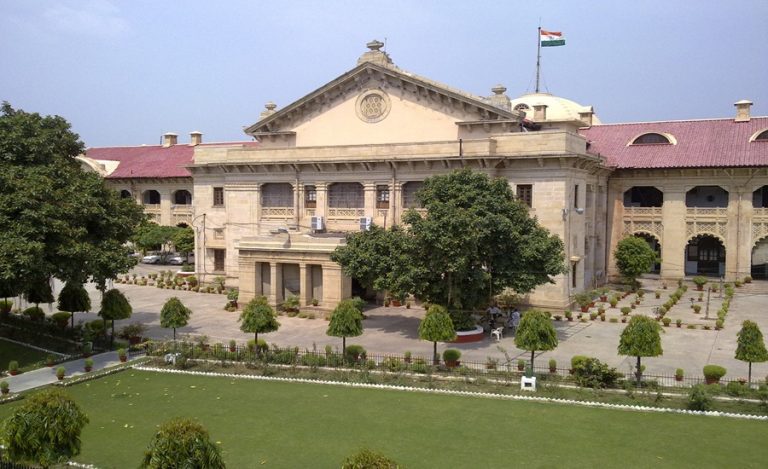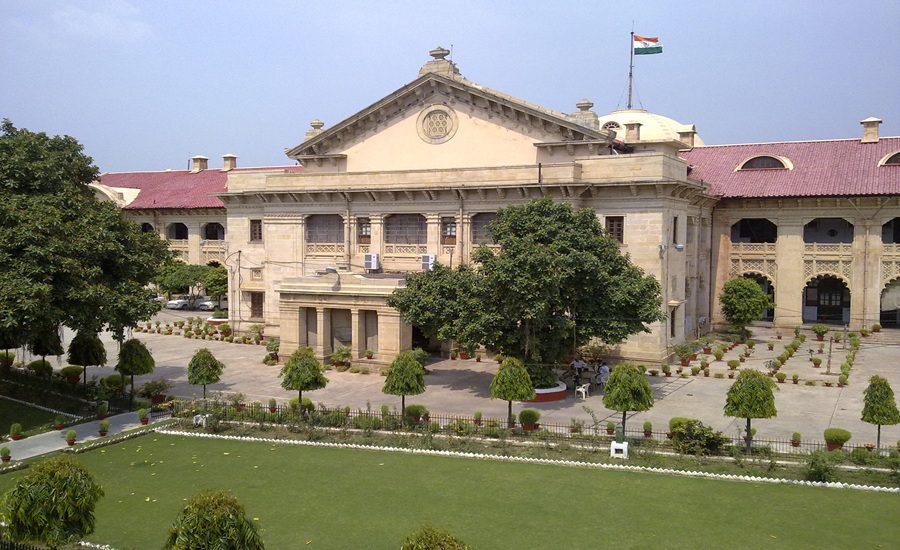
Lucknow: In a significant judicial pronouncement emphasizing strict compliance with court orders, the Allahabad High Court has held that the highest officer of a state government department — typically the Chief Secretary — can be held personally liable for contempt of court if a writ court order is not implemented due to confusion or dispute within the administrative machinery.
The ruling was delivered in a contempt proceeding related to land acquisition matters, reinforcing judicial oversight over state administrative functions.
Background of the Allahabad High Court Contempt Ruling
The case arose out of a long-standing land dispute where a petitioner’s land, acquired by the Irrigation Department in 1977, triggered decades-long litigation due to delayed compensation payments.
Awards for compensation were issued in 1982 and 1984, but no payment was made. After the implementation of the Right to Fair Compensation and Transparency in Land Acquisition, Rehabilitation and Resettlement (LARR) Act, 2013, the compensation amount was deposited in the government treasury, but the petitioner declined to accept it.
Relying on the Supreme Court’s decision in Pune Municipal Corporation vs Harakchand Misirimal Solanki, the petitioner argued that the acquisition proceedings had lapsed under Section 24(2) of the 2013 Act.
He represented before the Authority to release the land back to him, but no action was taken, ultimately leading to a writ petition in the High Court.
What is the Observations Behind Allahabad High Court Contempt Ruling
Here are the key observations on Allahabad High court contempt ruling;
Judicial Emphasis on Obedience to Court Orders
Justice Salil Kumar Rai observed that the state government cannot use the distribution of work among departments as a pretext for not implementing court orders. The Court stated that:
“The duty to ensure full compliance of orders passed by this Court lies with the State Government. If confusion in administrative machinery prevents compliance, the highest officer of the State Government — in this case, the Chief Secretary of Uttar Pradesh — will be held liable and could face contempt proceedings.”
This position underscores the principle that court orders override internal administrative hierarchies and confusion cannot shield non-compliance.
The Legal Context of Allahabad High Court Contempt Ruling
Under Indian law, contempt of court includes the willful disobedience of court orders — classified as civil contempt — which may attract penal action including fines or imprisonment. The Contempt of Courts Act, 1971 governs such proceedings and exists to uphold the authority and dignity of the judiciary.
Administrative Confusion Not a Shield
The High Court made clear that administrative confusion — such as disputes between departments on who should execute court-mandated actions — will not absolve the government or its officers of responsibility. If decisions or orders are ignored due to such confusion, the Court can direct contempt proceedings against senior bureaucrats.
Case Dynamics: State’s Attempts to Evade Compliance
The Uttar Pradesh Government relied on a subsequent judicial decision (Indore Development Authority vs Manoharlal) to argue that acquisition proceedings do not automatically lapse on non-deposit of compensation — a line of defense that the Court found did not justify non-compliance with its earlier order.
The bench critically noted that authorities had taken shelter under later jurisprudence to delay execution of the writ court’s instruction, which was final after the Supreme Court dismissed Special Leave Petitions (SLPs) related to the original order.
Court’s Decision: Time to Comply or Personal Liability
Although the Court found that the actions — or lack thereof — of the government officers amounted to wilful disobedience of its order, it refrained from immediately initiating contempt charges against the Chief Secretary. Instead, the Chief Secretary was given one more month to ensure compliance.
If the orders are not complied with by the next hearing, the Court indicated that the Chief Secretary would have to personally appear for framing of contempt charges.
The next hearing date has been listed as January 5, 2026.