https://indianmasterminds.com

ADVERTISEMENT
ADVERTISEMENT

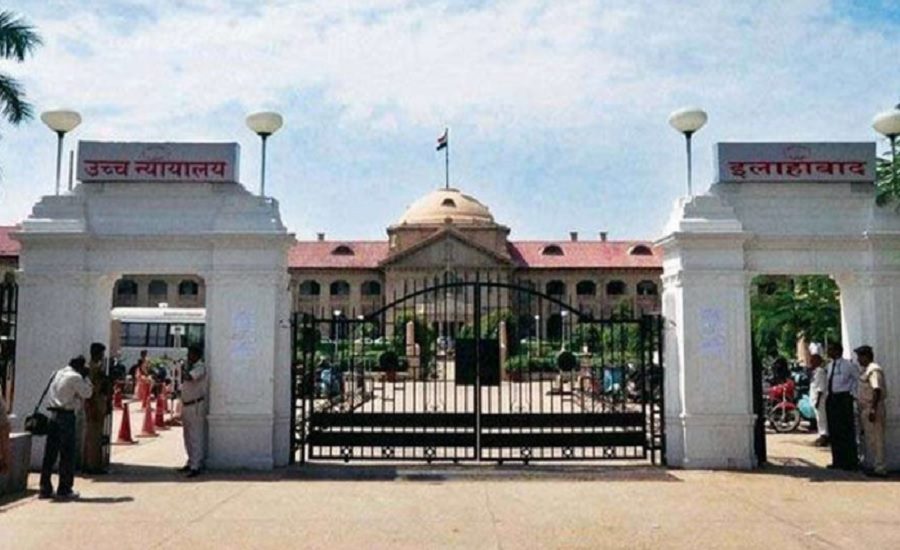
Allahabad High Court: ‘Sar Tan Se Juda’ Slogan Not Free Speech, Poses Serious Threat to India’s Unity and Rule of Law

The Allahabad High Court has ruled that the controversial “Sar tan se juda” slogan challenges India’s sovereignty and integrity, inciting armed rebellion. The judgement emphasises the rule of law, constitutional boundaries on free speech, and the unlawful nature of the chant in public assemblies.
Banda Family Court Divorce Case
Indian Masterminds Stories

Prayagraj: The Allahabad High Court has delivered a landmark ruling condemning the controversial slogan “gustakh-e-nabi ki ek saza, sar tan se juda, sar tan se juda” — translated as “for insulting the Prophet, there is one punishment: beheading.” 

The court held that this slogan is not merely offensive but constitutes a challenge to the authority of law, the sovereignty and integrity of India, and incites people toward armed rebellion, especially when used in public assemblies. 

Administered by a bench led by Justice Arun Kumar Singh Deshwal, the High Court rejected a bail application in a case linked to violent unrest in Bareilly, Uttar Pradesh, underlining that chanting this phrase violates the constitutional framework and legal norms of the nation. 

Background of ‘Sar Tan Se Juda’ Slogan

The judicial observations emerged while hearing the bail plea of Rihan, accused in a case stemming from violent clashes in Bareilly in September 2025. 

Read also: Retired IPS Officer Rakesh Singh Loses Legal Battle to His Lawyer Daughter in Allahabad High Court – Calls It His “Proudest Moment”

According to prosecution records, leaders of a local community group allegedly invoked the slogan during an unlawful assembly, prompting confrontations with police, injuries to officers, and damage to public and private property. 

Despite government-imposed prohibitory orders limiting assemblies to no more than five people, an estimated 500-strong crowd disregarded the restrictions, amplifying the risk of public disorder. The court held that the chant was directly linked to the violent flare-ups. 

Judicial Reasoning on ‘Sar Tan Se Juda’ Slogan

In its detailed order, the High Court categorised the slogan as punishable under Section 152 of the Bharatiya Nyaya Sanhita (BNS) — a provision addressing acts that endanger India’s sovereignty, unity, and integrity. 

It underscored that such slogans are not protected speech within the constitutional ambit of Article 19(1)(a) due to reasonable restrictions on expressions that incite violence or rebellion. 

The bench noted that while India’s Constitution guarantees freedom of speech and expression, such freedoms are subject to reasonable restrictions aimed at protecting national security, public order, and the sovereignty of the state. Slogans advocating violent punishment outside the legal framework are thus deemed unlawful. 

The court stressed that slogans or religious chants are ordinarily non-offensive — examples including “Allahu Akbar,” “Jo bole so nihaal, Sat Sri Akal,” “Jai Shree Ram,” or “Har Har Mahadev” — unless maliciously used to intimidate or provoke violence against other communities. 

Religious Context of ‘Sar Tan Se Juda’ Slogan

A crucial aspect of the court’s verdict was the observation that the “sar tan se juda” slogan has no basis in the Qur’an or any other Islamic scripture. This directly counters narratives that the phrase reflects core religious doctrine. The bench clarified that such slogans, despite being propagated in certain circles, are misinterpretations or misappropriations of religion used to intimidate and mobilise crowds. 

Justice Deshwal explicitly stated that the idea of extrajudicial punishments — including beheading — cannot be justified under religious teachings and, when invoked in public, undermines the rule of law and constitutional order.

Legal and Constitutional Implications

The court’s ruling resonates in the broader legal context of India’s justice system. By categorising the chant as an act endangering national integrity, the High Court effectively reinforces the principle that no individual or group may challenge the rule of law in the name of religion.

This stance aligns with constitutional jurisprudence affirming that freedom of speech and expression is not absolute; reasonable restrictions are enforceable where public safety, state integrity, or public order is at stake. 

Moreover, by linking the chant to incidents of public violence and property damage, the court reaffirmed that incitement to unlawful conduct — beyond religious expression — falls outside constitutional freedoms.


Read also: SC Raps Allahabad High Court Over Witness Protection Misuse, Says Bail Cancellation Principles Cannot Be Ignored


Indian Masterminds Stories
ADVERTISEMENT
ADVERTISEMENT
Related Stories
ADVERTISEMENT
ADVERTISEMENT
NEWS
Indigenous Warships
Major Naval Milestone: Indian Navy to Commission Three Indigenous Warships in Kolkata on 21 June 2026 
Samrat Chaudhary
Big Welfare Push: Bihar to Support Migrant Families with ₹4 Lakh Compensation and Full Repatriation Costs
Rice agri
Bihar Launches PACS-Led Paddy Seed Production Project in 6 Districts to Improve Quality Seed Access
Bridges
Jharkhand Rail Boost: Ranchi Division to Build 7 New Foot Overbridges in ₹30 Crore Passenger Safety Upgrade 
bihar  State Vigilance Unit (SVU)
Bihar SVU Raids Residences of Suspended IAS Officers Yogesh Sagar and Abhilasha Sharma in Alleged Tender Scam
Odisha Government
Odisha Home Department Questions DGP’s Proposal to Split Bhubaneswar UPD, Seeks Detailed Justification
Seema Agrawal Tamil Nadu
Who Is IPS Seema Agrawal? Tamil Nadu Appoints DGP-Rank Officer as Fire Commission Chairperson Ahead of Retirement
M
Former MP M. Ramadass Criticises CM Rangasamy’s Remarks on IAS Officers, Defends Bureaucracy
ADVERTISEMENT
ADVERTISEMENT
Videos
Shriram Tiwari
Jal Ganga Samvardhan Abhiyan: How Madhya Pradesh Is Turning Water Conservation into a People's Movement
Madhukar bhagat IRS
From Buddha to Bollywood:How India Preserved Its Soul Through Centuries of Change
Madhukar Kumar Bhagat
How an IRS Officer Spent Five Years Decoding 4,000 Years of Indian Culture
ADVERTISEMENT
UPSC Stories
Ritu goyal
The Story of Ritu Goyal and Her Four-Attempt Journey to AIR 223
From IIT Delhi to IFC and Deutsche Bank, Ritu Goyal’s journey to AIR 223 is a story of grit, reinvention,...
Ravinandan Gupta UPSC IFS 2025
6 AM PT, 7 Hours of Classes, 120-Day Tour—and AIR 17: The Story of Ravinandan Gupta
Ravinandan Gupta, son of a small shopkeeper from Madhya Pradesh's Singrauli district, secured AIR 17...
From a Two-Bigha Farm to the IPS: How Bhojram Patel Turned Rural Hardship into a Mission of Public Service
From Two-Bigha Farm to IPS Officer: How Chhattisgarh’s Bhojram Patel Turned Rural Hardship into a Mission of Public Service
Born in Poverty, Driven by Purpose, and Guided by Values—The Inspiring Journey of a Chhattisgarh IPS...
CSR NEWS
MCL
MCL Signs ₹17 Lakh CSR MoU for Battery-Operated Patient Transport Vehicles in Odisha, Boosts Rural Healthcare Access
Mahanadi Coalfields Limited will deploy three eco-friendly vehicles to improve maternal and child healthcare...
SECL
SECL Launches Model Anganwadi Centre in Bilaspur Under ₹4.72 Crore CSR Push for Early Childhood Education 
Under a larger plan to modernise 200 Anganwadi centres, SECL expands community development efforts with...
NTPL
NTPL Signs ₹2.97 Crore CSR MoU with Gandhigram Rural Institute to Establish Gandhi Museum in Tamil Nadu
Project aims to preserve Mahatma Gandhi’s legacy through education, research, and heritage conservation...
ADVERTISEMENT
ADVERTISEMENT
ADVERTISEMENT
Latest
Shriram Tiwari
Jal Ganga Samvardhan Abhiyan: How Madhya Pradesh Is Turning Water Conservation into a People's Movement
Indigenous Warships
Major Naval Milestone: Indian Navy to Commission Three Indigenous Warships in Kolkata on 21 June 2026 
ADVERTISEMENT
ADVERTISEMENT
ADVERTISEMENT
ADVERTISEMENT
ADVERTISEMENT
ADVERTISEMENT
ADVERTISEMENT
Videos
Shriram Tiwari
Madhukar bhagat IRS
Madhukar Kumar Bhagat
ADVERTISEMENT
ADVERTISEMENT