https://indianmasterminds.com

ADVERTISEMENT
ADVERTISEMENT

Punjab Forest Crisis: High Court Orders Total Prohibition on Tree Cutting, Cites Just 3.67% Forest Cover

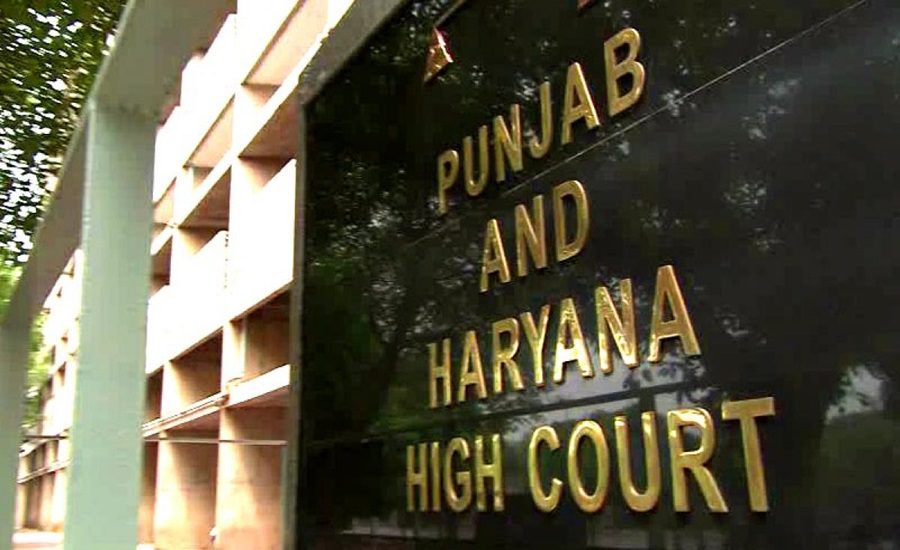
The Punjab & Haryana High Court has banned all tree cutting across Punjab until further orders, citing critically low forest cover and environmental governance failures. The directive follows public interest litigations challenging infrastructure-linked deforestation.
IAS Officer D. Suresh FIR Challenge
Indian Masterminds Stories

CHANDIGARH: In a landmark environmental order aimed at protecting the fragile ecology of Punjab, the Punjab and Haryana High Court has issued a total prohibition on tree cutting in the state of Punjab until further notice. 

The bench, led by Chief Justice Sheel Nagu and Justice Sanjiv Berry, took the extraordinary step after noting that the state’s forest cover remains dangerously low, prompting judicial intervention to check what it said was institutional apathy towards ecological conservation. 

What is the Background of Punjab Tree Cutting Prohibition Order

On December 24, 2025, the High Court passed an interim order in the Praneet Kaur v. State of Punjab and Others case, declaring that no tree of any species or age shall be cut in Punjab without prior permission from the Court until further orders are issued. 

Read also: Supreme Court Appoints Justice Narasimha to Head High-Level AI Intelligence Committee, Aiming for Digital Transformation

The decision followed a batch of public interest litigations (PILs) challenging widespread tree felling in Mohali (SAS Nagar) and other districts for infrastructure and development purposes.

The bench expressed strong displeasure at delays in execution of environmental safeguards, emphasising that the state government’s inaction had reached a level warranting drastic judicial measures. 

Punjab Tree Cutting Prohibition Order: PILs Raise Alarm Over Infrastructure-Driven Tree Felling

Petitioners in the case, including Mohali resident Praneet Kaur, argued that authorities were cutting down hundreds of trees for construction of three major roundabouts and traffic rotaries in the SAS Nagar district. 

Counsel for petitioners highlighted:

  • The tender for cutting 251 mature trees near key junctions was issued with little environmental assessment. 
  • Authorities failed to comply with mandatory environmental appraisal mechanisms before authorising tree removal. 

Another PIL challenged a proposed land swap involving protected forest land in Mohali, alleging it was impermissible under the Punjab Land Preservation Act (1900) and would result in irreversible ecological loss. 

Reasons of Punjab Tree Cutting Prohibition Order

The High Court cited official data from the Union Ministry of Environment, Forest and Climate Change (MoEFCC) to underline the urgency of its intervention. 

The latest information shows Punjab’s forest cover at just about 3.67% of its total geographical area — one of the lowest figures in the country, even trailing dry states like Rajasthan. 

This percentage is well below the national average forest cover target of 33% recommended for ecological stability, underscoring how dire the situation has become in Punjab. 

Ecologists and environmental groups have long pointed out that historical land use shifts — especially during the Green Revolution — led to widespread tree removal across Punjab’s fertile agricultural landscape, leaving the state with a much smaller forest and tree cover compared to other parts of India. 

Major Observations in Punjab Tree Cutting Prohibition Order

The High Court strongly criticised institutional inertia and lack of robust environmental governance from state machinery. It noted that the state’s environmental regulatory mechanisms appeared insufficient to curb ecological harm caused by seemingly routine development projects. 

Observing that conventional administrative processes had failed to safeguard Punjab’s green cover, the Court invoked constitutional principles, including:

  • Article 21 — Right to life (which includes the right to a clean environment),
  • Article 48A — Directive Principles urging protection of forests and wildlife, and
  • Article 51A(g) — Fundamental duties related to environmental protection. 

It also directed the state government to inform all relevant authorities immediately about the order, while the matter is listed for further hearing on January 19, 2026. 
Read also: No Fast-Track Courts for Honour Killing Trials in Delhi, High Court Seeks Government Action to Fill Critical Gap In Social Violence


Indian Masterminds Stories
ADVERTISEMENT
ADVERTISEMENT
Related Stories
ADVERTISEMENT
ADVERTISEMENT
NEWS
BHEL_resized
BHEL Appoints Aruna Gulati as Head of Solar Business Division to Strengthen Renewable Energy Push 
NTPC
NTPC Plans Two 700 MW Nuclear Units in Bihar’s Banka District; ₹25,000 Crore Project Under Feasibility Study 
nmdc resized
PESB Recommends Vivek Nishant Nath for NMDC Director (Commercial) Post After Competitive Selection Process 
ONGC deepwater Rig Tender
ONGC Names Yogish Nayak as New CFO from May 2026, Clears Major Petrochemical JV and Gas Project Funding 
, Nitu Samra
Who Is Nitu Samra? Noida Airport Appoints Her as Interim CEO After BCAS Blocks Christoph Schnellmann
Navi Mumbai Fake IAS Officer Case
From AGMUT to West Bengal: 18 IAS Officers Retire Across Cadres in April 2026 | Full List
Siddh Nath Gupta
West Bengal DGP Siddh Nath Gupta Gets 6-Month Extension Amid Elections | Know His Profile
cm hemant
Jharkhand CM Hemant Soren Launches Data Intelligence Platform for Real-Time Monitoring of Government Schemes
ADVERTISEMENT
ADVERTISEMENT
Videos
vandana
IRS Vandana Sagar: From Academic Excellence to International Tax Leadership and a Champion’s Mindset
Pawan Sareen
Truth Behind India’s LPG Supply Strain Amid Rising Demand and Global Uncertainty 
IAS Saurabh Katiyar
IAS Saurabh Katiyar’s Model of Good Governance: Compassion, Efficiency, and Real Impact
ADVERTISEMENT
UPSC Stories
WhatsApp Image 2026-04-25 at 7.02
Born Without a Forearm, Kerala’s Daughter Secures AIR 167 in UPSC CSE 2025
Born without a forearm, Kerala’s Kajal Raju improved from AIR 910 to AIR 167 in UPSC CSE 2025 after four...
WhatsApp Image 2026-04-24 at 3.47
How Manoj Ramchandra Patil Became His Village’s First Civil Servant
Hailing from drought-hit Jalihal village in Maharashtra, Manoj Ramchandra Patil secured AIR 493 in UPSC...
ankit sakni1
Ankit Sakni Becomes Bijapur’s First Civil Services Success Story
Ankit Sakni from Bhairamgarh, Bijapur, secured AIR 816 in UPSC CSE 2025, becoming the district’s first...
CSR NEWS
ews
DVK Foundation Launches Scholarship Programme for EWS Students at BGIS Vrindavan
BGIS Vrindavan Partners with DVK Foundation for EWS Student Scholarships
ECIL
ECIL Completes CSR Project by Handing Over Retaining Wall at Rastriya Vidya Kendra, Telangana
ECIL Enhances Student Safety and School Infrastructure in Medchal-Malkajgiri District Through Corporate...
ntpc
NTPC WR-I Launches ₹7.64 Crore CSR Project to Renovate IPD Blocks at N.M. Wadia Hospital, Solapur
Renovation of Buildings A, B, and Annex to Strengthen Healthcare Infrastructure, Improve Patient Care,...
ADVERTISEMENT
ADVERTISEMENT
ADVERTISEMENT
Latest
BHEL_resized
BHEL Appoints Aruna Gulati as Head of Solar Business Division to Strengthen Renewable Energy Push 
NTPC
NTPC Plans Two 700 MW Nuclear Units in Bihar’s Banka District; ₹25,000 Crore Project Under Feasibility Study 
ADVERTISEMENT
ADVERTISEMENT
ADVERTISEMENT
ADVERTISEMENT
ADVERTISEMENT
ADVERTISEMENT
ADVERTISEMENT
Videos
vandana
Pawan Sareen
IAS Saurabh Katiyar
ADVERTISEMENT
ADVERTISEMENT