Patna: The Bihar government has introduced a 100-point performance assessment system to rank banks operating in the state, aiming to improve credit disbursement, strengthen financial inclusion and accelerate the achievement of Annual Credit Plan (ACP) targets. IDFC First Bank topped the ranking with 74 points under the new evaluation framework.
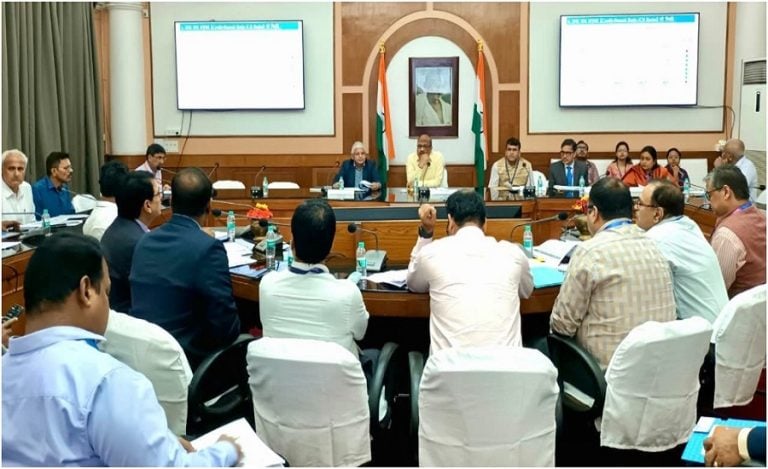
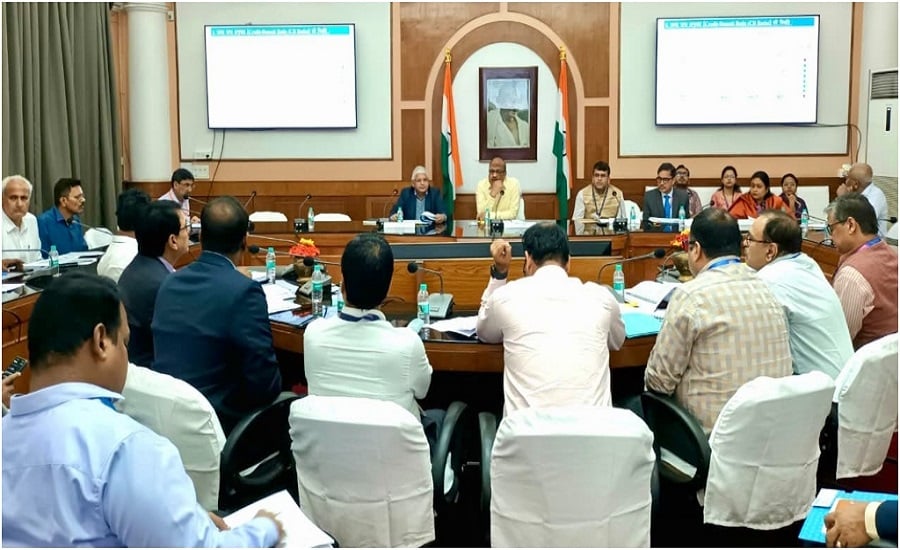
The decision was announced during the third review meeting of the High-Level Committee, chaired by Bihar Development Commissioner Mihir Kumar Singh at the Old Secretariat in Patna on Friday. The meeting reviewed the state’s overall banking performance, Annual Credit Plan targets, Credit-Deposit (CD) ratio and credit flow under various government welfare schemes.
Under the new assessment system, banks have been evaluated against different performance parameters and classified into three categories: Green, Yellow and Red zones. The state government has also expanded its credit monitoring framework by including four additional welfare schemes to enable more accurate tracking of financial assistance.
Bihar Introduces 100-Point Bank Ranking System
For the first time, the Bihar government has introduced a 100-point index to assess the performance of banks operating in the state. The system assigns scores based on different parameters and classifies banks according to their performance.
The three categories are:
- Green Zone: 50 points or more, indicating strong performance.
- Yellow Zone: 40 to 50 points, indicating moderate performance.
- Red Zone: Below 40 points, indicating performance below expectations.
The ranking framework is intended to improve accountability, identify areas requiring intervention and encourage faster credit disbursement to priority sectors of Bihar’s economy.
Read also: Bihar’s ‘Sweet Revolution’: Madhugram Women’s Honey Business Reaches ₹5.4 Crore Turnover
Bihar Sets ₹4.95 Lakh Crore Annual Credit Plan Target for FY 2026–27
The Annual Credit Plan target for Bihar for the financial year 2026–27 has been set at ₹4.95 lakh crore. According to the state government, this amount is approximately four times the state’s annual plan outlay of around ₹1.25 lakh crore for the same financial year.
Against the annual credit target, Bihar achieved credit disbursement of ₹1,89,343 crore by the September quarter, representing 38.25% of the annual target.
Development Commissioner Mihir Kumar Singh highlighted that credit disbursement had increased by ₹46,228 crore compared with the corresponding period of FY 2025–26. The increase reflects growth in lending and economic activity across the state.
The government expects expanded credit flow to support Bihar’s Gross State Domestic Product (GSDP), employment generation and economic development.
MSME and Agriculture Sectors Record Credit Disbursement
The review meeting assessed credit flow across key economic sectors, including micro, small and medium enterprises (MSMEs), agriculture and the priority sector.
The reported figures are as follows:
- MSME Sector: Against a target of ₹1,59,632 crore, credit disbursement reached ₹84,091 crore, achieving 52.68% of the target.
- Agriculture Sector: Against a target of ₹1,57,015 crore, credit disbursement reached ₹43,967.17 crore, achieving 28% of the target.
- Priority Sector: Against a target of ₹3,55,532 crore, credit disbursement reached ₹1,30,619 crore, achieving 36.74% of the target.
The MSME sector recorded the strongest performance among the listed categories. The state government aims to improve lending to agriculture and other priority sectors to support farmers, entrepreneurs, small businesses and employment opportunities.
Bihar’s Credit-Deposit Ratio Remains Above 60%
Bihar achieved a Credit-Deposit (CD) ratio of 60.21% at the end of FY 2025–26, crossing the 60% mark for the first time. The positive trend continued in the current financial year, with the state’s overall CD ratio standing at 60.17% as of September 30, 2026.
According to the review meeting, the state’s total bank deposits reached ₹6,49,225 crore, while outstanding credit increased to ₹3,90,655 crore.
Compared with the previous year, deposits grew by ₹33,797 crore and outstanding credit increased by ₹20,092 crore.
The Development Commissioner stressed that banks must ensure a stronger flow of credit into Bihar’s economy, particularly in agriculture, MSMEs, startups and infrastructure projects.
Credit Flow Under Government Welfare Schemes Reviewed
The High-Level Committee reviewed the implementation of key government schemes aimed at improving access to institutional finance for farmers, small businesses, artisans and other beneficiaries.
Kisan Credit Card Scheme
Under the Kisan Credit Card (KCC) scheme:
- Banks provided ₹8,344.70 crore in credit through 7,37,906 accounts.
- A total of 7,12,383 accounts were renewed.
- Credit disbursement reached ₹605.01 crore for animal husbandry.
- Credit disbursement for fisheries stood at ₹11.12 crore.
The Development Commissioner directed banks to accelerate implementation of the KCC scheme and address delays in processing applications.
PM Surya Ghar Muft Bijli Yojana
Under the PM Surya Ghar Muft Bijli Yojana:
- A total of 13,911 applications were approved in Bihar.
- Financial assistance amounting to ₹28,451.21 lakh, or approximately ₹284.51 crore, was reported in the review.
The scheme aims to support rooftop solar adoption among eligible households.
PM SVANidhi Scheme
Under the PM SVANidhi scheme for street vendors:
- Banks approved 2,17,731 applications.
- Loans amounting to ₹2,09,959 lakh, or approximately ₹2,099.59 crore, were disbursed.
The scheme provides access to institutional credit to help street vendors support and expand their business activities.
PM Formalisation of Micro Food Processing Enterprises and PM Vishwakarma
The review also highlighted progress under two other government schemes:
- PM Formalisation of Micro Food Processing Enterprises Scheme: A total of 2,748 enterprises were connected with financial assistance.
- PM Vishwakarma Scheme: More than 28,625 artisans were brought into the formal financial system, improving their access to institutional credit and other support.
The state government has expanded its credit monitoring framework to track financial assistance under additional welfare schemes and improve implementation.
Bihar Government Directs Underperforming Banks to Accelerate Lending
During the meeting, Development Commissioner Mihir Kumar Singh directed banks performing below the state average of 38.25% to accelerate lending activities and achieve their Annual Credit Plan targets in mission mode during the remaining months of FY 2026–27.
He expressed concern over major banks holding substantial deposits in Bihar but maintaining CD ratios below 50%.
He emphasised that money deposited by the people of Bihar should be channelled back into the state’s development through loans to agriculture, MSMEs, startups and infrastructure projects.
The Development Commissioner also instructed banks to clear pending loan applications as quickly as possible and minimise rejection rates, particularly under the Kisan Credit Card, PM Vishwakarma and street-vendor lending schemes.
Green Zone Banks: IDFC First Bank Tops with 74 Points
Banks scoring 50 points or more have been placed in the Green Zone, indicating strong performance under the assessment system.
The Green Zone banks and their scores are:
- IDFC First Bank: 74 points
- Jammu & Kashmir Bank: 68 points
- RBL Bank: 68 points
- HDFC Bank: 65 points
- Bank of Baroda: 64 points
- Ujjivan Small Finance Bank: 63 points
- Punjab & Sind Bank: 58 points
- Bihar Gramin Bank: 57 points
- Bank of Maharashtra: 53 points
- AU Small Finance Bank: 53 points
- Union Bank of India: 52 points
IDFC First Bank secured the top position with 74 points, followed by Jammu & Kashmir Bank and RBL Bank, which scored 68 points each.
Yellow Zone Banks: ICICI Bank and Bank of India Score 47
Banks scoring between 40 and 50 points have been classified under the Yellow Zone, indicating moderate performance.
The banks in this category are:
- ICICI Bank: 47 points
- Bank of India: 47 points
- Punjab National Bank: 45 points
- Axis Bank: 42 points
- YES Bank: 42 points
- Unity Small Finance Bank: 42 points
- Indian Bank: 40 points
ICICI Bank and Bank of India jointly lead this category with 47 points each, followed by Punjab National Bank with 45 points.
Red Zone Banks: SBI Scores 32, Canara Bank 27
Banks scoring below 40 points have been placed in the Red Zone, indicating performance below expectations under the assessment framework.
The banks listed in this category include:
- Indian Overseas Bank: 37 points
- Central Bank of India: 37 points
- UCO Bank: 35 points
- State Bank of India (SBI): 32 points
- Canara Bank: 27 points
- IDBI Bank: 26 points
- Bandhan Bank: 26 points
- Kotak Mahindra Bank: 26 points
- State Co-operative Bank: 26 points
The Development Commissioner directed underperforming banks to improve their lending performance, reduce pending applications and accelerate credit disbursement to meet the state’s annual targets.
The government intends to use the ranking framework to monitor bank performance more systematically and encourage improved lending outcomes across priority sectors.
Senior Officials Attend High-Level Banking Review Meeting
The third High-Level Committee review meeting was attended by the Principal Secretary of the Finance Department, the Chief Convenor of the State Level Bankers’ Committee, senior general managers of public and private sector banks, and senior officials from relevant state government departments.
The meeting focused on strengthening coordination between banks and government departments, improving credit delivery and ensuring that Bihar’s banking resources support the state’s economic priorities.
Through the new 100-point ranking system and closer monitoring of welfare scheme lending, the Bihar government aims to improve banking performance, expand access to credit and accelerate economic growth during FY 2026–27.
Read also: Bihar Food Safety Department Restricts Sale of ₹2.13 Crore Food Stock at Blinkit Warehouse