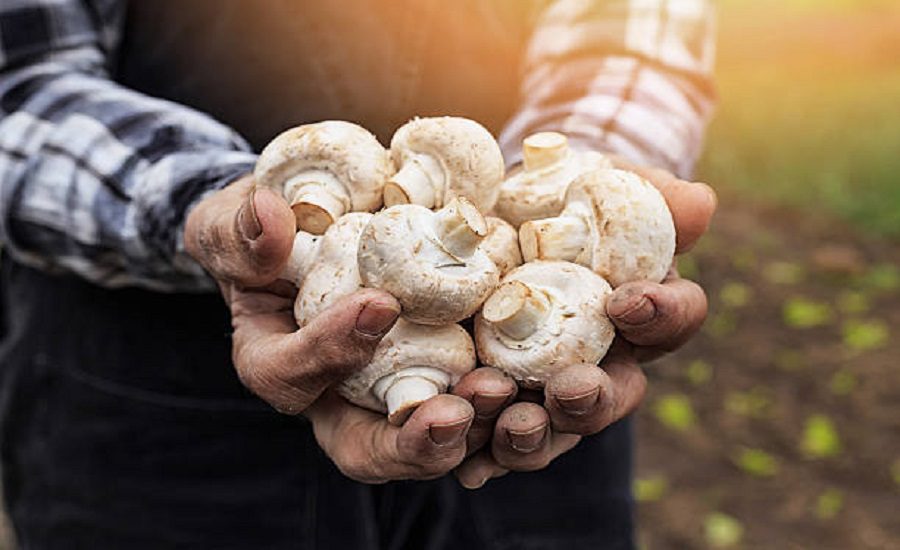
Patna: Bihar has become a frontrunner in mushroom production, reaching an impressive production figure of nearly 45,000 metric tons in 2024-25. The state’s contribution to India’s total mushroom output now accounts for approximately 12%, solidifying its role as a key player in the country’s agriculture sector.
Steady Growth in Mushroom Production
In the fiscal year 2022-23, Bihar’s mushroom production stood at 35,000 metric tons. This figure grew significantly to 42,000 metric tons in 2023-24, and reached nearly 44,930 metric tons in 2024-25. This steady growth is a direct result of the state government’s efforts to support farmers and promote sustainable agricultural practices.
Read also: Bihar Empowers 40 Lakh Poor Families with Pucca Homes under PMAY-G, Transforming Rural Lives
A Boost to Farmer’s Income and Rural Economy
Mushroom cultivation has proven to be an effective way to boost the income of farmers in Bihar. By providing a high-yield, low-cost, and fast-turnaround farming option, mushroom production offers a steady source of income for small and marginal farmers, landless families, women, and rural youth. The cultivation process requires minimal land, low investment, and can be done in a short period of time, making it an ideal choice for rural communities.
Key Areas for Mushroom Cultivation
The state’s Agriculture Minister, Ram Kripal Yadav, highlighted the importance of Bihar’s mushroom production in his recent statement. Key districts such as Muzaffarpur, Patna, Nalanda, Gaya, Vaishali, and West Champaran have emerged as major centers for mushroom cultivation. These regions are now supplying fresh mushrooms not only to local markets but also to neighboring states such as West Bengal, Jharkhand, Uttar Pradesh, and even Nepal, ensuring better market access and competitive pricing for farmers.
Empowering Farmers through Training and Support
The Bihar government has launched several initiatives to promote mushroom farming among local farmers and entrepreneurs. These initiatives include financial assistance, infrastructure development, training programs, and technical collaboration with agricultural universities. As part of the scheme, the government provides subsidies for setting up mushroom cultivation units, along with distribution of mushroom kits and the construction of mushroom units under state and centrally sponsored schemes.
The program has been particularly beneficial for women self-help groups and youth entrepreneurs, as they can set up small-scale mushroom cultivation operations at home. The process also helps in utilizing agricultural waste, such as rice and wheat straw, for composting and growing mushrooms, promoting the concept of “earning from waste.”
Economic and Social Benefits of Mushroom Farming
In addition to providing economic benefits, mushroom farming offers multiple social advantages. The activity creates new local employment opportunities in sorting, packaging, storage, transportation, and processing. Farmers are also benefiting from the supplementary income generated through mushroom cultivation, which helps them meet daily household expenses, including healthcare and education.
Government’s Role in Promoting Mushroom Production
To further encourage mushroom cultivation, the state government is focusing on enhancing infrastructure, such as the establishment of climate-controlled facilities for mushroom farming, as well as expanding training opportunities for interested farmers, self-help groups, and youth entrepreneurs. The government is also facilitating access to technical guidance and financial support through local Agricultural Science Centers (KVKs), block/district horticulture offices, and recognized training units.
Encouraging Wider Participation in Mushroom Cultivation
Minister Yadav has urged farmers and young entrepreneurs to take advantage of the ongoing training programs and the various schemes available to them. Interested parties are encouraged to contact their nearest agricultural science center, block or district horticulture offices, or authorized training organizations to get more details on how they can participate in this lucrative and sustainable agricultural activity.
A Sustainable Future for Bihar’s Farmers
Bihar’s success in mushroom cultivation serves as a model for sustainable agricultural development. With minimal land and investment requirements, and a strong government support system, mushroom farming is quickly becoming a staple agricultural activity that boosts local economies, improves the livelihoods of farmers, and contributes to the state’s economic growth.
By focusing on this high-yielding agricultural practice, Bihar is not only enhancing its farmers’ income but also paving the way for a greener, more self-sufficient future.
Read also: Bihar Launches Chief Minister Artist Pension Scheme; Senior Artists and Young Talents Honoured