Patna: Bihar is preparing to expand its Solar Village initiative, with villages likely to be ranked based on the number of operational solar systems installed across them. Villages that perform strongly under the proposed assessment could receive the Solar Village tag along with incentives from the electricity company.
The initiative seeks to increase the use of renewable energy in rural Bihar by encouraging more households and public institutions to install solar systems. Unlike a model based only on solar street lights, the proposed assessment will focus on installations that contribute directly to electricity generation and use.
Homes, Schools and Health Centres to Shape Rankings
Under the proposed Solar Village framework, several types of solar installations will be considered while assessing villages.
These are expected to include:
- Solar systems installed in schools
- Rooftop solar panels installed at residential properties
- Solar systems installed at health centres
- Rooftop installations supported through the Pradhan Mantri Surya Ghar Muft Bijli Yojana
The growing adoption of rooftop solar by households could therefore become an important factor in determining a village’s position in the proposed ranking.
The approach is designed to encourage solar adoption not only in individual homes but also across key public institutions that serve rural communities.
Read Also: Bihar Plans Revival of Closed Sugar Mills, 25 New Units to Boost Industry and Rural Employment
Solar Systems to Be Linked With the Grid
According to the power company, newly installed solar systems are being connected to the electricity grid as part of the initiative.
The focus is on expanding solar generation across rural areas while integrating new installations with Bihar’s existing electricity network. This approach allows solar systems at residential and institutional locations to contribute to the broader power system rather than operating as isolated installations.
However, existing solar street lights will not be counted while assessing villages for the proposed Solar Village ranking.
The assessment will instead focus on solar systems that support electricity generation and consumption at homes and public institutions.
Complete Solar-Powered Villages Not Yet Feasible
Officials involved in the initiative have indicated that making an entire village dependent on solar power is not immediately feasible.
Instead, Bihar is taking a gradual approach by increasing the number of solar installations across villages and connecting them with the grid.
Solar systems are being introduced at different levels, including homes, schools and health centres. As their numbers increase, villages could gradually move closer to the proposed Solar Village model.
This approach also allows the state to expand solar adoption without requiring an immediate shift away from the existing electricity infrastructure.
Bihar’s Earlier Solar Village Experiments
Bihar has previously experimented with solar-based electricity solutions in rural areas.
In 2014, Dharnai village in Jehanabad district received a solar micro-grid with support from various organisations. The project attracted attention as an early attempt to provide electricity through renewable energy in a rural setting.
However, the project was later discontinued amid maintenance-related challenges.
More recently, Doiya village in Noorsarai block of Nalanda district has been developed as a solar model village, providing another example of Bihar’s efforts to expand renewable energy in rural areas.
Modhera Shows What a Solar Village Can Look Like
Bihar’s proposed initiative also comes against the backdrop of solar village projects in other parts of the country.
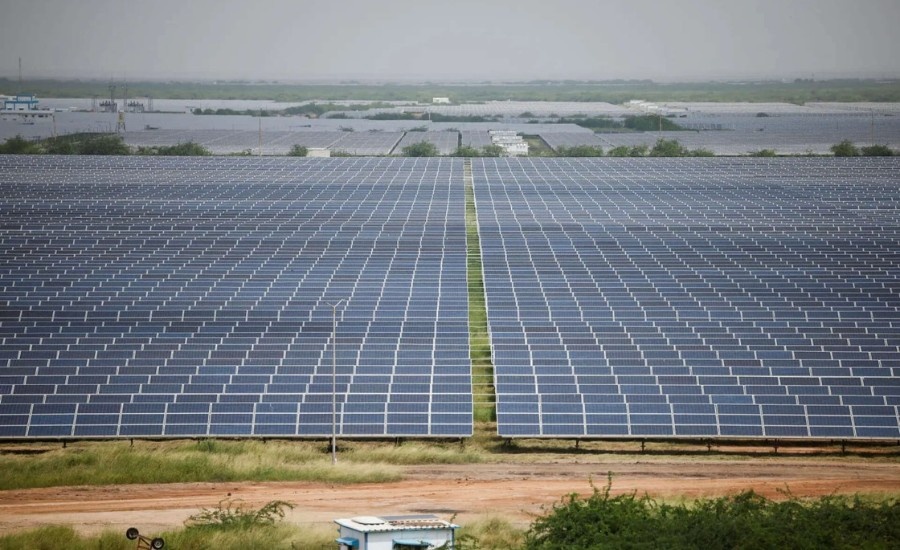
Modhera in Gujarat has emerged as a prominent example of a solar-powered village model. The village has a ground-mounted solar power plant along with a battery energy storage system.
Solar panels have also been installed on residential rooftops. Together, solar generation, battery storage and household-level installations contribute to meeting the village’s electricity requirements.
The Modhera experience demonstrates how generation, storage and rooftop solar can work together at the village level.
Top-Performing Villages Could Get Incentives
Under Bihar’s proposed system, the number of eligible operational solar systems in a village will form an important basis for assessment.
Villages that perform strongly could be recognised as Solar Villages and may receive incentives from the electricity company. The incentive-based approach is intended to encourage local participation and motivate more households and public institutions to adopt solar power.
For rural residents, greater rooftop solar adoption could also create opportunities to reduce dependence on conventional electricity sources while contributing to cleaner energy generation.
Bihar’s Solar Village plan is therefore focused on building solar capacity gradually rather than attempting an immediate transition to completely solar-powered villages.
If the proposed ranking and incentive mechanism gains traction, it could encourage competition among villages and accelerate the installation of solar systems across rural Bihar. The broader objective is to bring renewable energy closer to households and essential public institutions while strengthening the state’s transition towards cleaner and more distributed power generation.
Read Also: Bihar Plans Revival of Closed Sugar Mills, 25 New Units to Boost Industry and Rural Employment