New Delhi: In a breakthrough that strengthens India’s scientific, industrial, and strategic capabilities, the Department of Atomic Energy (DAE) has launched the country’s first indigenously developed Certified Reference Material (CRM) for Rare Earth Elements (REE). Named Ferrocarbonatite (BARC–B1401), the CRM marks a transformative step toward technological self-reliance and aligns strongly with India’s AtmaNirbhar Bharat vision.
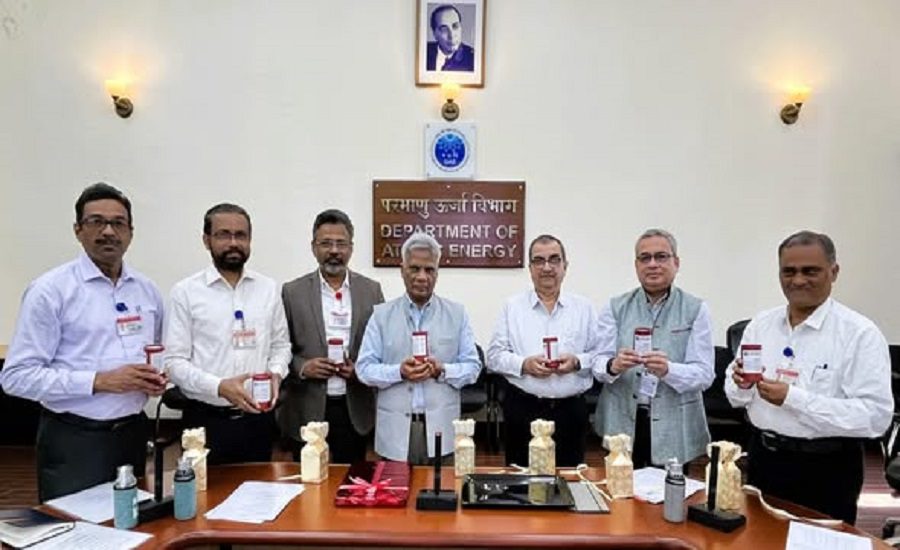
The historic launch was performed by Dr. Ajit Kumar Mohanty, Secretary, DAE and Chairman, Atomic Energy Commission (AEC), in the presence of senior DAE officials, including Mr. Vivek Bhasin, Director, Bhabha Atomic Research Centre (BARC). The event showcased DAE’s leadership in building high-end scientific capabilities crucial for national progress.
A Milestone in India’s Rare Earth Ecosystem
The newly released CRM positions India as a global contender in the highly specialized field of rare earth analysis. Rare Earth Elements are critical components in renewable energy systems, advanced electronics, defence technologies, electric vehicles, magnets, and emerging strategic industries.
With this launch, India joins an exclusive group of only four countries worldwide capable of producing ISO-compliant REE CRMs—an achievement that significantly boosts India’s capacity for accurate material characterization and secure supply chains.
Read also: Gati Shakti Vishwavidyalaya Signs MoU with DRDO to Develop Smart Defence and Logistics Technologies
A Collaborative Effort of BARC and AMD
The development of Ferrocarbonatite (BARC–B1401) is the result of a high-level collaboration between two premier DAE units based in Hyderabad:
- National Centre for Compositional Characterisation of Materials (NCCCM), BARC
- Atomic Minerals Directorate for Exploration and Research (AMD)
Both institutions brought together advanced expertise in material science, mineral analysis, and exploration to create a CRM of global relevance. Their work ensures that Indian laboratories, industries, and research institutions can now access world-class reference standards for REE analysis.
ISO-Compliant and Globally Relevant
Ferrocarbonatite (BARC–B1401) has been produced in accordance with strict ISO guidelines, ensuring international credibility and analytical precision. The CRM contains certified values for:
- 13 Rare Earth Elements
- 6 major elements
This breakthrough will significantly improve the accuracy of measurements used in mineral exploration, defence applications, high-tech manufacturing, and advanced scientific research. It also strengthens India’s ability to support global supply chains by reducing dependence on foreign CRMs.
High-Level Participation Underscores National Importance
The launch event saw the participation of prominent DAE leaders and scientists, including:
- Mr. Dheeraj Pande, Director, AMD
- Dr. A.C. Bhasikuttan, Associate Director, Chemistry Group, BARC
- Mr. K. Jayakumar, Controller, BARC
- Mr. Daniel P. Babu, Head, TT&CD, BARC & Head, PA&MID, DAE
- Dr. K. Dash, Head, NCCCM–BARC
Their presence highlighted the coordinated national effort to strengthen India’s rare earth research capabilities and ensure secure access to critical materials essential for future industries.
Strengthening India’s Scientific and Strategic Edge
The introduction of this indigenous CRM will transform India’s REE ecosystem by enhancing the reliability of analytical laboratories, supporting industrial innovation, and strengthening national defence readiness.
It marks a major advancement toward creating a self-sufficient and robust rare earth supply chain, a critical requirement for India’s long-term economic resilience and technological leadership.
About the Department of Atomic Energy (DAE)
The Department of Atomic Energy (DAE) is India’s premier agency overseeing atomic energy research, nuclear power development, and advanced scientific innovation. With multiple research centers and specialized units such as BARC and AMD, DAE plays a vital role in strengthening national security, fostering scientific excellence, and promoting indigenous technological progress across strategic sectors.