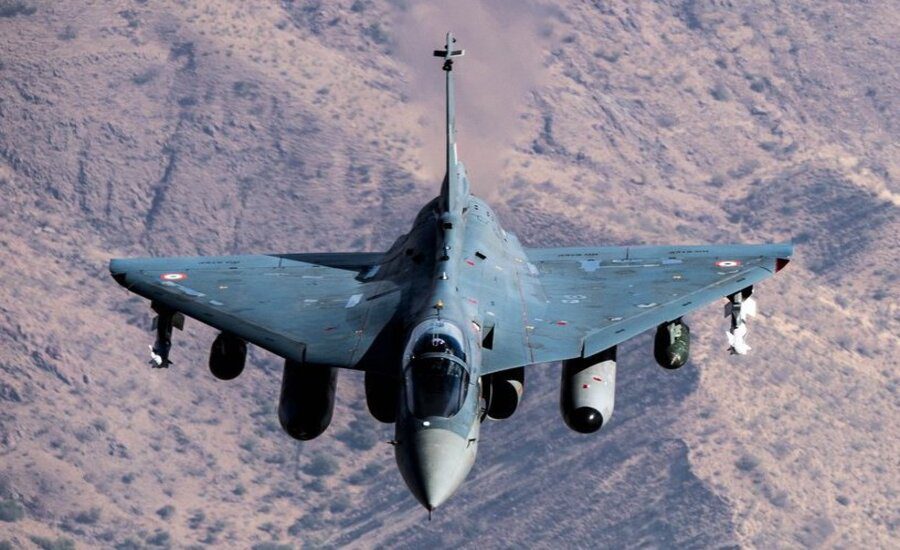
New Delhi: India is rapidly strengthening its deep strike capability, a key part of modern air warfare that allows the Indian Air Force (IAF) to hit enemy targets far behind the front lines. The Deep Strike Evolution of India’s fighter aircraft—from Tejas Mk2 to the Advanced Medium Combat Aircraft (AMCA)—marks a major step toward a stronger and more self-reliant air combat force. These next-generation fighter jets are being developed with advanced sensors, powerful engines, and long-range precision weapons. Together, they aim to replace older aircraft and provide India with modern capabilities for long-range precision strikes and high-intensity combat operations.
Indigenous AMCA Programme: What Is “Deep Strike” in Modern Air Warfare?
Deep strike refers to long-range attacks on critical enemy infrastructure, such as command centers, airbases, missile sites, and logistics hubs far from the battlefield.
Key objectives of deep strike missions include:
- Destroying strategic enemy assets
- Disrupting supply and command systems
- Weakening enemy air defenses
- Creating an advantage before ground combat
Modern deep strike operations rely on precision-guided weapons, stealth aircraft, advanced sensors, and network-centric warfare systems.
India is now building this capability through a new generation of indigenous fighter jets.
Tejas Mk2: The Backbone of India’s Future Strike Fleet
The Tejas Mk2, also known as the Medium Weight Fighter (MWF), is the next step after the Tejas Mk1 series. It is designed to be larger, more powerful, and capable of carrying heavier weapons for strike missions.
Key Features of Tejas Mk2
- Powered by the GE F414 engine, providing higher thrust and improved performance
- Equipped with 11 weapon stations for carrying missiles, bombs, and other weapons
- Uses the Uttam AESA radar and advanced sensors for better target detection
- Integrated electronic warfare suite and infrared search-and-track system
- Supports network-centric warfare through secure tactical data links
These improvements allow the aircraft to carry heavier payloads over longer distances and operate in complex combat environments.
Role in the Indian Air Force
The Tejas Mk2 is expected to replace several older aircraft types in the IAF, including:
- Jaguar strike aircraft
- Mirage-2000 fighters
- MiG-29 variants
This will significantly strengthen India’s strike capability while reducing dependence on imported platforms.
Indigenous AMCA Programme: Long-Range Precision Weapons Integration
To perform deep strike missions effectively, the Tejas Mk2 will be integrated with long-range precision missiles and smart munitions.
Such weapons allow fighter jets to:
- Attack targets hundreds of kilometers away
- Strike while staying outside enemy air defenses
- Increase mission success with high accuracy
The combination of advanced sensors, precision weapons, and improved payload capacity will transform the Tejas Mk2 into a powerful strike aircraft.
What is Indigenous AMCA Programme
While Tejas Mk2 represents a major upgrade, India’s ultimate deep strike capability will come from the Advanced Medium Combat Aircraft (AMCA).
AMCA is India’s fifth-generation stealth fighter jet currently under development.
Key Features of AMCA
- Stealth design to reduce radar detection
- Internal weapons bays for stealth strike missions
- Artificial intelligence assisted sensor fusion
- Advanced electronic warfare systems
- High-power twin engines for superior performance
These technologies will allow AMCA to penetrate heavily defended airspace and carry out strategic strikes with minimal detection.
Development Timeline
According to official programme timelines:
- Prototype rollout expected around 2026–2027
- First flight planned around 2028
- Service entry expected around 2034
This timeline shows India’s long-term strategy to build a fully indigenous fifth-generation fighter capability.
Building a Layered Air Strike Capability
India’s future air power strategy is based on a layered fighter fleet.
1. Tejas Mk1A
- Light combat fighter
- Focus on air defense and limited strike roles
2. Tejas Mk2
- Medium weight fighter
- Long-range strike and multirole operations
3. AMCA
- Stealth fifth-generation aircraft
- Deep penetration and strategic strike missions
This layered approach will allow the Indian Air Force to handle different types of combat scenarios effectively.
Importance of Fighter Aircraft for India
Developing domestic fighter aircraft offers several strategic advantages:
Strategic independence: India reduces reliance on foreign weapons systems.
Technology development: Programs like Tejas and AMCA boost India’s aerospace ecosystem.
Cost control: Indigenous production lowers long-term operational costs.
Export potential: Future variants may be offered to friendly countries.
These benefits align with India’s “Atmanirbhar Bharat” defence manufacturing strategy.