New Delhi: The Indian Army’s Aviation Corps is poised to receive the final batch of Boeing AH-64E Apache attack helicopters this month, marking a significant strengthening of India’s offensive and deterrence capabilities along sensitive frontiers.
This development completes the delivery of six Apache helicopters contracted from the United States, bolstering the Army’s ability to perform precision strikes, close-air support, and reconnaissance in high-threat environments.
Background of Indian Army Boeing AH-64E Apache Attack Delivery
In February 2020, the Government of India signed a contract worth approximately ₹5,691 crore (about $600 million) with the United States for six advanced AH-64E Apache attack helicopters specifically for the Indian Army. These helicopters are in addition to the Apache fleet already operated by the Indian Air Force, and represent a strategic expansion of the Army’s own aviation strike capability.
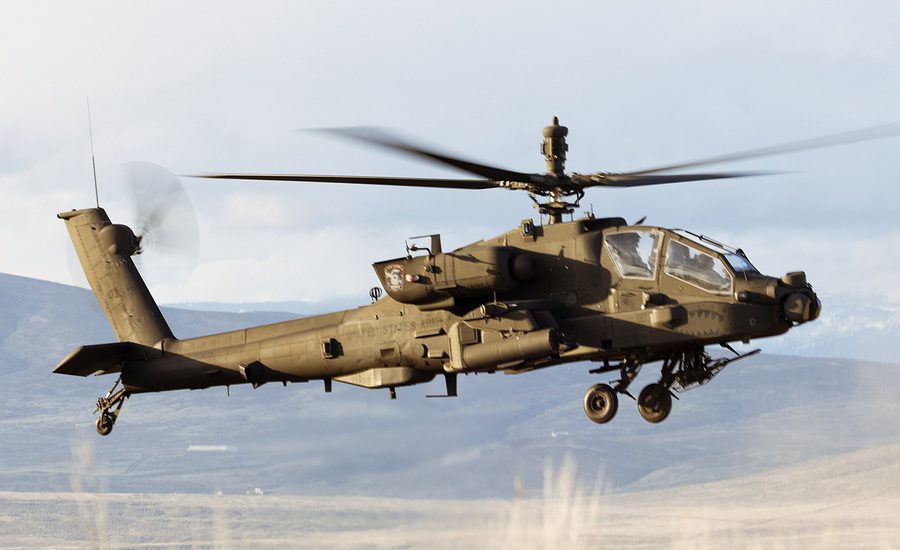
The Apache AH-64E, built by Boeing in the United States, is widely regarded as one of the world’s most advanced attack helicopters — often dubbed a “flying tank” due to its survivability, powerful armament, and battlefield versatility.
Indian Army Boeing AH-64E Apache Attack Delivery Timeline
Although the contract was signed in 2020, deliveries were repeatedly postponed due to supply-chain constraints, technical hold-ups, and global aerospace production challenges. The initial plan had envisioned all six helicopters arriving much earlier, with the first three originally slated for delivery in 2024. However, these timelines extended by over a year.
Finally, the first batch of three Apache helicopters was delivered in July 2025. They were flown into India — transported aboard heavy aircraft — and after assembly and inspection were earmarked for deployment with the Army’s Aviation Corps.
Final Batch of Indian Army Boeing AH-64E Apache Attack Delivery Expected This Month
According to defence reports, the remaining three AH-64E helicopters are expected to arrive in India by December 2025, completing the six-unit order. Once delivered and made operational, the squadron will be fully equipped to undertake complex missions, significantly enhancing India’s military readiness.
Capabilities and Combat Edge of Apache AH-64E
The Apache AH-64E represents a major escalation in the Indian Army’s offensive aviation portfolio:
Advanced Armament: Equipped with AGM-114 Hellfire missiles, Stinger air-to-air missiles, 30mm chain guns, and precision-guided rockets, the Apache can accurately engage tanks, light vehicles, and fortified positions.
All-Weather, Day-Night Operations: High-resolution sensors, night vision systems, and integrated targeting suites allow the helicopter to operate in diverse climatic conditions — including at night and in poor visibility.
Networked Battlefield Role: The AH-64E’s modern avionics enable it to link with battlefield sensors, UAVs, and other military assets, enhancing situational awareness and facilitating coordinated strikes.
This combination makes the Apache particularly effective in open terrain and desert sectors, such as India’s western border with Pakistan, where armoured conflicts and fast-maneuver engagements remain a concern.
Strategic Deployment: Focus on Western Frontier
Once the full complement of six helicopters is inducted, they are expected to be based at Jodhpur, where the Indian Army has already cultivated an operational attack helicopter squadron. Jodhpur’s proximity to the India-Pakistan border — along Rajasthan’s desert terrain — underscores the strategic priority of these assets.
These Apaches will offer close air support, anti-armour strikes, and rapid reaction capabilities in sectors where speedy battlefield response is critical. Their presence adds to India’s deterrence posture, complementing other Army Aviation and Air Force platforms.
Integration With Indigenous Platforms
While the Apache significantly enhances strike capabilities, India continues to pursue indigenous rotary-wing development. Platforms such as the HAL Prachand attack helicopter and the armed version of HAL Rudra contribute to the Army and Air Force’s broader aviation mix with roles tailored for high-altitude and diverse geographies.
This blend of home-grown and advanced imported platforms reflects India’s dual strategy: technological self-reliance alongside selective acquisition of cutting-edge systems.