BENGALURU: In a significant advance toward modernising its aerial surveillance capabilities, the Indian Army has signed a contract with U.S. defence technology company Shield AI to acquire the cutting-edge V-BAT autonomous unmanned aircraft systems (UAS) along with licences for the firm’s Hivemind autonomy software.
Details of Indian Army V-BAT Drones Procurement
Under the agreement, the Indian Army will receive:
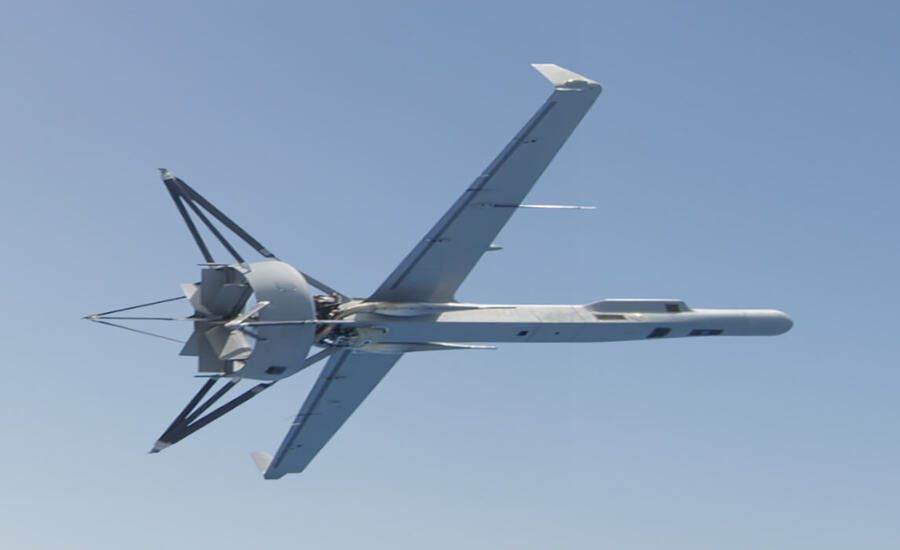
- V-BAT vertical take-off and landing (VTOL) unmanned aircraft systems – capable of launching without runways, making them suitable for diverse and rugged environments.
- Licences for Shield AI’s Hivemind autonomy software and development kit (SDK) – allowing defence forces and select Indian partners to build, deploy, and test autonomous mission solutions.
Read also: Explained: Defence Procurement Board’s Approval for 114 Rafale Jets and Its Strategic Impact
This combination of hardware and software will enable autonomous operations with minimal human input — a vital capability for modern defence strategies.
Importance of V-BAT Drones for India
The V-BAT drone is designed for:
- Intelligence, surveillance, and reconnaissance (ISR) missions in high-threat zones.
- Long-endurance operations with over 12 hours of flight capability.
- Flexible take-off and landing from confined locations such as rooftops, ship decks, or forward bases.
The introduction of these systems positions the Indian Army to better monitor borders, respond to emerging threats, and gather real-time battlefield data without relying solely on manned aircraft or ground forces.
Hivemind: The AI Behind Autonomous Flight
Shield AI’s Hivemind software equips unmanned systems with the ability to:
- Sense surroundings autonomously
- Make decisions in real time
- Navigate complex terrains and contested airspace
- Avoid threats and complete missions with limited human control
This software enables drones to operate even when satellite GPS is unavailable or under electronic warfare conditions — a critical advantage in modern battle scenarios.
Supporting India’s Defence Indigenisation Goals
The deal builds on an existing industrial partnership that will boost India’s domestic defence manufacturing:
- In late 2025, JSW Defence began construction of a manufacturing facility near Hyderabad to produce next-generation unmanned aerial systems, including the V-BAT.
- This facility is intended to support local assembly, testing, and future production, aligning with India’s broader defence indigenisation strategy and efforts to reduce reliance on imported systems.
The project is expected to strengthen India’s role as a production hub for advanced UAS technologies, creating jobs and fostering high-tech skills.
What is the impact of Indian Army V-BAT Drones Procurement
Analysts see this development as a major boost to India’s operational readiness and technological capabilities:
- Enhances border surveillance and strategic reconnaissance
- Provides AI-enabled autonomy to quickly adapt to real-time battlefield scenarios
- Offers greater situational awareness across diverse geographic regions
- Reduces logistical burden through runway-free operations and extended endurance
The Indian Army V-BAT Drones Procurement comes at a time when unmanned systems play an increasingly important role in modern warfare, especially in contested environments such as the India–China border and volatile border regions.