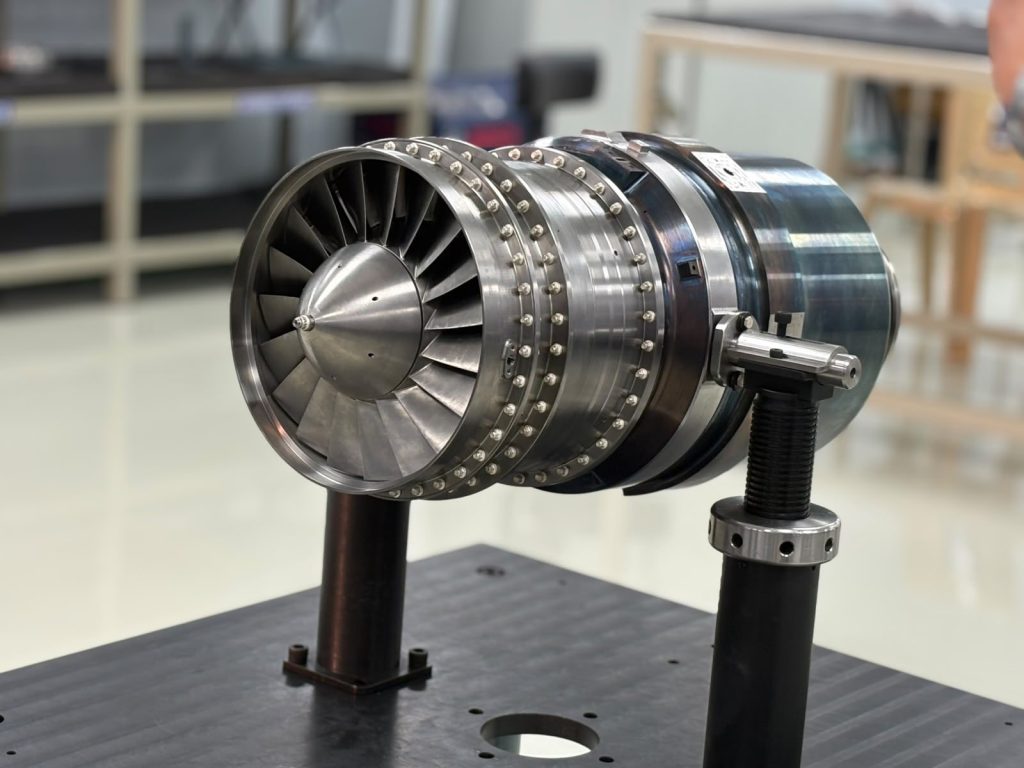
New Delhi: In a significant breakthrough for India’s indigenous defence and aerospace capabilities, the Defence Research and Development Organisation (DRDO) has successfully developed the country’s first indigenous Expendable Turbo Jet Engine in the 350 kg thrust class. The achievement marks a major milestone in India’s quest for self-reliance in advanced jet engine technology—an area mastered by only a handful of nations worldwide.
Designed by DRDO’s Gas Turbine Research Establishment (GTRE) and manufactured by Hyderabad-based Azad Engineering, the successful development reflects the growing synergy between India’s defence research establishments and domestic industry.
Major Milestone in Indigenous Jet Engine Technology
The newly developed 350 kg thrust class Expendable Turbo Jet Engine has been designed by GTRE, one of DRDO’s premier laboratories responsible for indigenous gas turbine engine technologies.
After years of research, precision engineering and advanced manufacturing, the engine was successfully realised and delivered to GTRE by Azad Engineering on July 22, 2026.
Read Also: DRDO Successfully Tests Kusha Missile, Boosting India’s Indigenous Air Defence Capability
The development represents a landmark achievement in India’s aerospace ecosystem and significantly strengthens the country’s indigenous capability in one of the world’s most complex engineering domains.
Azad Engineering Played Key Manufacturing Role
DRDO had identified Azad Engineering, Hyderabad, as its industry partner for manufacturing and assembly of the engine.
The successful delivery demonstrates the increasing capability of Indian private industry to manufacture highly sophisticated defence systems in collaboration with government research organisations.
The project highlights the growing role of industry participation in India’s defence manufacturing ecosystem under the government’s push for Aatmanirbhar Bharat.
Jet Engine Technology Among the World’s Most Complex
Jet engine development is widely regarded as one of the most challenging engineering achievements due to the demanding requirements of:
- Advanced metallurgy
- Precision manufacturing
- High-temperature materials
- Complex aerodynamic design
- Extremely tight quality standards
Only a limited number of countries possess the capability to independently design and manufacture advanced jet engines.
The successful indigenous development of the expendable turbo jet engine therefore represents a significant technological leap for India’s defence sector.
Engine Handed Over to DRDO Leadership
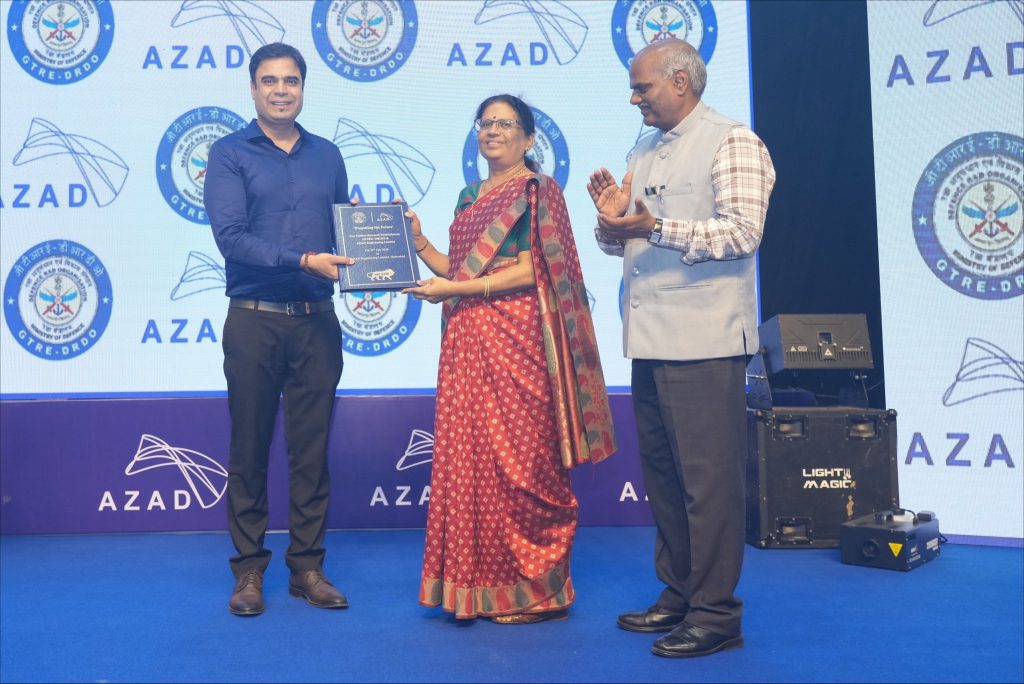
The engine was formally handed over by Azad Engineering CEO Rakesh Chopdar to:
- Dr K. Rajalakshmi Menon, Distinguished Scientist and Director General (Aeronautical Systems), DRDO
- Dr S.V. Ramanamurty, Outstanding Scientist and Director, GTRE
The handover marked the successful completion of the design, manufacturing and assembly phase of the project.
Defence Secretary Hails Industry-DRDO Collaboration
Defence Secretary, Secretary Department of Defence R&D, and DRDO Chairman Rajesh Kumar Singh congratulated GTRE and Azad Engineering for achieving the milestone.
He praised the close partnership between DRDO and industry, describing it as instrumental in transforming the vision of indigenous jet engine development into reality.
According to him, the successful development reflects the growing technological maturity of India’s defence industrial base and reinforces the country’s capability to design and manufacture advanced aerospace systems domestically.
Boost to India’s Aerospace and Defence Ecosystem
The successful development of the indigenous expendable turbo jet engine is expected to provide a significant boost to India’s defence manufacturing ecosystem by reducing dependence on imported propulsion technologies.
The achievement also underlines the growing capabilities of Indian industry in producing complex aerospace systems and demonstrates the success of collaborative innovation between DRDO laboratories and private manufacturers.
As India continues to invest in indigenous propulsion technologies, the breakthrough is expected to pave the way for the development of more advanced engines for future defence and aerospace applications.
Read Also: Project Kusha: DRDO Issues RFP for M3 Interceptor Canister Materials Before Flight Trials