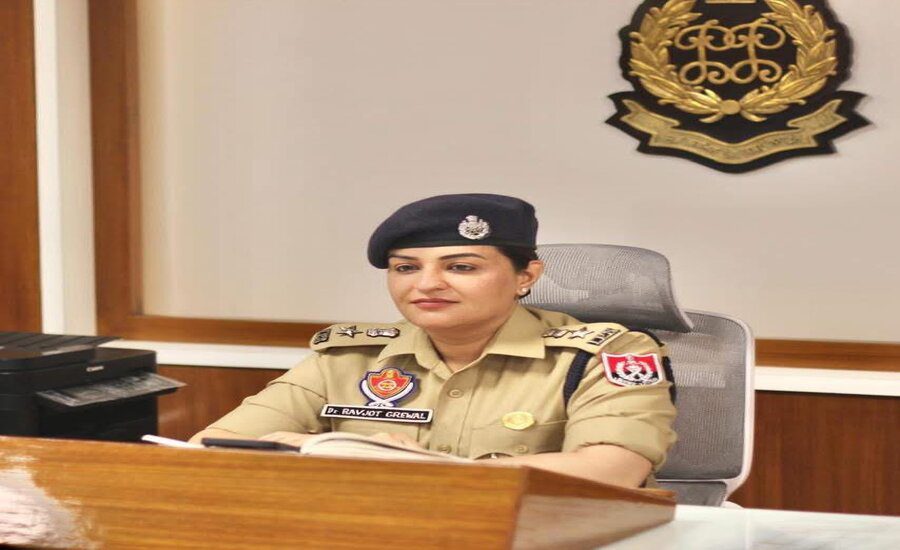
Chandigarh: On December 9, 2025, the Election Commission of India (ECI) formally requested the Punjab government to submit the chargesheet against suspended Ravjot Kaur Grewal — formerly the Senior Superintendent of Police (SSP) in Tarn Taran — as part of its ongoing inquiry into alleged misuse of police machinery during the recent by-election.
The suspension and demand for a chargesheet come amid serious allegations from opposition party Shiromani Akali Dal (SAD) that police under Grewal’s command registered “false” FIRs, arrested party workers and used state machinery to curb their activities — effectively compromising the fairness of the electoral process in the border district.
As the political storm intensifies, the EC’s move to seek a formal chargesheet signals that the matter could escalate well beyond a mere suspension — potentially shaping broader debates over institutional impartiality, election integrity, and police accountability in Punjab.
Background of The Tarn Taran Bypoll Row
The controversy centers around the assembly by-election in Tarn Taran, scheduled for November 11, 2025. Just three days ahead — on November 8 — ECI directed the immediate suspension of SSP Ravjot Kaur Grewal.
Grewal assumed the post of Tarn Taran SSP only in September 2025. Her abrupt suspension indicates that the EC considered the complaints raised against her to be serious enough to warrant removal — especially given the delicate pre-poll environment and the need for strict neutrality.
Tarn Taran Bypoll Row: Key Allegations by SAD
The main impetus for the action was a petition filed by SAD president Sukhbir Singh Badal, who alleged that Grewal and other police officers were misusing their power to target SAD workers and leadership.
Specifically, the complaints included:
- Registration of “false” FIRs against party workers.
- Illegal arrests of workers, purportedly to intimidate and prevent them from campaigning.
- Use of official police machinery to favor the ruling Aam Aadmi Party (AAP), thereby influencing the outcome of the bypoll.
In addition to SAD’s complaint, feedback from a police observer — appointed by EC — was also taken into account. The EC’s suspension order cited “serious lapses in impartial conduct” under the model code of conduct (MCC).
Early Defense & Internal Probe
Following the suspension, Punjab’s Punjab Police defended its actions. On November 25, the state’s Director General of Police (DGP), Gaurav Yadav, appeared before the EC to explain the police conduct during the bypoll.
Moreover, a probe by the then Ferozepur-range Deputy Inspector General of Police (DIG), Harmanbir Singh Gill, submitted on the same day as the suspension (November 8), reportedly exonerated the Tarn Taran police, deeming the allegations by SAD “baseless.”
Still, the EC was not satisfied — prompting its December 9 letter requesting the formal chargesheet against Grewal.
The Importance of EC December 9 Notice on Tarn Taran Bypoll Row
In its letter addressed to Punjab’s Chief Secretary, the EC asked the state government to provide a copy of the chargesheet issued against Grewal “for further necessary action.”
Administrative Limbo
As of now, the state’s Additional Chief Secretary (Home), Alok Shekhar, when contacted about the chargesheet’s status, expressed inability to comment, citing lack of competence on the issue and directed queries to the Chief Secretary. However, the Chief Secretary K A P Sinha was reportedly abroad on a government delegation in South Korea at the time of the inquiry.
This delay, whether procedural or bureaucratic, has added uncertainty — raising questions over when, or even whether, the Punjab government will comply with the EC’s request.
Significance of the Chargesheet Demand
The demand for the chargesheet transforms the matter from a provisional suspension to the possibility of formal penal or disciplinary proceedings. It indicates that the EC is not merely interested in policing the by-election but may hold personnel accountable — a message that could ripple across state bureaucracy and electoral oversight mechanisms.
It also underscores growing concerns about misuse of executive/police power during elections in Punjab — and shapes perceptions not just about fairness in Tarn Taran but about the impartiality of institutions during electoral contests.
Tarn Taran Bypoll Row: Reactions & Political Fallout
From SAD: The party has repeatedly demanded a “high-level independent inquiry” into all FIRs and arrests during the bypoll. They argue that what happened in Tarn Taran was not a mere case of overzealous policing — but a coordinated attempt to tilt the playing field.
From Punjab Police / State Government: The police and home department have defended their actions, and pointed to the internal DIG-level probe clearing local officers. With the DGP already having appeared before EC, the state seems to be adopting a wait-and-see approach — at least until the chargesheet is made public.
From EC / Election Oversight Circles: The EC’s insistence on the chargesheet reflects enhanced vigilance over election-related complaints — especially in sensitive constituencies like border-districts, where allegations of bias or misuse carry heavy political consequences.
Broader Implications of Tarn Taran Bypoll Row
1. Election Integrity & Institutional Trust: The demand for a chargesheet against a high-ranking police officer like Grewal demonstrates that the EC is willing to probe not just candidates or parties — but even enforcement authorities, when complaints of bias surface. For voters and civil society, this can strengthen confidence that electoral fairness is being actively guarded.
2. Precedent for Police Accountability: If followed through, the proceedings could set a precedent for holding police officials accountable for actions during elections — potentially deterring future misuse of power in politically sensitive periods.
3. Political Fallout in Punjab: Given Punjab’s polarized political environment, the case could inflame tensions between SAD, the ruling AAP, and the bureaucracy — with possible ramifications for upcoming elections and public perception of law-and-order neutrality.
4. Institutional Oversight & Autonomy: The case raises questions about the boundaries of state authority and the autonomy of institutions. Should police actions during elections automatically be subordinated to electoral oversight? Or does this risk undermining routine policing autonomy? The debate is likely to intensify if the EC pursues formal sanctions.
About Tarn Taran SSP Ravjot Kaur Grewal
Ravjot Kaur Grewal is a 2012-batch Indian Police Service (IPS) officer of the Punjab cadre known for her administrative discipline, ground-level policing experience, and leadership across several sensitive districts in the state. Over the years, she has served in key law-and-order and crime-prevention roles, earning a reputation for efficiency, strict fieldwork, and people-centric policing.
Grewal has previously held postings such as SP Headquarters, SP Vigilance, and SSP in various districts, where she led operations related to anti-drug drives, crime control, and community outreach. Her career has been marked by a focus on maintaining public safety, strengthening police–citizen relations, and streamlining internal policing systems.
What Comes Next
The Punjab government’s response — whether and when the chargesheet is submitted — will be watched closely. Any delay could invite further criticism or legal challenge.
If the chargesheet is produced and the EC deems it adequate, formal disciplinary or legal proceedings may follow against Grewal (and possibly other officers, if implicated).
The case may prompt calls for broader reforms: clearer guidelines for policing during elections, better mechanisms for independent monitoring, and stronger safeguards against political misuse of law-enforcement.
Political parties — especially opposition parties — may use the case to demand accountability beyond Tarn Taran, potentially triggering similar inquiries or complaints in other districts.