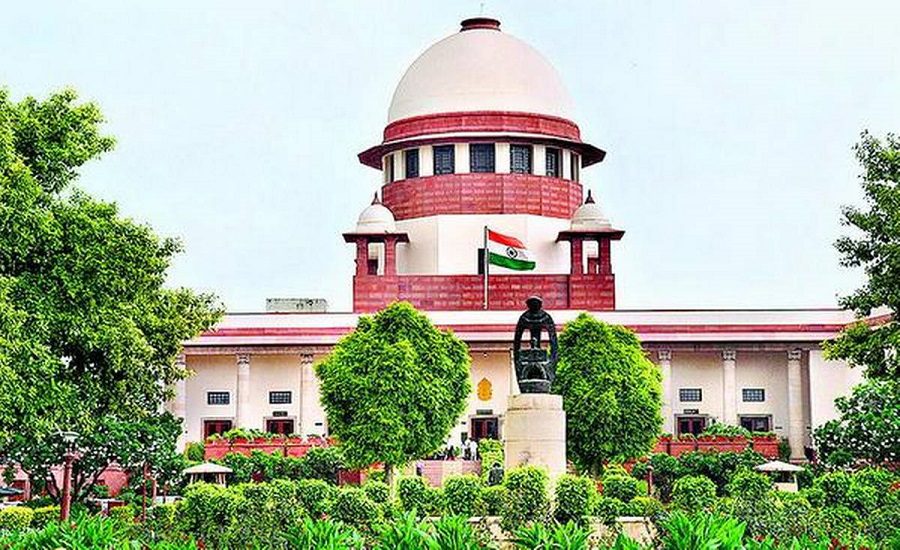
New Delhi: The year 2026 is set to be a significant one for India’s Supreme Court as five of its sitting judges are scheduled to retire. These retirements, spread over eight months, will create substantial vacancies in the apex court, making timely appointments crucial to maintain judicial efficiency and ensure the smooth functioning of the judiciary.
Supreme Court Strength and Current Scenario
As of December 2025, the sanctioned strength of judges in India’s Supreme Court, including the Chief Justice of India (CJI), is 34. With the upcoming retirements, the number of sitting judges is expected to decrease, raising concerns about the court’s ability to handle its increasing backlog of cases. The Supreme Court handles a significant number of cases daily, and maintaining its full strength is essential to avoid delays in justice delivery.
Judges Scheduled for Retirement in 2026
Between April and November 2026, five senior judges will retire from the Supreme Court. Their details, along with retirement dates and parent High Courts, are as follows:
- Justice Rajesh Bindal
- Retirement Date: 15 April 2026
- Parent High Court: Punjab and Haryana High Court
- Retirement Date: 15 April 2026
- Justice Pankaj Mithal
- Retirement Date: 16 June 2026
- Parent High Court: Allahabad High Court
- Retirement Date: 16 June 2026
- Justice Jitendra Kumar Maheshwari
- Retirement Date: 28 June 2026
- Parent High Court: Madhya Pradesh High Court
- Retirement Date: 28 June 2026
- Justice Sanjay Karol
- Retirement Date: 22 August 2026
- Parent High Court: Himachal Pradesh High Court
- Retirement Date: 22 August 2026
- Justice Satish Chandra Sharma
- Retirement Date: 29 November 2026
- Parent High Court: Madhya Pradesh High Court
- Retirement Date: 29 November 2026
These retirements will occur over a short span of eight months, marking a significant reshuffling at the top judicial level.
Judicial Functioning and Collegium’s Role
The retirement of five senior judges within a short span presents a major challenge for the Supreme Court’s operational efficiency. The Collegium system, which recommends appointments of judges to the Supreme Court, is expected to be highly active in 2026. Normally, the process of recommending new names begins before vacancies arise to ensure a seamless transition.
Legal experts emphasize that delays in appointments could impact the court’s working strength, making it imperative for both the Collegium and the central government to act swiftly in finalizing new appointments.
Regional Representation in Focus
The retiring judges hail from key High Courts including Punjab and Haryana, Allahabad, Madhya Pradesh, and Himachal Pradesh. Historically, the Collegium has maintained regional representation while selecting judges for the Supreme Court. As these vacancies arise, it will be important to ensure that the appointments reflect the diversity and regional balance that the apex court has traditionally upheld.
Impact on the Public and Legal Community
For litigants and the general public, timely justice remains the most critical concern. A Supreme Court functioning at full capacity is better equipped to manage its heavy caseload and expedite hearings. The efficiency of the appointment process in 2026 will significantly influence the pace of justice delivery, making it a year that could set important precedents for judicial administration in India.
Read also: Explained: Supreme Court’s New SOP on Oral Arguments and How It Aims to Deliver Faster Justice