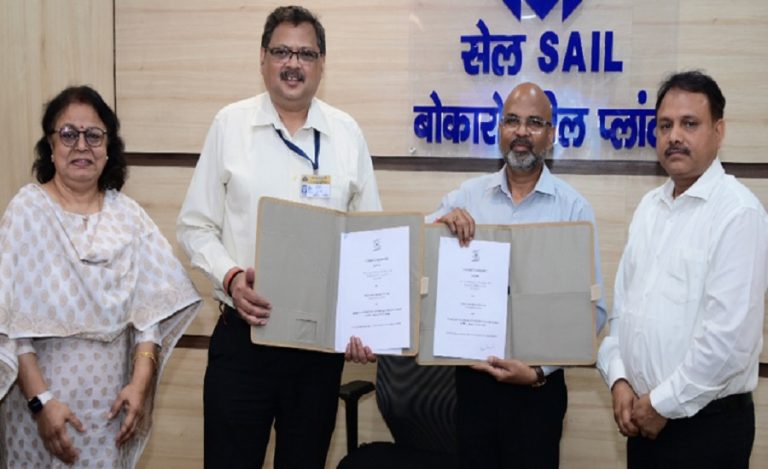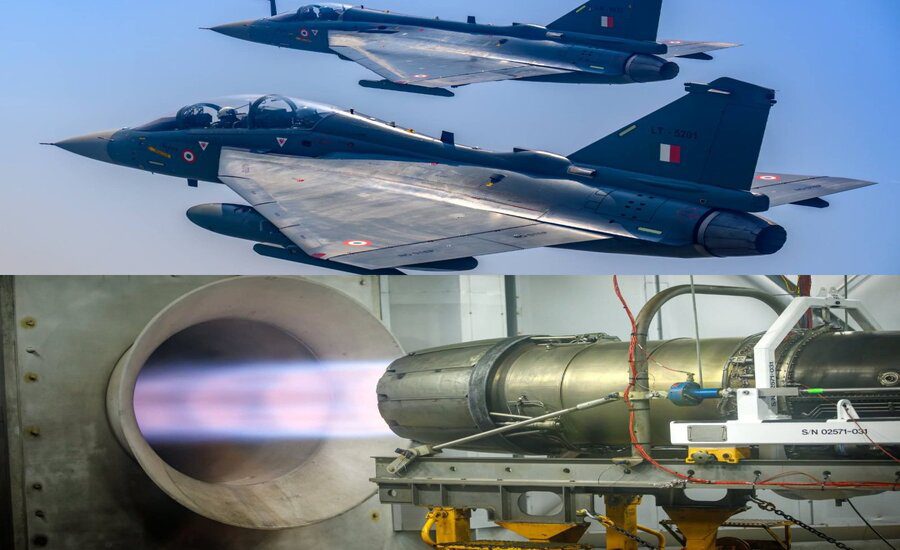
New Delhi: In a significant boost to India’s indigenous defence aviation efforts, GE Aerospace has formally handed over the fifth F404‑IN20 turbofan engine to Hindustan Aeronautics Limited (HAL) — strengthening the supply pipeline for the country’s premier light combat aircraft, HAL Tejas Mk1A.
The delivery marks a key turning point for the Tejas Mk1A programme, which suffered repeated delays because of engine supply disruptions. With the fifth engine now handed over, HAL and the Indian defence establishment look to accelerate jet production and fulfil long-pending orders.
Background of The F404-IN20 Engine and Tejas Programme
The F404 engine series by GE Aerospace has been one of the most successful turbofan platforms globally — powering a range of combat and training aircraft over decades.
For the Indian context, GE developed a higher-thrust, uprated variant — the F404-IN20 — tailored for the country’s indigenous light combat aircraft. This version delivers up to 19,000 lbf (≈ 85 kN) thrust with afterburner, making it the most potent member of the F404 family.
HAL Tejas: From Kaveri Dreams to F404 Reality
When the programme for HAL Tejas began decades ago, one of the core goals was to power it with a fully indigenous jet engine — the domestically developed GTRE Kaveri. That ambition, however, was repeatedly delayed by technical challenges.
In view of the delays and urgency to induct combat-ready jets, India opted for the F404-IN20 as an interim but reliable powerplant.
Since the early 2000s, the F404-IN20 has powered limited series production Tejas jets (prototypes, LSP, naval variants) and now the Mark-1 and Mark-1A versions.
The 2021 Contract and Lost Momentum
In August 2021, HAL signed a contract with GE Aerospace for 99 F404-IN20 engines (plus support services) valued at roughly US$ 716 million, intended to power an order of 83 Tejas Mk1A jets.
However, the delivery schedule ran the risk of derailment: global supply-chain disruptions, vendor issues (notably a South Korean supplier supplying critical parts), and even a temporary closure of the engine production line at GE’s Lynn facility in Massachusetts pushed deliveries far beyond the original timeline.
As of late 2024, the first F404-IN20 engine had yet to be delivered — a delay that had serious ramifications for the entire Tejas Mk1A induction timeline.
Recent Progress: The Fifth F404-IN20 Engine Delivery
March 2025: Breaking the Delay
The long wait ended on 25 March 2025, when GE Aerospace delivered the first of the contracted 99 F404-IN20 engines to HAL.
The supply line has since seen steady progress: HAL received the third engine in September 2025. The fourth engine followed by late September or early October.
And now, in the most recent development, the fifth engine has been handed over — a symbolic but vital event, reinforcing that the procurement remains on track.
Importance of F404-IN20 Engine Delivery
According to publicly available information, GE and HAL plan to deliver engines at a steady cadence — with a goal of about 12 engines in 2025, then roughly 20 per year from 2026.
With five already delivered and more in the pipeline, HAL is now better positioned to accelerate the assembly and induction of Tejas Mk1A jets for the IAF. The fifth engine delivery sends a strong message that the long-standing bottleneck — engine supply — is being addressed.
Strategic Significance of F404-IN20 engine in HAL Tejas MK1A Program
The steady delivery of F404-IN20 engines is crucial for clearing production backlog and enabling the delivery of pending Tejas Mk1A jets. The earlier engine shortage had stalled timelines and stalled aircraft inductions.
Resumption of engine deliveries also restores confidence in HAL’s ability to meet commitments under the 2021 contract. The consistency may encourage further orders or even export ambitions for Tejas Mk1A. An expansion of the contract to a larger pool of engines has indeed been mooted.
Delivery of Tejas Mk1A fighters depends fundamentally on engines. With the supply stabilised, the IAF can accelerate operationalisation schedules — a key need given squadron strength reductions and rising regional tensions.
Timely induction of Tejas Mk1A strengthens indigenous capability and reduces dependence on foreign imports, aligning with India’s broader goal of defence self-reliance.
The block-delivery of F404-IN20 engines via GE underscores the long-standing — and deepening — defence-industrial cooperation between India and the US.
At the same time, the Indians continue to explore co-development or licensed production of more powerful engines (like the F414) for future jets — with ambitious technology transfer clauses.
This balance — between foreign procurement to meet near-term needs and indigenisation for long-term autonomy — reflects the pragmatic and strategic pivot of India’s defence policy.
Key Challenges, Risks, and What to Watch Next
While the fifth engine delivery is undoubtedly positive, a number of challenges remain:
Supply-chain fragility: The earlier delay arose from vendor issues halfway across the world. Unless supply-chain reliability is restored end-to-end, future deliveries remain vulnerable.
Production ramp-up pace: Delivering five engines is good, but Tejas Mk1A induction targets are high. To meet them, GE and HAL must adhere to the planned rate of 20 per year — any slippage could again delay deliveries.
Transition to next-gen engines: While F404-IN20 meets current needs, future Tejas Mk2, naval fighters or heavier aircraft will require more powerful engines like the F414 — whose licensed manufacture under co-production deals still awaits full fruition.
Export potential and certification: If HAL seeks to market Tejas abroad, these jets (and their engines) must meet international export regulations and certification standards — a process that demands not only supply but consistent quality and after-sales support.