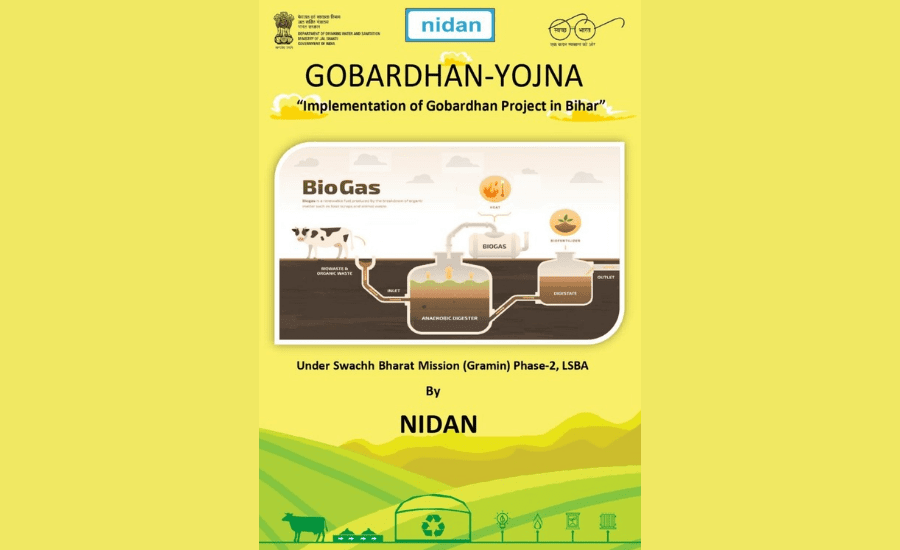
New Delhi: The GOBARdhan scheme, Galvanizing Organic Bio-Agro Resources Dhan, is a flagship waste-to-wealth initiative by the Government of India aimed at transforming cattle and organic waste into biogas, compressed biogas (CBG) and organic fertilizer to promote rural cleanliness, enhance farmer income and build a circular economy across India.
Launched in April 2018 under the Swachh Bharat Mission (Grameen), this initiative supports decentralized waste management and renewable energy generation in villages, aligning with India’s environmental and sustainable development priorities.
What Is the GOBARdhan Scheme?
The GOBARdhan initiative was introduced under the Swachh Bharat Mission (Grameen) Phase-II to effectively manage cattle waste, agricultural leftovers and other organic residues.
The programme’s central idea is straightforward — convert waste into energy and wealth rather than leaving it to pollute the environment.
- It focuses on biodegradable waste management in rural areas
- It promotes setting up biogas plants and compressed bio-gas (CBG) facilities
- It aims to provide affordable renewable fuel, compost and manure
- It contributes to employment and income generation in villages
How GOBARdhan Scheme Works: Models & Implementation
The GOBARdhan scheme adopts various models to ensure sustainable implementation:
1. Individual Household Model
Households with three or more cattle can install small biogas units.
Gas produced is used for cooking, and slurry becomes usable organic fertilizer.
2. Community & Cluster Models
Gram Panchayats, SHGs or Farmer Producer Organisations (FPOs) manage biogas plants serving multiple households or a cluster of villages.
3. Commercial CBG Plants
Entrepreneurs, cooperatives or private entities can set up CBG plants to produce clean fuel for industrial or transport use.
This multi-model system ensures that waste is processed at varied scales — from individual homes to larger commercial units.
Key Objectives of the Initiative
The GOBARdhan scheme has several clear goals:
Effective Waste Management: Reduce environmental pollution by processing cattle and organic waste.
Renewable Energy Production: Generate biogas and compressed bio-gas (CBG) as alternatives to fossil fuels.
Rural Income & Jobs: Create livelihood opportunities and boost farmers’ earnings.
Organic Fertilizer Supply: Produce bio-slurry and organic manure to support farming.
Circular Economy: Promote sustainable resource use and minimize waste.
Progress & Impact Across India
Official data shows substantial progress under the scheme:
- Biogas and CBG plants have been registered across hundreds of districts nationwide.
- In FY 2023-24, nearly 198 new plants were installed, including CBG facilities.
- The initiative is creating employment in rural areas, helping villagers reap economic and environmental benefits.
- Local implementations, including large bio-CNG plants like in Indore, exemplify how cities and villages alike are adopting the waste-to-wealth framework.
Benefits of GOBARdhan Scheme
Here are the following benefits of GOBARdhan scheme;
Environmental Benefits
- Reduces greenhouse gas emissions
- Controls pollution from open waste dumping
- Improves farm waste management
Economic Benefits
- Farmers and villagers earn from selling CBG and organic manure
- Reduced dependence on LPG and fossil fuels
- Boosts rural entrepreneurship
Social Benefits
- Improved sanitation and health outcomes
- Strengthened community involvement
- Skill creation in renewable energy sector
Challenges & Next Steps
Despite its success, some challenges remain:
- Limited number of operational CBG plants compared to targets.
- Transparency and data updates on the unified portal need improvement.
To address these gaps, stakeholders continue to push for better monitoring systems, investment incentives, and enhanced community awareness.
Conclusion: A Model for Sustainable Rural Growth
The GOBARdhan scheme stands as a pioneering initiative in circular economy, renewable energy, sustainable waste management, rural development, and clean fuel adoption across India. By converting cattle and organic waste into valuable resources like biogas and organic manure, GOBARdhan is helping villages become cleaner, greener, and more economically empowered.