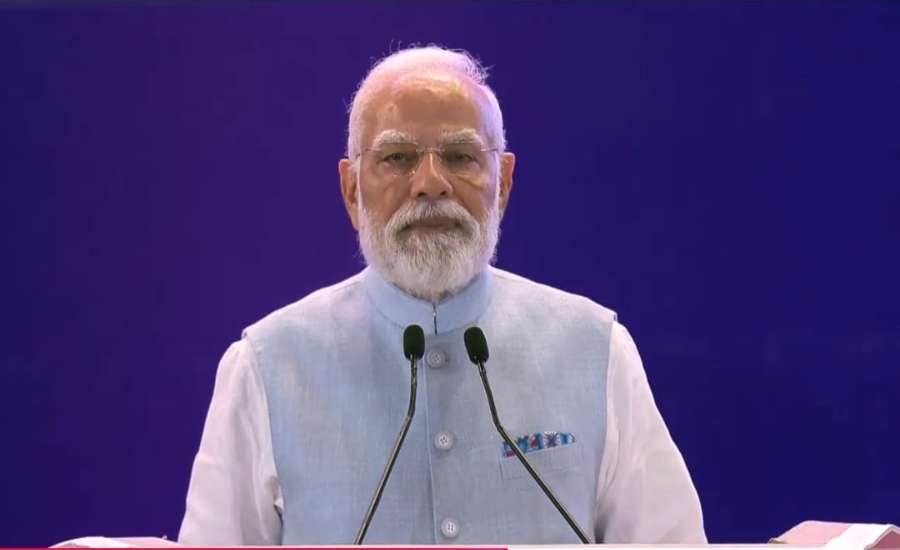
New Delhi: PM Modi announced fast-track courts for paper leak cases to protect students and stop examination fraud. These courts will be set up to ensure quick trials and strict punishment for people involved in question paper leaks. The announcement comes after the alleged NEET-UG 2026 paper leak, which triggered protests across the country and raised concerns about the fairness of competitive exams.
Why Did PM Modi Announce Fast-track Courts for Paper Leak Cases
Prime Minister Narendra Modi said that the future of India’s youth is the government’s top priority. In a post on X (formerly Twitter), he said that the government has decided to set up fast-track courts so that paper leak cases can be heard quickly and the guilty can receive strict punishment.
Read also: NEET-UG 2026 Paper Leak Case: Future of NEET in Question? Supreme Court Demands These Major Changes
He also directed all concerned departments and officials to take every necessary step to protect students and strengthen the examination system.
PM Modi Directions
The Prime Minister said:
“Nothing is more important than the welfare and future of our youth. We have decided to set up fast-track courts to ensure swift and stringent punishment for those involved in paper leaks. Those who try to harm the future of our youth will not be spared.”
The government says this decision is part of its larger effort to make public examinations more secure and transparent. So far, the government has announced the following:
- Fast-track courts will hear examination paper leak cases.
- The aim is to complete trials faster.
- Strict punishment will be ensured for the guilty.
- Authorities have been directed to take immediate action.
However, the government has not yet announced:
- The number of fast-track courts.
- Their locations and jurisdiction.
- The timeline for starting these courts.
Usually, fast-track courts are established by State Governments in consultation with the respective High Courts.
Why Is Fast-track Courts for Paper Leak Cases Important
The decision comes after the alleged NEET-UG 2026 question paper leak, which affected lakhs of medical aspirants across India. Students, parents and several organisations demanded strict action against those responsible. Many also called for stronger laws and faster investigation into paper leak cases.
The government believes fast-track courts will help deliver justice more quickly and discourage future examination fraud.
Existing Law Against Paper Leaks in India
India already has a law to deal with examination fraud. The Public Examinations (Prevention of Unfair Means) Act, 2024 makes paper leaks and organised cheating a criminal offence. Under this law:
- Individuals involved in unfair means can face 3 to 5 years in jail and a fine of up to ₹10 lakh.
- Organised paper leak networks can face 5 to 10 years in jail and a minimum fine of ₹1 crore.
The law aims to protect the fairness and credibility of public examinations.
Supreme Court Is Also Hearing the Matter
The Supreme Court is hearing a Public Interest Litigation (PIL) seeking:
- A Standard Operating Procedure (SOP) for paper leak investigations.
- Time-bound investigations.
- Faster trials in paper leak cases.
The case is currently under judicial consideration.
How Will Fast-Track Courts Help Students
If implemented effectively, fast-track courts can:
- Deliver faster justice.
- Reduce delays in criminal trials.
- Increase accountability.
- Prevent organised examination fraud.
- Improve trust in competitive examinations.
- Protect honest students.
Experts believe quicker legal action can discourage future paper leaks and make public examinations more secure.