New Delhi: V2V Communication Technology India is set to take a major step forward as the Ministry of Road Transport and Highways (MoRTH) prepares to issue a notification for vehicle-to-vehicle (V2V) communication systems.
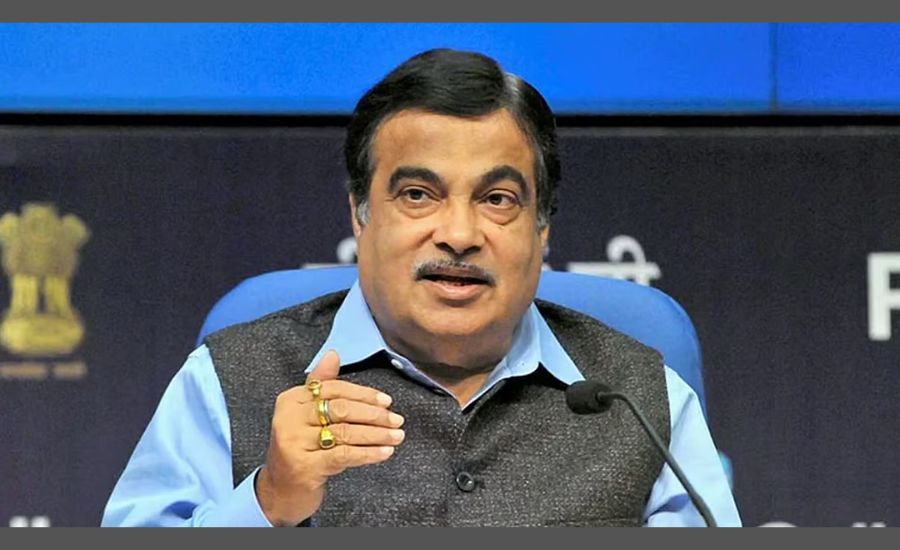
Union Road Transport and Highways Minister Nitin Gadkari said the government is working on the required frequency allocation and regulatory framework.
The technology is expected to improve road safety by allowing vehicles to exchange real-time information and warn drivers about potential dangers.
What Is V2V Communication?
Vehicle-to-Vehicle (V2V) communication enables vehicles to automatically exchange important safety information such as:
- Vehicle speed
- Position
- Direction of travel
- Braking status
- Collision warnings
- Traffic hazard alerts
The system works without direct human intervention and can alert drivers to risks that may not be visible due to fog, blind spots, curves, or heavy traffic.
V2V Communication Technology: What Did Gadkari Announce?
According to Gadkari, the government is close to issuing a notification for V2V communication technology after obtaining the necessary spectrum support from the communications authorities.
Key points from the announcement:
- Notification is expected soon.
- Required radio frequencies are being arranged.
- Technology aims to reduce road accidents.
- Vehicles will exchange safety-related data in real time.
- The system will eventually become part of India’s road safety ecosystem.
Why Is V2V Communication Technology Important?
India records one of the highest numbers of road accident fatalities globally.
V2V communication can help drivers by:
- Warning about sudden braking ahead.
- Alerting vehicles approaching intersections.
- Detecting vehicles hidden in blind spots.
- Reducing accidents during foggy conditions.
- Preventing rear-end collisions.
- Improving emergency response times.
How Will the System Work?
The proposed system will allow vehicles to continuously share information with nearby vehicles using dedicated wireless communication channels.
Example
Imagine a truck suddenly brakes around a curve:
- The truck transmits an emergency signal.
- Nearby connected vehicles receive the alert instantly.
- Drivers receive warnings before seeing the obstacle.
- Vehicles equipped with advanced safety systems may respond automatically.
This creates a connected transport network capable of reducing reaction times significantly.
Spectrum Allocation: The Key Requirement
A dedicated communication spectrum is essential for V2V technology.
The government has been coordinating with telecommunications authorities regarding spectrum allocation. Recent official statements indicate that dedicated radio frequencies have been earmarked to support connected vehicle systems.
Global Adoption of V2V Technology
Several countries have already tested or deployed V2V and broader Vehicle-to-Everything (V2X) communication systems.
Benefits observed globally include:
- Improved traffic management.
- Faster hazard notifications.
- Enhanced autonomous driving support.
- Lower accident rates.
- Better road efficiency.
Impact of V2V Communication Technology
The proposed rollout could create new opportunities for:
- Automobile manufacturers
- Automotive electronics suppliers
- Semiconductor companies
- Telecom infrastructure providers
- Smart mobility startups
The move also aligns with India’s broader push toward intelligent transportation systems and connected mobility solutions.
Key Challenges Ahead
While the technology offers significant advantages, implementation will require:
- Nationwide standards.
- Vehicle hardware integration.
- Interoperability among manufacturers.
- Consumer awareness.
- Cybersecurity protections.
- Affordable deployment costs.
Industry experts believe a phased rollout may be the most practical approach.
Analysis: A Major Road Safety Reform
The government’s push for V2V communication represents one of the most important road safety initiatives in recent years.
If implemented effectively:
- Accident rates could decline.
- Driver awareness could improve.
- Smart mobility adoption could accelerate.
- India could move closer to global connected vehicle standards.
The upcoming notification will likely serve as the foundation for a nationwide connected vehicle ecosystem, supporting safer roads and future autonomous mobility technologies.