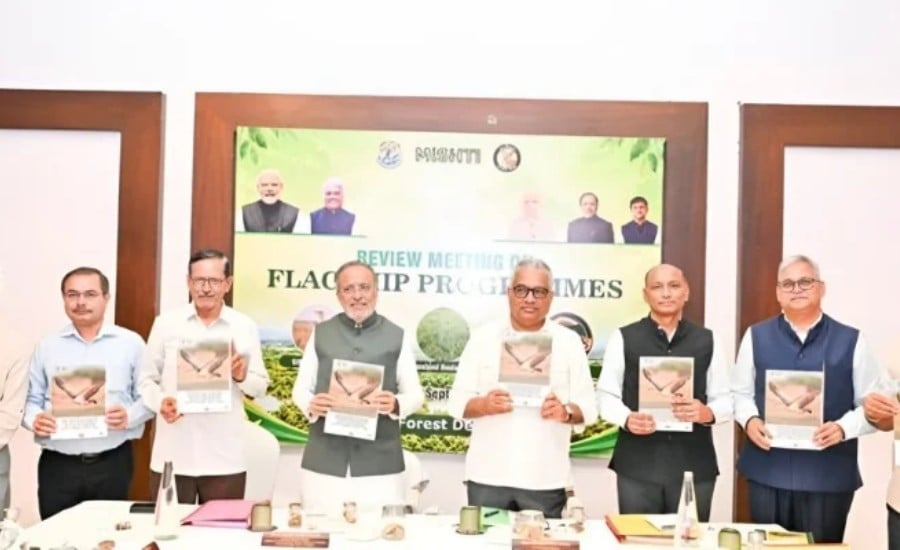
Bhuj: Union Environment, Forest and Climate Change Minister Bhupender Yadav on Sunday reviewed Gujarat’s conservation efforts for the Great Indian Bustard (GIB), grasslands and cheetahs in Kachchh, while releasing a state action plan aimed at securing a viable GIB population of more than 30 birds.
Yadav stressed that wildlife conservation must focus on restoring entire landscapes rather than protecting isolated species, combining scientific management, habitat restoration and community participation. He also reviewed the progress of Project Cheetah and a proposed national framework for grassland restoration.
Gujarat Action Plan Sets GIB Conservation Targets
The Minister released the Gujarat Action Plan for Great Indian Bustard Conservation, prepared by the Wildlife Institute of India in collaboration with the Gujarat Forest Department.
Read Also: Gujarat Restores 27,652 Hectares of Mangroves Under MISHTI, Bhuj Workshop Reviews Conservation Push
The plan aims to:
- Establish a minimum viable population of more than 30 Great Indian Bustards in Gujarat.
- Secure 200–500 sq km of safe and contiguous habitat.
- Prioritise the approximately 200 sq km Lala–Rawa landscape in Kachchh.
- Restore habitat and manage grazing and invasive species.
- Strengthen predator management and address infrastructure-related threats.
Kachchh currently supports a small and isolated GIB population. The species is classified as Critically Endangered.
Naliya Grassland Restoration Underway
According to the Environment Ministry, several measures have already been undertaken in Naliya to strengthen the GIB habitat.
Around 11 sq km of grassland affected by the invasive Prosopis juliflora has been restored. A 30-km predator-proof fence has also been installed around a 15 sq km enclosure, along with targeted management of nest predators.
The Minister said protecting the GIB also means conserving Kachchh’s open natural ecosystems, which provide habitat for species including the lesser florican, chinkara, desert cats, raptors and vultures.
Wild GIB Egg Intervention Shows Progress
The review also highlighted a conservation-breeding intervention in which infertile eggs laid by wild GIB females were replaced with viable eggs from the conservation breeding programme.
The chick produced through the second such intervention has survived beyond three months in the wild, which the Ministry described as a significant result for GIB recovery efforts in Gujarat.
A GIB Soft Release Centre has also been developed near Naliya. It will be used to house and acclimatise captive-bred birds from Rajasthan before their eventual release, subject to appropriate protocols and habitat conditions.
National Grassland Assessment Proposed
The government also reviewed a proposed five-year national assessment of grasslands, in collaboration with the Wildlife Institute of India, ICFRE and the Forest Survey of India, with National CAMPA support.
The proposed assessment will focus on:
- Mapping and ecological assessment of grasslands
- Restoration of degraded grasslands
- Improved management of Open Natural Ecosystems
- Developing a scientific framework for national grassland management
The Ministry noted that grasslands cover nearly 24% of India’s land area but remain among the country’s degraded and under-conserved ecosystems. Gujarat’s Banni Grassland is among the landscapes relevant to the initiative.
Project Cheetah Population Reaches 52
During the review of Project Cheetah, Yadav said India’s cheetah population has reached 52 individuals, originating from 29 founder cheetahs, with 49 cubs born in India.
The cheetah population in Kuno has recorded a cub survival rate of around 68%, according to the Ministry.
The protected habitat available to cheetahs has expanded to 3,428 sq km through integrated management of Kuno National Park and Gandhi Sagar.
The government has also identified Banni Grasslands in Gujarat and Nauradehi Wildlife Sanctuary in Madhya Pradesh as future cheetah release sites.
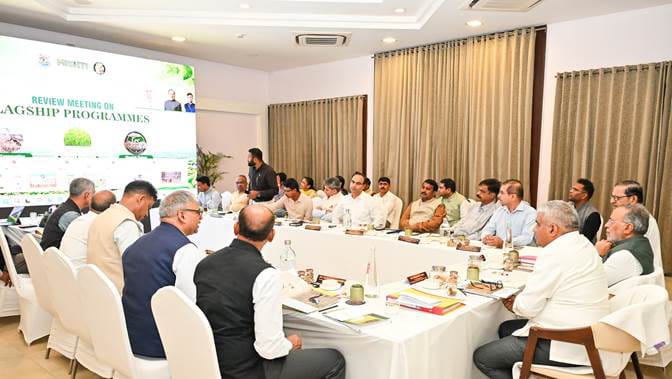
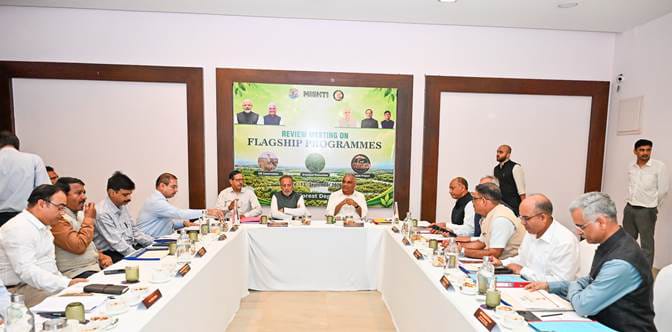
The review meeting was attended by senior officials of the Environment Ministry and Gujarat Forest Department, along with representatives from the Wildlife Institute of India and the National Tiger Conservation Authority.
Read Also: Project GIB Milestone: Captive-Bred Bustard Chick Hatches in Gujarat for First Time in 10 Years