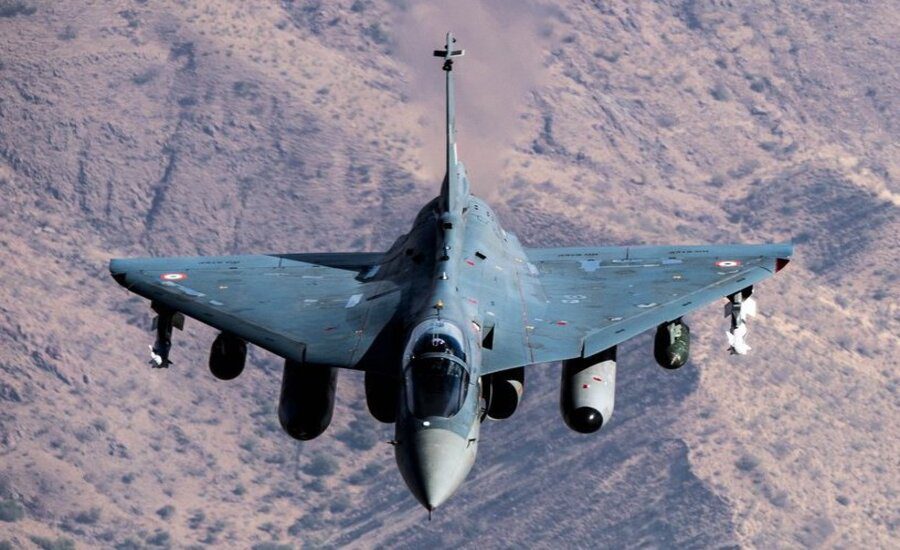
New Delhi: The TEJAS MK-1A delivery standoff between Hindustan Aeronautics Limited (HAL) and the Indian Air Force (IAF) has taken a new turn as HAL seeks limited relaxation of the Air Staff Qualitative Requirements (ASQRs) to push through the earliest delivery of the first five jets. This move comes amid growing concerns over readiness certifications, operational standards, and delivery delays of India’s indigenous 4.5-generation fighter aircraft.
Core Issues with TEJAS MK-1A Delivery
The conflict centres on the Air Staff Qualitative Requirements (ASQRs) — the detailed performance and capability benchmarks that all combat aircraft must meet before being accepted into service.
The IAF insists that aircraft must meet every ASQR clause before induction, while HAL wants limited ASQR waivers so that deliveries can begin despite pending minor software and integration issues.
HAL Claims on TEJAS MK-1A Delivery
HAL has publicly stated that five TEJAS MK-1A fighters are fully ready for delivery with all major contracted capabilities integrated according to agreed specifications. Additionally, HAL says nine more aircraft have been built and flown, awaiting engines from US-based General Electric (GE). HAL has downplayed the delays, calling them due mainly to supply chain issues rather than technical immaturity.
IAF Claims on TEJAS MK-1A Delivery
The Indian Air Force has made it clear that fighters cannot be inducted into service without complete compliance with the Air Staff Qualitative Requirements. The IAF emphasises full integration of systems such as the Active Electronically Scanned Array (AESA) radar, electronic warfare suite, mission computers, and weapon systems before acceptance. Minor software updates and unfinished integrations are considered critical parts of compliance and cannot be deferred after delivery.
TEJAS MK-1A Delivery: Engine Delays Compound the Problem
Another major factor slowing deliveries is delayed engine supplies. The TEJAS MK-1A is powered by the GE F404-IN20 engine, and supply chain disruptions have resulted in only a limited number of engines reaching HAL so far. Blockages in engine delivery have hampered tests, integration work, and final clearances required before handing over jets to the IAF.
Importance of TEJAS MK-1A Delivery Delay
The TEJAS MK-1A is a cornerstone of India’s indigenous combat aircraft programme. It represents the backbone of future fleet expansion and has been designed to replace aging fighters such as the MiG-21. With the IAF’s operational squadron strength already below authorised levels, delays in TEJAS inductions place further strain on readiness.
The aircraft features advanced avionics, AESA radar, electronic warfare systems, air-to-air refuelling capability, and increased indigenous content — all designed to enhance India’s combat and deterrence capabilities in the region.
Risks of ASQR Waivers
Allowing ASQR waivers poses strategic and operational risks. Defence analysts warn that inducting aircraft without full compliance could lead to reduced combat effectiveness, integration challenges, and additional time and cost spent in retrofitting upgrades. In modern aerial warfare, connected and fully integrated systems are essential for mission success.
What Happens Next?
Negotiations are expected to intensify in the coming weeks. A potential tripartite review involving HAL, the IAF, and the Defence Research and Development Organisation (DRDO) could occur to bridge the gap. Some analysts predict that a conditional ASQR relaxation tied to post-delivery milestones might be adopted to allow phased induction while ensuring compliance is eventually met.
The upcoming Defence Acquisition Council meetings and a detailed programme review around mid-2026 will be key inflection points in determining the final delivery timeline.
The Strategic Stakes
This stand-off highlights a broader tension between India’s self-reliance goals ( ‘Atmanirbhar Bharat’) in defence manufacturing and the stringent operational standards of the armed forces. While HAL aims to scale up production — targeting 16–24 jets per year once engine and production bottlenecks ease — the IAF holds that compromised standards could weaken combat readiness at a time of rising regional threats.