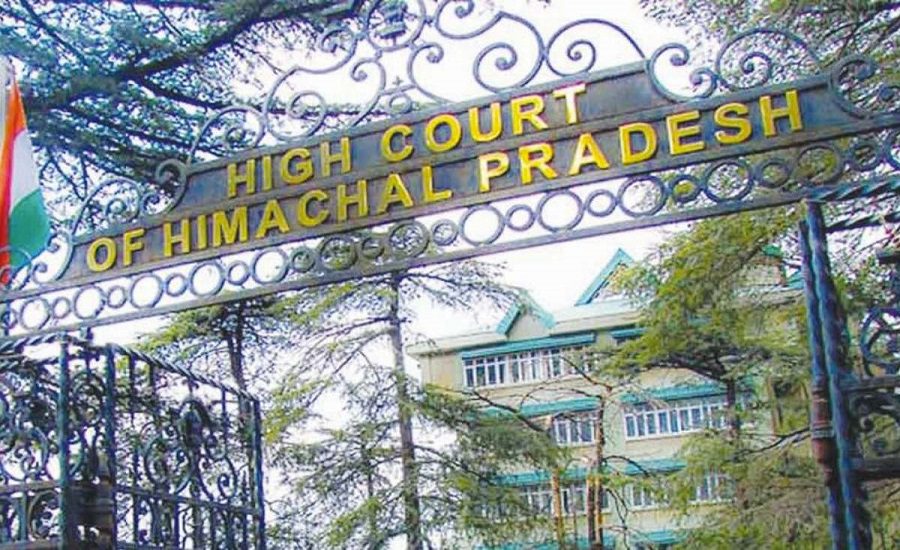
Shimla: In a significant legal development, the Himachal Pradesh High Court has put an interim stay on the state government’s decision to move the Himachal Pradesh State Commission for Backward Classes office from its long-established headquarters in Shimla to Dharamshala in the Kangra district.
The order, issued by a Division Bench, comes amid contentions over administrative norms, financial prudence, and procedural propriety.
Background of Himachal Pradesh Backward Classes Commission office
The Division Bench hearing the case comprised Chief Justice G.S. Sandhawlia and Justice Jiya Lal Bhardwaj, who presided over the matter after a public interest litigation (PIL) challenged the government’s relocation plan.
The petition was filed under CWPIL No. 9 of 2026 (Ram Lal Sharma v/s State of H.P. and others), wherein the petitioner argued that the state’s decision to shift the Commission office was hasty and lacked necessary deliberations.
Himachal Pradesh Backward Classes Commission office: Timeline of Appointment and Relocation Proposal
According to the High Court’s order, the timing of the decision raised procedural concerns:
Chairman Appointment: The Chairman of the Backward Classes Commission was appointed on December 3, 2025.
Member Appointments: Other Commission members were appointed on December 23, 2025.
Relocation Proposal Filed: The government submitted the proposal to relocate the office on December 24, 2025, just one day after the full Commission was in place.
This rapid sequence—appointment followed immediately by the relocation plan—was highlighted by the court as necessitating closer judicial scrutiny.
Key Arguments by the Petitioner
The petitioner contended that shifting the office was administratively unsound and offered little practical benefit:
- The Commission currently operates with only 11 filled positions, of which 6 are Class-IV staff, raising questions over the logistics and cost-benefit of relocation.
- The existing office premises in Shimla are held on a 99-year lease, negating regular rental costs while providing stability.
- There was no clarity on alternative accommodation arrangements in Dharamshala, which could result in unplanned expenditure and functional disruption.
- Contrary to the stated government rationale of decongesting Shimla, the court reiterated that relocating a “minuscule team” to Dharamshala would be ineffective in relieving administrative congestion.
Government’s Position and Court’s Concerns
While the state government justified the relocation as part of administrative restructuring and regional decongestion, the High Court was not convinced that the move had undergone adequate evaluation in terms of cost, infrastructure readiness, or long-term benefits.
The Bench referred to its earlier precedents emphasizing that moving offices with minimal staff should not be undertaken without empirical justification.
Court Order and Interim Stay
The High Court’s interim order restrains the state government from executing the transfer of the Backward Classes Commission office until further hearings. Notices have been issued to the respondents, including the state government, to appear and file detailed replies.
The next hearing has been scheduled for April 8, 2026. Until then, the office will remain in Shimla, and no relocation activities will be permitted.
Broader Context: Office Relocations in Himachal Pradesh
In recent years, several government and quasi-government bodies have been subjects of relocation controversies:
In January 2026, the High Court also scrutinized the proposed shifting of the Real Estate Regulatory Authority (RERA) office from Shimla to Dharamshala, questioning the administrative rationale behind moving smaller offices and reiterating judicial oversight on such decisions.
These cases reflect emerging tensions between the Himachal Pradesh government’s administrative decentralization efforts and the judiciary’s insistence on procedural transparency and economic justification.