New Delhi: Hindustan Urvarak & Rasayan Limited (HURL) is exploring the production of Green Urea at its Barauni fertiliser plant in Bihar in collaboration with NTPC Limited, as part of its efforts to promote sustainable and low-carbon fertiliser manufacturing in India.
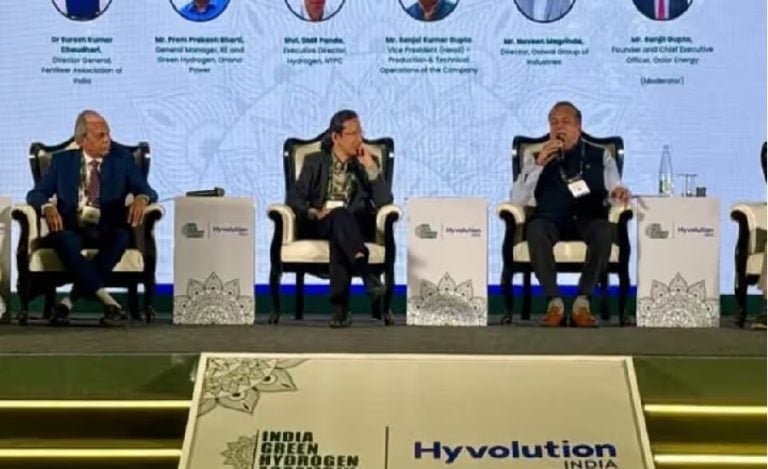
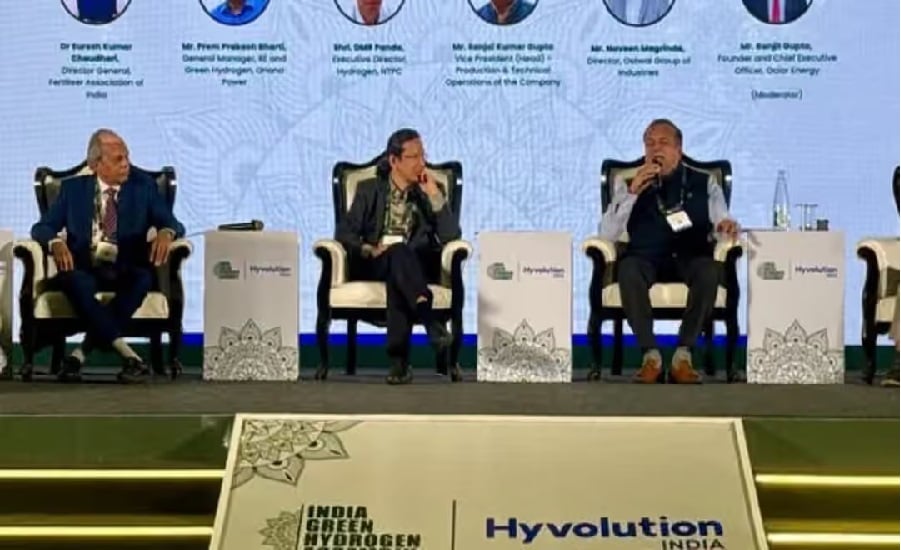
The development was highlighted during the India Clean Energy Summit & Hyvolution India 2026, held on November 17–18, 2026, at India Expo Mart, Greater Noida.
During a panel discussion and industry roundtable at the summit, HURL’s Vice President (Production & Technical Operations) discussed the technical and economic opportunities for decarbonising India’s urea manufacturing sector.
The proposed Green Urea initiative at the Barauni unit builds on a Memorandum of Understanding (MoU) signed between HURL and NTPC in August 2026. The two companies are jointly evaluating the project, which aims to integrate green ammonia with captured carbon dioxide to manufacture low-carbon urea.
HURL and NTPC Explore Green Urea Project at Barauni Plant
Under the proposed collaboration, HURL and NTPC are examining the feasibility of producing Green Urea at HURL’s Barauni facility in Begusarai district, Bihar.
The project will focus on combining green ammonia with captured industrial carbon dioxide (CO₂) through Carbon Capture, Utilisation and Storage (CCUS) technologies.
Green ammonia, produced using renewable energy and green hydrogen, can serve as a cleaner alternative to conventional ammonia production based on fossil fuels. Combining it with captured CO₂ offers a pathway towards manufacturing urea with a lower carbon footprint.
The collaboration will bring together NTPC’s capabilities in clean energy and green hydrogen-related technologies with HURL’s fertiliser manufacturing infrastructure and operational expertise.
Green Ammonia and CCUS to Drive Low-Carbon Urea Production
A key focus of the discussions at the India Clean Energy Summit was the integration of green ammonia and captured industrial CO₂ for sustainable urea manufacturing.
The proposed production model aims to reduce the carbon intensity of conventional fertiliser production by using cleaner feedstocks and carbon capture technologies.
However, the successful implementation of the project will depend on several important factors, including:
- Green ammonia availability: Ensuring a reliable supply of green ammonia produced using renewable energy.
- Carbon capture technology: Integrating captured industrial CO₂ into the urea manufacturing process.
- Economic viability: Making low-carbon fertiliser production commercially competitive.
- Affordable renewable energy: Ensuring access to cost-effective renewable electricity for green hydrogen and ammonia production.
- Policy support: Developing favourable policy frameworks and incentives to encourage investment in green fertiliser technologies.
HURL highlighted that addressing these factors will be essential for scaling up low-carbon urea production in India.
Green Urea Initiative to Support Atmanirbhar Bharat
The proposed HURL-NTPC collaboration also aligns with the broader vision of Atmanirbhar Bharat by strengthening domestic fertiliser production and reducing dependence on imported energy resources.
India’s conventional urea manufacturing sector relies heavily on natural gas as a key feedstock, making production costs vulnerable to fluctuations in international fuel prices and supply conditions.
By exploring the use of green ammonia and captured CO₂, the proposed initiative seeks to develop an alternative pathway for domestic urea manufacturing.
HURL emphasised that achieving self-reliance in the fertiliser sector should go beyond expanding domestic manufacturing capacity. It should also involve greater utilisation of indigenous clean energy resources and locally available feedstocks.
The integration of renewable energy, green hydrogen, green ammonia and carbon capture technologies could help reduce dependence on imported natural gas while supporting India’s long-term energy security and climate objectives.
India Clean Energy Summit Highlights Opportunities in Green Fertiliser Manufacturing
The India Clean Energy Summit & Hyvolution India 2026 provided a platform for industry stakeholders to discuss emerging clean energy technologies and their applications across different sectors.
HURL’s participation highlighted the growing importance of decarbonisation in the fertiliser industry and the potential role of collaborations between public sector enterprises in accelerating the clean energy transition.
The proposed Green Urea project at Barauni represents an effort to connect clean energy generation with large-scale industrial manufacturing.
Through its collaboration with NTPC, HURL is exploring opportunities to develop a more sustainable fertiliser production model that can contribute to India’s clean energy ambitions and domestic fertiliser security.
About HURL and NTPC Limited
Hindustan Urvarak & Rasayan Limited (HURL) is a joint venture company established to strengthen India’s domestic fertiliser manufacturing capacity. It operates fertiliser plants at Gorakhpur, Sindri and Barauni and primarily focuses on the production and supply of urea to support the country’s agricultural sector.
NTPC Limited is India’s largest integrated power utility and a Maharatna Central Public Sector Enterprise under the Ministry of Power, Government of India. The company is expanding its presence in renewable energy, green hydrogen, green ammonia and other clean energy technologies as part of its strategy to support India’s energy transition.