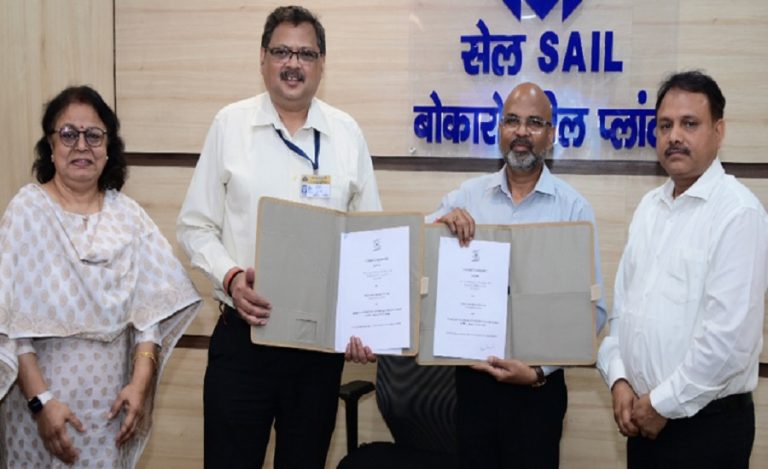
New Delhi: The Indian Coast Guard (ICG) has signed a key defence contract with Larsen & Toubro (L&T) Precision Engineering & Systems for the procurement of six Rail-Less Helicopter Traversing Systems (RLHTS).
The agreement was formalised at the Coast Guard Headquarters in New Delhi on December 26, 2025, underscoring India’s ongoing push toward defence self-reliance under the Aatmanirbhar Bharat initiative.
Senior officials from both organisations were present, including the Principal Director (Air Acquisition) of the ICG and a Vice President from L&T, alongside the Deputy Director General (Aviation).
What Are Rail-Less Helicopter Traversing Systems?
Traditionally, ship-borne helicopters are moved between the flight deck and hangar via fixed rails — a system that can be restrictive and vulnerable to harsh sea states. In contrast, the RLHTS eliminates fixed rails, using winches, tensioned wires and precision sensors to safely maneuver helicopters across the deck, even in rough maritime conditions.
This innovative design provides significant operational flexibility, reduces alignment constraints, and enhances safety during helicopter deck operations.
What are Significance of ICG – L&T RLHTS Deal for the India
Here are the following significance of ICG – L&T RLHTS deal for the india;
Enhancing Naval Aviation Operations
The Indian Coast Guard operates helicopters as essential assets for search and rescue (SAR), maritime surveillance, anti-smuggling, pollution response, and humanitarian missions.
In line with GoI #AatmanirbharBharat, initiative @IndiaCoastGuard today inked a deal with L&T Precision Engineering & Systems at #CGHQ, #NewDelhi for procurement of six (06) Rail-Less Helo Traversing Systems #RLHTS for indigenously built Next-Generation #OPVs. The agreement was… pic.twitter.com/Rne6F0YQme
— Indian Coast Guard (@IndiaCoastGuard) December 26, 2025
The new RLHTS units are compatible with probe-equipped helicopters up to 12.5 tonnes, making them suitable for a wide range of rotary-wing aircraft deployed by the force.
By introducing RLHTS onboard, the Coast Guard is expected to significantly improve helicopter handling reliability and operational readiness across its fleet — especially on its Next-Generation Offshore Patrol Vessels (NGOPVs).
Bolstering Next-Generation Offshore Patrol Vessels (NGOPVs)
The RLHTS contract is directly linked to induction of these systems on the indigenously built NGOPVs — a cornerstone of India’s strategic maritime capability development.
These advanced patrol vessels are designed for long-range endurance and multi-role maritime operations, enhancing India’s security footprint across the Indian Ocean Region (IOR).
NGOPVs feature helicopter decks and hangars that greatly extend patrols, surveillance, and rapid response actions critical to safeguarding India’s exclusive economic zone (EEZ) and coastal interests.
Aligning With Aatmanirbhar Bharat and Make in India
The procurement exemplifies India’s growing defence manufacturing ecosystem. L&T has been a pivotal partner in several Indian defence projects, from shipbuilding to naval systems, reinforcing the country’s push for indigenous design and production.
By sourcing advanced technologies domestically, the Coast Guard reduces dependency on foreign suppliers, strengthens national security, and supports local defence industries — directly aligning with the Government of India’s Aatmanirbhar Bharat policy.
Importance of ICG – L&T RLHTS Deal for Maritime Security
Deploying RLHTS sets a new benchmark for naval aviation operations on Indian vessels. These systems promise:
- Enhanced safety and efficiency during helicopter deck handling
- Greater operational flexibility in adverse weather
- Reduced turnaround time for air operations
- Strengthened integration of aviation assets in patrol missions
Taken together, these improvements will support the Indian Coast Guard’s expanding operational responsibilities in increasingly complex maritime domains.