Srinagar: Reinforcing its growing role in technology-driven environmental governance, the Sher-e-Kashmir University of Agricultural Sciences and Technology of Kashmir (SKUAST-K) has launched a five-day national capacity-building programme to train senior Indian Forest Service (IFS) officers in Artificial Intelligence (AI) and emerging technologies for forest and wildlife conservation.
The programme, titled “Smart Conservation: Technological Solutions for Forest and Wildlife Protection,” is being conducted from July 20 to 24 by the Division of Basic Sciences and Humanities, Faculty of Horticulture, SKUAST-K, in collaboration with the Research & Training Division of the Ministry of Environment, Forest and Climate Change (MoEFCC).
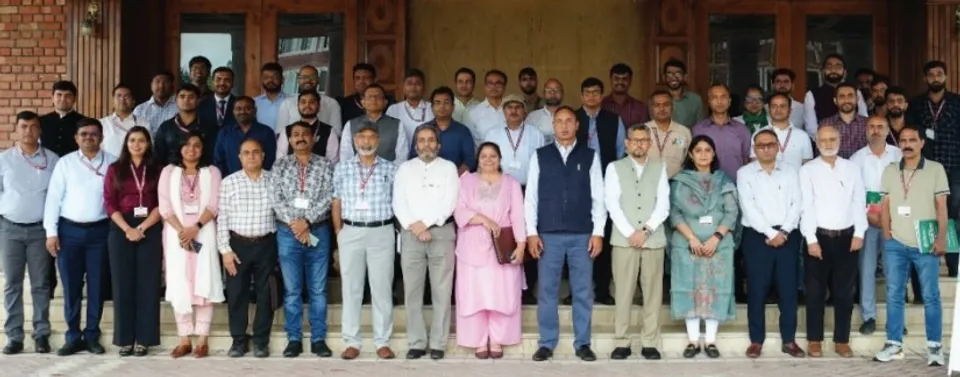
A total of 30 senior IFS officers from 14 states, including Principal Chief Conservators of Forests (PCCFs), Conservators of Forests, Divisional Forest Officers (DFOs), and Assistant Conservators of Forests (ACFs), are participating in the programme aimed at strengthening technology-enabled forest governance across India.
Focus on AI and Emerging Technologies
The training programme is designed to equip forest administrators with cutting-edge digital tools that can transform wildlife conservation and sustainable forest management.
Participants are receiving training in:
- Artificial Intelligence (AI)
- Machine Learning (ML)
- Remote Sensing
- Geographic Information Systems (GIS)
- Drone Technology
- Satellite Monitoring
- Smart Forest Surveillance Systems
- Digital tools for sustainable forest governance
The programme seeks to integrate modern technological solutions with ecological science and policy frameworks to address pressing environmental challenges such as climate change, biodiversity loss, habitat degradation, forest fires and ecosystem restoration.
Vice Chancellor Calls for Technology-Driven Conservation
The inaugural session was presided over by Prof. Nazir Ahmad Ganai, Vice Chancellor of SKUAST-K, while Shri Sarvesh Rai, IFS, Principal Chief Conservator of Forests and Head of Forest Force, Jammu & Kashmir, attended as the Guest of Honour.
Delivering the keynote address, Prof. Ganai emphasized that conservation in the 21st century requires the convergence of forestry, agricultural sciences, climate science, data analytics and digital technologies.
Highlighting the university’s expertise in AI, machine learning, drone technology, precision agriculture and remote sensing, he said these innovations are transforming multiple aspects of conservation, including:
- Wildlife monitoring
- Habitat assessment
- Forest health surveillance
- Climate-risk prediction
- Forest fire management
- Ecosystem restoration
He also underlined the ecological vulnerability of the Himalayan region, stressing that mountain ecosystems require science-based, technology-enabled management. He called for stronger collaboration among universities, forest departments, research institutions and policymakers to build climate-resilient conservation systems.
Third Consecutive National Training Batch
Welcoming the participants, Course Director Prof. Javeed Iqbal Ahmad Bhat said the programme marks the third consecutive batch of IFS officers being trained at SKUAST-K under the aegis of the Ministry of Environment, Forest and Climate Change.
He noted that the initiative reflects the university’s emergence as a national centre for capacity building in environmental governance.
According to him, the programme blends advanced technologies with ecological principles and public policy to prepare senior forest administrators for the evolving challenges of conservation in an era of climate change.
J&K Forest Department Showcases Smart Conservation
Addressing the participants, Shri Sarvesh Rai, IFS, highlighted several technology-based initiatives undertaken by the Jammu & Kashmir Forest Department.
He spoke about the use of:
- Geospatial mapping
- Smart forest surveillance systems
- Community-based conservation models
to strengthen the protection of forests and wildlife across the Union Territory.
He encouraged the participating officers to actively engage in practical sessions and adopt successful conservation practices in their respective states.
Hands-On Learning Through Field Visits
Apart from classroom lectures and laboratory demonstrations, the programme places strong emphasis on experiential learning.
Participants will visit several premier institutions and conservation sites, including:
- Center for Artificial Intelligence and Machine Learning (CAIML)
- SKUAST-K Innovation, Incubation and Entrepreneurship Center (SKIIE)
- Faculty of Forestry, SKUAST-K
- Dachigam National Park and Wildlife Rescue Centre
- Wular Lake conservation projects
- Gulmarg Biosphere Reserve
- Protected forests of the Zabarwan Hills
These visits will provide practical exposure to biodiversity management, ecosystem restoration, wildlife monitoring and smart conservation technologies in real-world environments.
Building Future-Ready Forest Leadership
Sponsored by the Ministry of Environment, Forest and Climate Change (MoEFCC), the programme seeks to strengthen collaboration among scientists, policymakers and forest professionals while equipping senior IFS officers with advanced technological capabilities.
As environmental challenges become increasingly complex, the initiative is expected to help forest administrators adopt AI-powered, data-driven approaches for protecting India’s forests, wildlife and ecologically sensitive landscapes, while promoting sustainable and climate-resilient natural resource management.