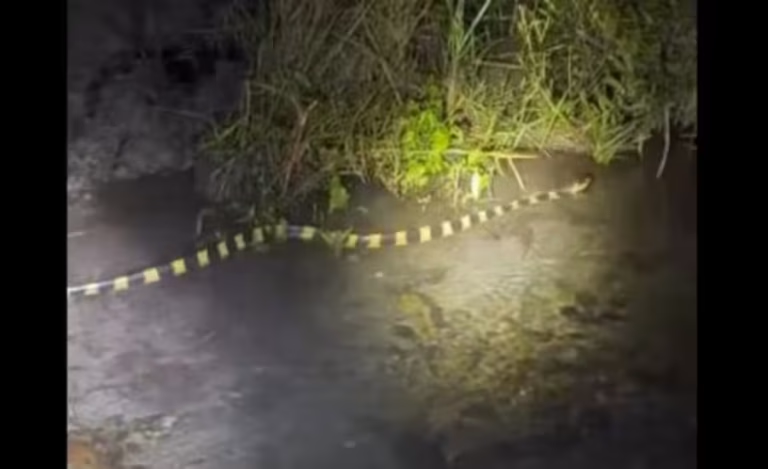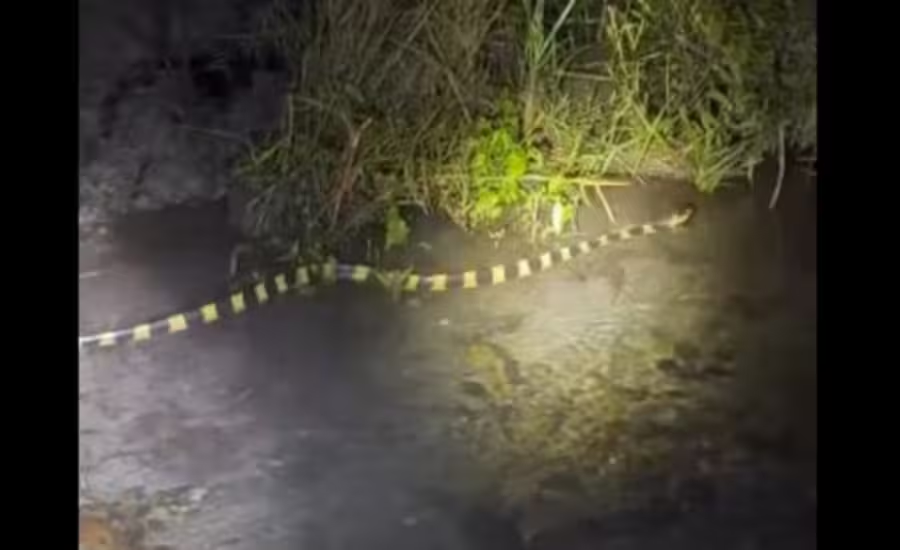
An Indian Forest Service (IFS) officer has captured national attention after sharing a striking video of a highly venomous banded krait encountered during a routine night patrol. The video, which showcases the snake gliding through shallow water under torchlight, has gone viral on social media, drawing admiration for both the reptile’s beauty and India’s rich biodiversity.
The encounter was shared by Parveen Kaswan, an IFS officer known for documenting wildlife and conservation efforts across India.
The Viral Moment: A Venomous Banded Krait in the Darkness
The video shows the banded krait moving calmly through a waterlogged forest path at night. Its distinctive black and yellow bands appear vividly under the flashlight, creating a visually arresting scene that many viewers described as both beautiful and intimidating.
Read also: JP Morgan to the Indian Forest Service, Meet IFS Pulkit Gulati
Sharing the clip on social media platform X (formerly Twitter), Kaswan wrote that the snake was found randomly during night patrolling, adding that nature had “provided such distinct bands” to the species.
The post quickly gained traction, with users praising the officer’s calm observation and the snake’s striking appearance.
About the Banded Krait: One of India’s Most Venomous Snakes
The banded krait (Bungarus fasciatus) is among the most venomous snakes found in India. It belongs to the elapid family, which also includes cobras and coral snakes.
Key Characteristics of the Banded Krait:
- Recognisable alternating black and yellow bands
- Mostly nocturnal in behaviour
- Typically non-aggressive but extremely venomous
- Found across India, Nepal, Bangladesh, and Southeast Asia
- Venom affects the nervous system, making bites medically critical
Despite its dangerous venom, experts note that the banded krait usually avoids human contact and bites are rare unless the snake is provoked or accidentally disturbed.
About IFS Parveen Kaswan
Parveen Kaswan is a 2016-batch officer of the Indian Forest Service (IFS) belonging to the west bengal cadre.
He is widely known for his work in wildlife conservation and for documenting rare forest encounters during patrols.
He regularly shares rare insights from forests, including encounters with wildlife during patrols, helping people understand India’s rich biodiversity.
Through social media, he educates the public on ecology, sustainable living, and the importance of protecting natural habitats.
His work bridges the gap between forest administration and public awareness, making conservation more relatable and impactful.
His clear, educational communication has helped bring forest conservation issues closer to the general public.
Importance of Night Patrols in Forest Conservation
Night patrols conducted by forest officials play a crucial role in:
- Preventing poaching and illegal activities
- Monitoring wildlife movement
- Documenting nocturnal species rarely seen during the day
- Ensuring ecosystem protection in sensitive forest zones
Encounters like this highlight how much of India’s wildlife remains unseen by the general public and underscore the dedication of forest officers who work in challenging conditions to protect biodiversity.
Social Media Reaction: Awe, Curiosity, and Awareness
The video sparked widespread reactions online. While many users expressed awe at the snake’s beauty, others used the opportunity to discuss snake awareness, human-wildlife coexistence, and the importance of not harming reptiles out of fear.
Those beautiful bands. Banded krait is highly venomous snake found in India. Found this randomly during night patrolling. How nature provided them so distinct bands !! pic.twitter.com/it2s1vf8yY
— Parveen Kaswan, IFS (@ParveenKaswan) December 28, 2025
Wildlife experts and conservationists also praised the post for educating the public about a species that is often misunderstood and unnecessarily killed due to fear.
A Reminder of India’s Living Forests
India is home to more than 300 species of snakes, many of which play a vital role in maintaining ecological balance by controlling rodent populations. Incidents like this serve as a reminder that forests are living ecosystems, even at night, and that respectful coexistence is essential.
By sharing such encounters responsibly, forest officers help bridge the gap between the public and the natural world—turning fear into fascination and awareness.
Read also: Indian Forest Services Trainee Officer in Dehradun Duped of ₹98,000 in Credit Card Cyber Fraud