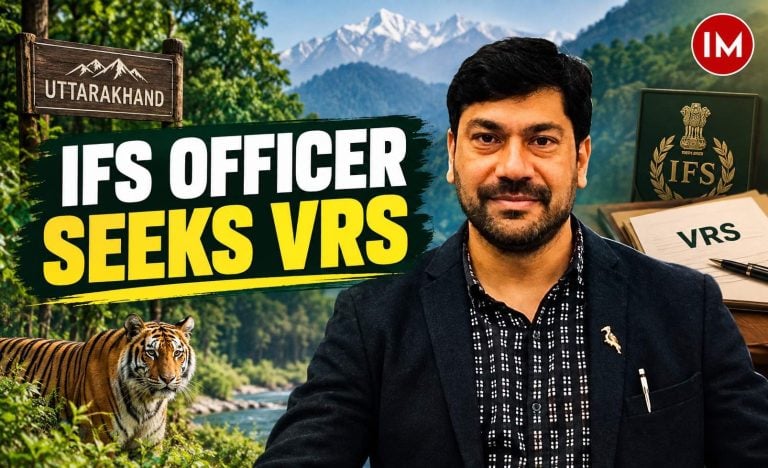
Dehradun: Dr. Saket Badola, a senior Indian Forest Service (IFS) officer of the 2008 batch from the Uttarakhand cadre, has applied for voluntary retirement from service, bringing a possible end to a career spanning nearly two decades in forest administration and wildlife conservation.
Currently serving as Chief Conservator of Forests and Field Director of Corbett Tiger Reserve, Badola said he had made the decision after months of serious contemplation and on personal grounds. In a statement posted on X, he reflected on his journey from a humble family background in Uttarakhand to the prestigious All India Service, expressing gratitude to the governments he had served, his colleagues, forest personnel, family and the public.
His career has included leadership responsibilities at Corbett and Rajaji Tiger Reserves, conservation work with TRAFFIC India, and initiatives focused on wildlife crime, human-wildlife conflict and community participation in conservation. Shortly before announcing his decision, he also spearheaded the first Corbett Literature Festival in October 2026.
Saket Badola Announces Decision to Retire on Personal Grounds
Announcing his decision on X, Badola said he had decided to voluntarily retire from the Indian Forest Service after months of careful consideration.
He described joining an All India Service as a dream come true for someone from a humble family with roots in Uttarakhand’s Pauri district, associated in his post with the land of Maa Vindhyavasini and Baba Neelkanth.
Reflecting on his professional journey, Badola said he was grateful for the opportunities to serve the public, contribute to nature and wildlife conservation, and understand the grassroots challenges facing the country.
Read Also: Who Is Devashish Sharma? Former IAS Officer Takes VRS & Wins Nagaon Lok Sabha Bypoll
He added that he had always endeavoured to give his best during his service and hoped to continue contributing to nation-building in the future, in whatever capacity he might take up.
Badola also thanked the governments under which he had served, fellow officers, forest staff, family members, friends and the public for their support, blessings and affection. He expressed hope that he would continue to receive the same goodwill as he moved towards the next phase of his life.
His announcement follows his tenure as Field Director of Corbett Tiger Reserve, one of India’s most prominent tiger habitats.
Who Is Dr. Saket Badola?
Dr. Saket Badola is a 2008-batch Indian Forest Service officer of the Uttarakhand cadre who has held several important positions in forest administration and wildlife conservation. He is recognised for his work on wildlife protection, combating illegal wildlife trade and promoting conservation approaches that involve local communities.
At the time of announcing his decision, he was serving as Chief Conservator of Forests and Field Director of Corbett Tiger Reserve in Ramnagar, Uttarakhand. He took charge of Corbett in January 2026.
Over the course of his career, Badola has worked across protected areas, forest circles and conservation organisations. His assignments have involved managing tiger habitats, protecting wildlife, addressing human-animal conflict and coordinating conservation efforts across landscapes.
His application is for voluntary retirement from service; the information provided does not establish that the government has formally accepted it. His announcement therefore marks his decision to seek VRS rather than confirmation that his retirement has been completed.
Educational Background and Research
Before entering forest administration, Badola pursued veterinary science and holds a Master of Veterinary Science (M.V.Sc.) degree.
His early academic research included veterinary subjects such as cattle and buffalo genetics, growth hormone gene polymorphism and milk production traits. This scientific background has complemented his subsequent work in wildlife management and conservation.
He has also authored and co-authored publications on wildlife conservation and related issues, including illegal wildlife trade, zoonotic disease impacts and the protection of species such as the red panda, Indian pangolin, freshwater turtles and tortoises.
His work reflects an intersection of scientific research, field-level forest management and wildlife protection, with attention to both species conservation and the challenges affecting their habitats.
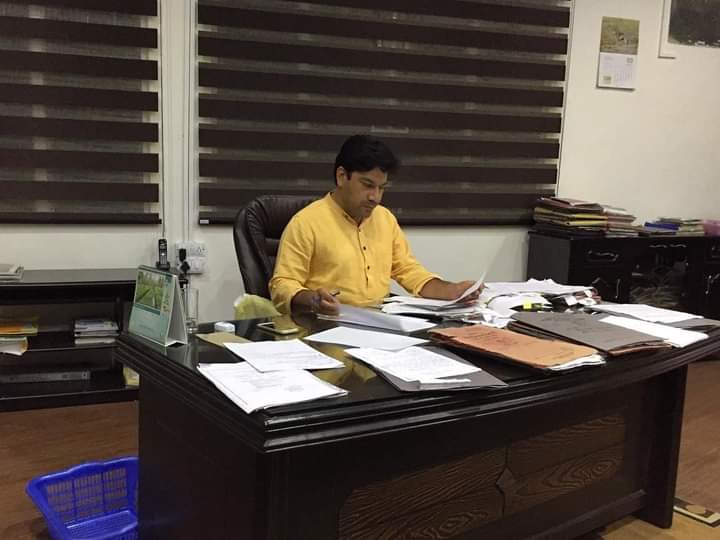
Career in the Indian Forest Service
During his career, Badola has served in several prominent forest and wildlife assignments in Uttarakhand and at the national level.
Field Director of Corbett Tiger Reserve
Badola was appointed Field Director of Corbett Tiger Reserve in January 2026. In this role, he was responsible for overseeing the management of one of India’s best-known tiger landscapes, including its wildlife protection and conservation administration.
His responsibilities also included addressing challenges at the interface between forests and surrounding communities. Human-wildlife conflict, habitat protection and the coordination of conservation work across the wider landscape have been important themes of his work.
He also held additional responsibility as Conservator of Forests, Western Circle, in Haldwani, giving him a broader role in forest management across the region.
Earlier Role at Rajaji Tiger Reserve
Before joining Corbett, Badola served as Field Director of Rajaji Tiger Reserve in Uttarakhand. His experience at Rajaji added to his work in protected-area administration and wildlife management.
He also served as Conservator associated with Gangotri National Park and Govind Wildlife Sanctuary, as well as Deputy Director of Corbett Tiger Reserve.
These assignments gave him experience across different protected landscapes, each with its own conservation priorities and administrative challenges.
Country Head of TRAFFIC India
One of Badola’s significant assignments was as Country Head and Director of TRAFFIC India, the wildlife trade monitoring network.
During this period, he worked on efforts to combat illegal wildlife trade and raise awareness about wildlife crime. His work included nationwide campaigns and webinars addressing the threats posed by illegal trade in wildlife and wildlife products.
TRAFFIC’s work focuses on monitoring wildlife trade and supporting efforts to ensure that trade does not threaten the survival of species. Badola’s assignment broadened his experience beyond protected-area management to include conservation policy, research, awareness and collaboration with organisations working against wildlife crime.
Corbett Literature Festival: Taking Conservation Beyond Tiger Safaris
One of Badola’s recent initiatives was the first Corbett Literature Festival, held in October 2026.
The festival was conceived as a platform to expand conversations about wildlife and the natural environment beyond the conventional focus on tiger sightings and tourism. It brought the wider conservation discussion into the realms of literature, storytelling, filmmaking and the experiences of communities living near forests.
The initiative reflected an approach in which conservation is not limited to forest departments and wildlife specialists. Writers, filmmakers, local communities and other stakeholders can also help build public understanding of ecosystems and the challenges involved in protecting them.
The festival was among Badola’s latest initiatives before he announced his decision to seek voluntary retirement.
Work on Human-Wildlife Conflict and Water Security
Badola has also championed landscape-level conservation approaches across the Terai Arc Landscape, where wildlife habitats and human settlements frequently intersect.
His work has included monsoon patrolling and support for water-security initiatives under the Amrit Sarovar programme. Such interventions aim to improve the availability of water and strengthen local resource management while addressing some of the pressures that can contribute to human-wildlife conflict.
Managing conflict requires more than responding to individual incidents. It also involves understanding wildlife movement, habitat conditions, seasonal patterns and the needs of communities living close to forests. Badola’s work has included these broader conservation considerations.
Efforts to Reduce Wildlife Fatalities on Railway Tracks
Badola has also been involved in efforts to address wildlife deaths caused by infrastructure, particularly elephant fatalities on railway tracks.
Drawing on his conservation experience, he collaborated with institutions including the Wildlife Institute of India and Indian Railways to explore practical measures to reduce such incidents.
Railway infrastructure can intersect with wildlife corridors and elephant movement routes, creating risks for animals and transport operations. Reducing these fatalities requires coordination between forest authorities, railway officials and scientific institutions, alongside suitable mitigation measures.
This work formed another part of his broader focus on addressing conservation challenges beyond the boundaries of individual protected areas.
A Career Spanning Forest Administration and Wildlife Conservation
From protected-area management in Uttarakhand to his national-level assignment with TRAFFIC India, Dr. Saket Badola’s career has covered several dimensions of wildlife conservation. His work has included tiger reserve administration, action against illegal wildlife trade, research-led conservation, human-wildlife conflict mitigation and initiatives designed to bring communities into the conservation conversation.
His decision to seek voluntary retirement comes after his appointment as Field Director of Corbett Tiger Reserve earlier in 2026 and the launch of the Corbett Literature Festival in October.
In his public statement, Badola expressed gratitude for the opportunities he received during his service and indicated that he hopes to continue contributing to the country in the future. The next stage of his professional life remains to be seen, subject to the government’s decision on his VRS application.
Read Also: Who Is Satyapal Balmiki? CBIC Accepts VRS Plea of 2014-Batch IRS Officer