Lucknow: The escalating conflict involving Iran, United States and Israel has pushed India into heightened maritime alert, with the Indian Navy significantly expanding its operational deployment in the Gulf of Oman and the Arabian Sea under Operation Sankalp.
Amid growing instability in the Strait of Hormuz—one of the world’s most critical oil and gas transit routes—the Indian Navy has deployed seven additional warships and logistics support vessels to secure Indian merchant shipping and energy cargo routes. The move comes as maritime traffic through the Strait has slowed sharply following military hostilities in West Asia, raising fresh concerns over India’s fuel security and supply chain resilience.
India’s Energy Security Under Pressure as Hormuz Faces Severe Disruption
The Strait of Hormuz handles nearly 20% of global oil and gas trade, making it one of the world’s most strategically sensitive waterways. For India, the disruption carries immediate economic and energy consequences.
India imports nearly 45% of its crude oil and gas requirements from Gulf countries, while approximately 90% of its LPG imports also originate from the Gulf region. With vessel movement slowing and several tankers stranded near the Strait, fears of domestic LPG shortages have intensified.
The situation has already affected shipping schedules, with multiple commercial vessels awaiting safe transit clearance in the region. Two state-owned LPG tankers have recently been evacuated safely, while diplomatic engagement continues with Iran to secure passage for additional vessels.
Seven Additional Naval Ships Deployed Under Operation Sankalp
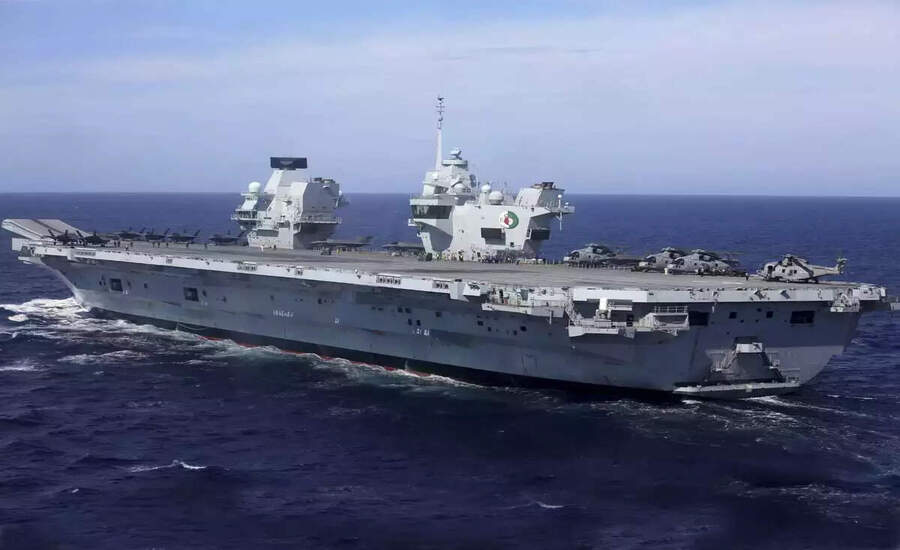
To strengthen maritime security, the Indian Navy has dispatched seven more warships and logistics support vesselsacross the Arabian Sea and Gulf of Oman.
This fresh deployment supplements two task forces activated over the past ten days, which had earlier escorted Indian merchant ships from the North Arabian Sea back to Indian ports.
The enhanced naval presence is aimed at:
• Protecting LPG and fuel tankers
• Escorting Indian merchant vessels
• Monitoring maritime threats
• Responding rapidly to emergencies near the Persian Gulf
Multiple naval platforms are now positioned close to the Persian Gulf to ensure immediate intervention if merchant ships face risk.
Operation Sankalp: India’s Maritime Shield Since 2019
Operation Sankalp was launched by the Indian Navy in 2019 after tensions escalated in the Gulf region following attacks on oil tankers.
Under this operation, Indian naval vessels provide security cover to commercial shipping across:
• Gulf of Oman
• Gulf of Aden
• Northern Arabian Sea
The operation has remained active continuously, ensuring safe transit of Indian-flagged and India-bound vessels through volatile waters.
The current deployment marks one of the most significant expansions under Operation Sankalp since its launch.
Mission-Based Deployment: Continuous Naval Vigil Across Six Maritime Zones
The current response is also part of India’s larger Mission-Based Deployment (MBD) framework, operational since 2017.
Under MBD, Indian naval assets remain deployed round-the-clock across six major maritime sectors globally.
Key Mission-Based Deployment Zones Include:
1 Gulf of Oman – Operation Sankalp shipping security
2 Gulf of Aden – Anti-piracy patrols
3 Near Seychelles – Security along Cape of Good Hope route
4 Near Maldives – Indian Ocean regional surveillance
5 Andaman and Nicobar region – Eastern maritime monitoring
6 Bay of Bengal – Patrols near Myanmar-Bangladesh maritime zone
At these locations, Indian warships also conduct:
• Joint exercises with friendly nations
• Humanitarian assistance
• Search and rescue missions
• Anti-piracy interventions
Initially, only one Indian naval ship was stationed near the Gulf of Oman during the latest crisis. That number rose to three and has now expanded further.
Over 20 Indian Vessels Stranded Near Hormuz
According to inputs linked to the Ministry of External Affairs, more than 20 Indian vessels are currently stranded west of the Strait of Hormuz.
Diplomatic discussions are underway with Iran to facilitate safe passage.
So far, three LPG tankers have already been escorted safely through the sensitive zone.
Indian authorities are coordinating closely with ship operators and regional stakeholders to ensure uninterrupted movement wherever possible.
No Immediate Alternative to Strait of Hormuz, Says Naval Experts
Retired naval expert Commodore Ranjit Rai has indicated that India currently has no practical immediate alternativeto the Strait of Hormuz.
According to maritime assessments:
• Gulf oil remains the cheapest available option for India
• Importing larger quantities from Russia would sharply raise freight costs
• Supplies from Venezuela or the U.S. would be significantly more expensive
• Alternative Saudi oil movement via Jeddah to Gulf of Aden through land logistics is operationally difficult and costly
This makes the Strait of Hormuz indispensable for India despite rising risks.
Navy Prepared for Further Escalation
Indian naval assets remain on continuous alert in forward waters.
Security planners indicate that naval vessels cannot remain confined to port during such crises and must stay mission-ready at sea.
If Iran provides security assurances, India may even expand operational movement deeper into the Persian Gulf.
The present deployment is not limited to escort duties alone—it is designed to prepare for broader contingencies if regional hostilities intensify further.
Domestic LPG Concerns Add Urgency to Naval Action
The maritime crisis is beginning to intersect with domestic supply concerns, especially around LPG availability.
Any prolonged disruption could affect:
• Household LPG distribution
• Industrial fuel supply
• Shipping costs
• Inflationary pressure on energy imports
Given India’s heavy dependence on Gulf energy imports, maritime stability in the region has become a critical strategic priority.
India’s Strategic Maritime Message
By increasing naval deployment, India is signalling that it intends to protect its shipping lanes and energy lifelines proactively.
The combination of Operation Sankalp and Mission-Based Deployment gives India flexibility to respond quickly across multiple maritime theatres.
For now, despite diplomatic efforts and naval readiness, the Strait of Hormuz remains India’s primary and unavoidable energy corridor.
How long the crisis persists will determine whether the current naval posture becomes a temporary safeguard or evolves into a larger long-duration maritime security mission.
Read also: IOCL Signs MoU with Indian Navy to Strengthen Training, Technology, and Operational Solutions