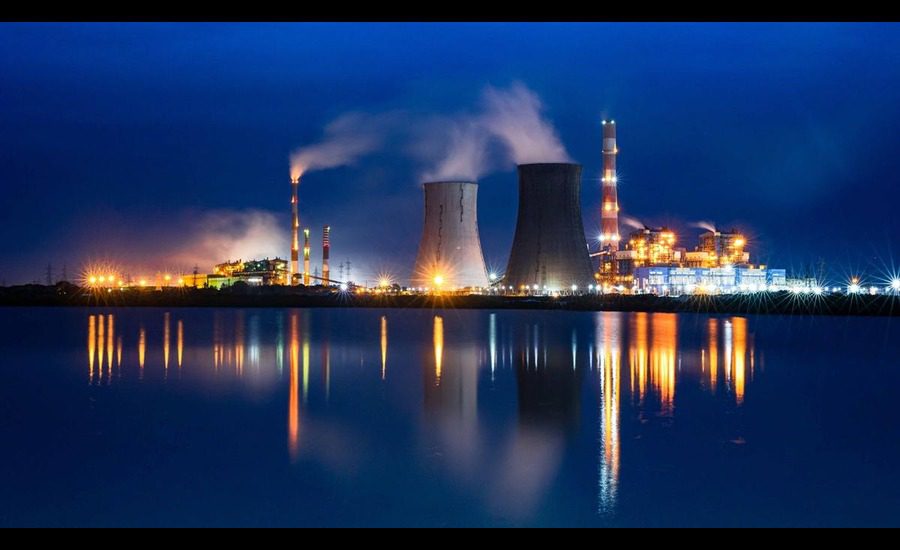
New Delhi: The Government of India has reaffirmed that all nuclear power plants (NPPs) in the country, including those under NTPC and other operators, comply with strict nuclear and radiation safety standards established by the Atomic Energy Regulatory Board. The assurance was provided by Dr. Jitendra Singh, Union Minister of State (Independent Charge) for Science & Technology and Earth Sciences, in a written reply in the Rajya Sabha.
The regulatory framework ensures technology-neutral and uniform safety compliance across all nuclear facilities in India, benchmarking international standards and guidelines set by the International Atomic Energy Agency.
Comprehensive Safety and Licensing Mechanisms
The AERB oversees nuclear safety at every stage of an NPP’s life cycle: siting, design, construction, commissioning, and operation. Before granting an operational license, the AERB conducts a thorough review to ensure compliance with national and international safety standards, including environmental safeguards.
During the operational phase, nuclear facilities undergo continuous monitoring, including:
- Routine Regulatory Inspections (RI) – conducted at defined frequencies and depths
- Special or Reactive Inspections – based on specific events or activities, which may be announced or unannounced
- Periodic Safety Reviews (PSR) – comprehensive evaluations conducted typically every ten years to benchmark safety provisions against current standards and implement upgrades
Read also: Why HALEU-Thorium Fuel May Not Fit India’s Nuclear Roadmap: Key Findings from the BARC Study
Safety Deviations Categorized and Corrected
All deviations identified during regulatory inspections are classified based on safety significance:
- Grey: Low safety significance
- Orange: Moderate safety significance
- Red: High safety significance
AERB ensures that corrective actions are implemented in a time-bound manner, and deviations are closed only after verifying the adequacy of measures taken by the nuclear facility. This framework applies uniformly across all NPPs, irrespective of technology or operating organization, including emerging projects.
Public Awareness and Outreach Initiatives
The Department of Atomic Energy (DAE) and Nuclear Power Corporation of India Limited actively conduct public outreach programmes to promote awareness of nuclear energy and safety:
- Educational Programs: Parmanu Jyoti Programme covering schools, college visits, and science projects at Environmental Survey Laboratories
- Community Engagement: Plant site visits, exhibitions, lectures, and seminars targeting students, teachers, local communities, media, and decision-makers
- Awareness Campaigns: Technology exhibitions, stakeholder-focused drives, journalist meets, and literature distribution on radiation safety
- Skill Development: Training under the Trade Apprentice Act, 1961, and CSR initiatives to build local expertise
These programs aim to dispel myths around nuclear energy, enhance public understanding, and support workforce skill development, particularly in regions surrounding nuclear facilities.
Socio-Economic Benefits of Nuclear Energy
Deployment of nuclear energy in India not only strengthens energy security but also contributes to local economic development:
- Creation of jobs for skilled local youth during plant construction and commissioning
- Boost to local industries and commercial activities
- Long-term engagement with communities through education and skill development initiatives
NPCIL’s Structured Public Engagement
Nuclear Power Corporation of India Limited carries out multi-pronged and continuous public awareness campaigns across India. Focus groups include students, teachers, local communities, policymakers, media, and opinion leaders. Activities include school and college visits, NCC camps, science center tours, exhibitions, lectures, and seminars, ensuring credible and widespread outreach on nuclear safety and technology.
About NTPC
NTPC Limited is India’s leading integrated power utility with a strong presence across the entire energy value chain. The company is actively expanding its portfolio in renewable energy, green hydrogen, and sustainable power solutions, while continuing to drive innovation and efficiency in conventional and clean energy generation.