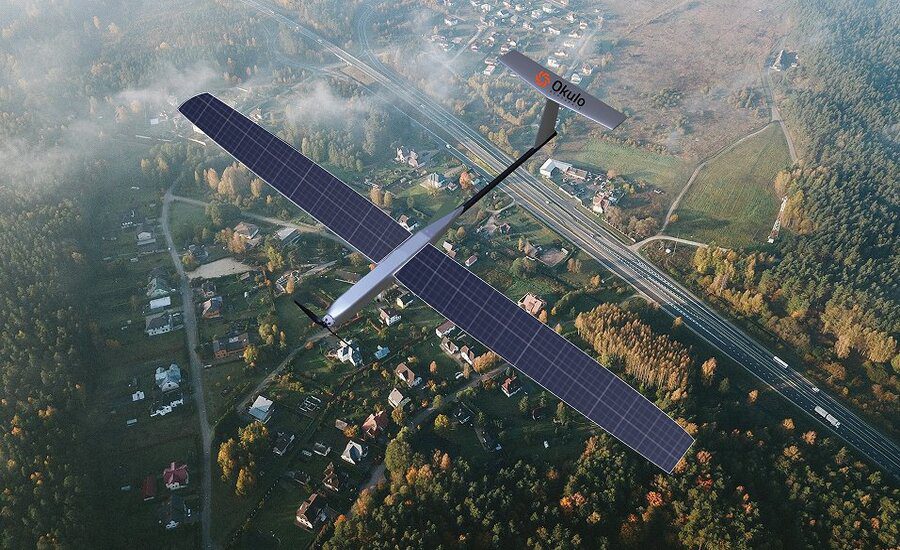
New Delhi: India’s first solar-electric fixed-wing UAV, the Suvi-V1, has officially received type certification from the Directorate General of Civil Aviation (DGCA), marking a major milestone for the country’s aerospace and defence innovation ecosystem.
This Type Certified solar drone confirms compliance with stringent safety and performance standards, making it ready for real-world deployment across surveillance, mapping, environmental monitoring, and defence operations.
Type certification validates airworthiness and regulatory compliance, building confidence for both defence and commercial users. The achievement reflects India’s growing focus on Atmanirbhar Bharat in advanced aerospace technology and places it among nations developing long-endurance unmanned platforms.
What Is the Suvi-V1 Solar-Electric UAV?
The Suvi-V1 is a solar-electric hybrid fixed-wing UAV developed by Okulo Aerospace, a Bengaluru-based aerospace startup. Unlike conventional battery-powered drones, the Suvi-V1 uses a combination of solar power and onboard batteries to extend its endurance — allowing it to remain airborne much longer with reduced need for ground charging.
Read also: Big Push for Atmanirbhar Bharat: MoD Seals ₹659 Crore MKU Deal for Army’s SIG-716 Rifles
By harnessing solar energy, the platform can support extended flight durations and continuous operations in remote or hard-to-reach regions without frequent recharge stops.
This makes it particularly useful for missions that require long-term observation or wide-area data collection, such as border surveillance, environmental studies, infrastructure monitoring, and disaster response.
What is the Importance of Suvi-V1 Certification
Receiving a Type Certification from India’s aviation regulator (DGCA) is a formal endorsement that the Suvi-V1 meets established standards for safety, reliability, performance, and operational capability.
This certification provides:
- Regulatory acceptance for real-world operations under Indian airspace rules.
- Confidence for defence and commercial users evaluating and procuring these systems.
- A foundation for export and global interoperability with allied regulatory frameworks.
Type certification is a strong signal that a UAV is approved for deployment beyond experimental testing, which has historically been a barrier for many emerging unmanned technologies. It bridges the gap between prototype innovation and scalable operational use.
The Strategic Importance for India
India’s rapid adoption of drone technology in both defence and civilian sectors has been growing. Policy initiatives such as Drone Rules 2021 and investment in indigenous R&D have boosted local design, manufacturing, and certification efforts.
Fixed-wing UAVs with solar-electric endurance represent a major strategic advantage:
- They support persistent intelligence, surveillance & reconnaissance (ISR) missions.
- They reduce logistical constraints and operating costs associated with battery-only drones.
- They align with clean energy and sustainability goals.
This achievement also reinforces India’s goals of self-reliance in cutting-edge defence technologies, encouraging other Indian startups and research organisations to pursue advanced aerospace innovations.
What is Applications of Suvi-V1
Solar-electric endurance drones like the Suvi-V1 can support:
- Long-duration border patrols.
- Persistent area surveillance without frequent landings.
- Data feeds for battlefield intelligence and early warning systems.
With its official certification, the Suvi-V1 becomes a credible option for defence procurement and complements other UAV categories in India’s expanding unmanned fleet.
Civil and Commercial Uses
In civilian sectors, such UAVs can be used for:
- Large-area mapping and surveying.
- Environmental and wildlife monitoring.
- Disaster management and recovery operations.
- Agricultural land observation.
Long-endurance solar platforms help reduce human intervention and lower operating costs for broad-area missions.
What This Means for India’s UAV Ecosystem
India’s UAV ecosystem is rapidly evolving. From surveillance quadcopters in anti-insurgency operations to indigenous development of high-endurance fixed-wing systems, the sector is gaining momentum.
According to market analysis, the India UAV market is expected to grow significantly by 2030, driven by increased defence adoption and broader civil use, especially for fixed-wing and long-endurance platforms.
The Suvi-V1’s certification helps:
- Establish global credibility for India-developed UAVs.
- Encourage regulatory clarity for advanced unmanned systems.
- Promote private sector innovation within the “Make in India” initiative.
Challenges and the Road Ahead
Despite this milestone, integration of solar-electric UAVs into operational theatres involves additional challenges:
- Regulatory alignment for Beyond Visual Line of Sight (BVLOS) operations.
- Development of support infrastructure for maintenance and training.
- Airspace coordination with manned aviation.
Ongoing collaboration between regulators, industry bodies, and defence organisations will be key to unlocking full potential.
Read also: Defence Breakthrough: Indian Army Cuts Import Dependence with 91% Ammunition Made Locally