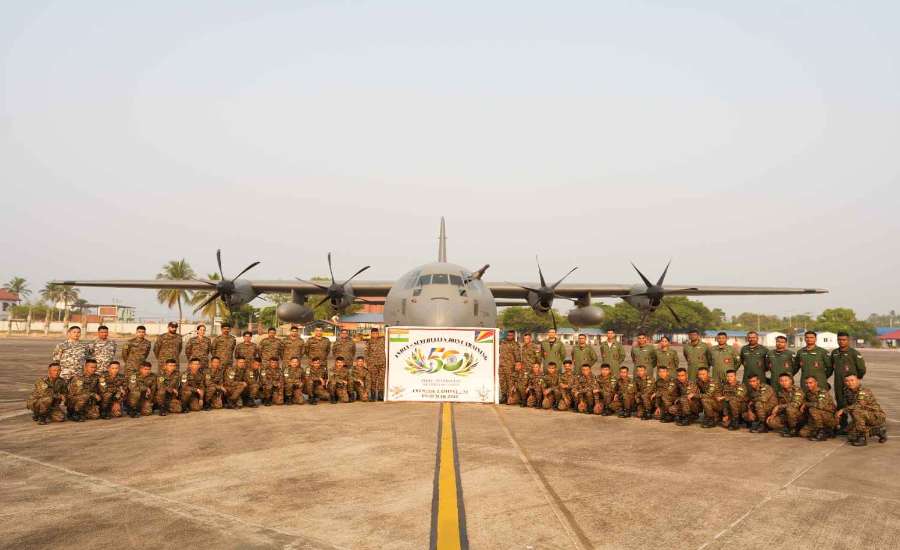
New Delhi: The Joint Military Exercise LAMITIYE 2026 has begun as an Indian Armed Forces contingent departed for Seychelles to participate in the eleventh edition of the bilateral defence exercise with the Seychelles Defence Forces (SDF).
The Joint Military Exercise LAMITIYE 2026 is being conducted at the Seychelles Defence Academy from 9 March to 20 March 2026. This exercise focuses on improving cooperation, interoperability and tactical coordination between the two countries’ armed forces.
The initiative is part of India’s broader defence diplomacy in the Indian Ocean Region and aims to strengthen military ties, share operational experience and enhance readiness for peacekeeping and security operations.
What is Exercise LAMITIYE?
Exercise LAMITIYE is a biennial joint military exercise between India and Seychelles. The word “LAMITIYE” means “Friendship” in Creole, symbolizing the strong diplomatic and defence relations between the two nations.
The exercise has been conducted in Seychelles since 2001, making it one of the long-standing bilateral defence engagements between India and an Indian Ocean partner nation.
The 2026 edition is particularly significant because it includes participation from all three branches of the Indian Armed Forces for the first time in this exercise.
Key Highlights of Exercise LAMITIYE 2026
- Location: Seychelles Defence Academy
- Dates: 9 March – 20 March 2026
- Edition: 11th edition of the exercise
- Participants: Indian Armed Forces and Seychelles Defence Forces
- Duration: 12 days
The Indian contingent includes personnel from the Assam Regiment along with participation from the Indian Navy and Indian Air Force. Naval warship INS Trikand and an Indian Air Force C-130 aircraft are also part of the exercise activities.
Focus Areas of the Joint Exercise
The main objective of the exercise is to improve operational coordination between the two countries. The training focuses on several critical military aspects:
1. Sub-Conventional Operations
Troops will train for operations in semi-urban environments, where modern security threats often occur.
2. Peacekeeping Cooperation
The exercise aims to enhance coordination during peacekeeping operations, especially in situations involving multinational missions.
3. Tactical Skills and Threat Neutralisation
Both sides will practice joint tactical drills to neutralise potential threats in complex environments.
4. Technology and Modern Equipment
The exercise also highlights the use of new-generation military equipment and advanced technologies during training.
Training Activities During the Exercise
The 12-day exercise includes a wide range of professional military training activities designed to simulate real-world operations.
Key activities include:
- Field Training Exercises
- Combat discussions
- Case studies and operational analysis
- Lectures and demonstrations
- Tactical drills in semi-urban terrain
- Final two-day validation exercise
These activities will allow soldiers from both countries to train, plan and execute missions together, improving their joint operational capability.