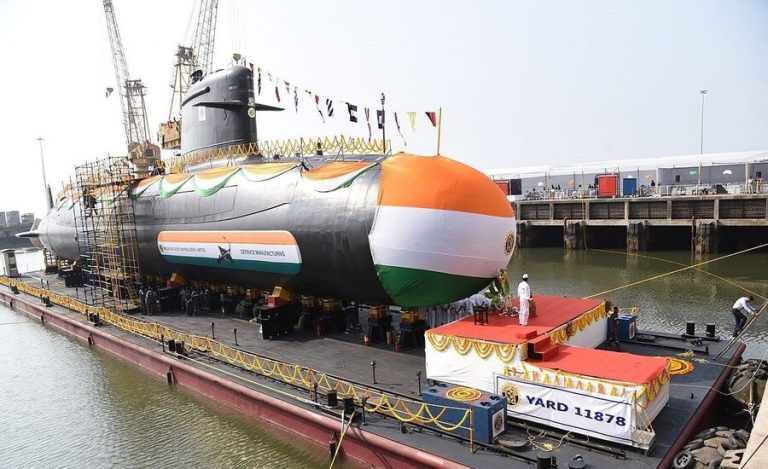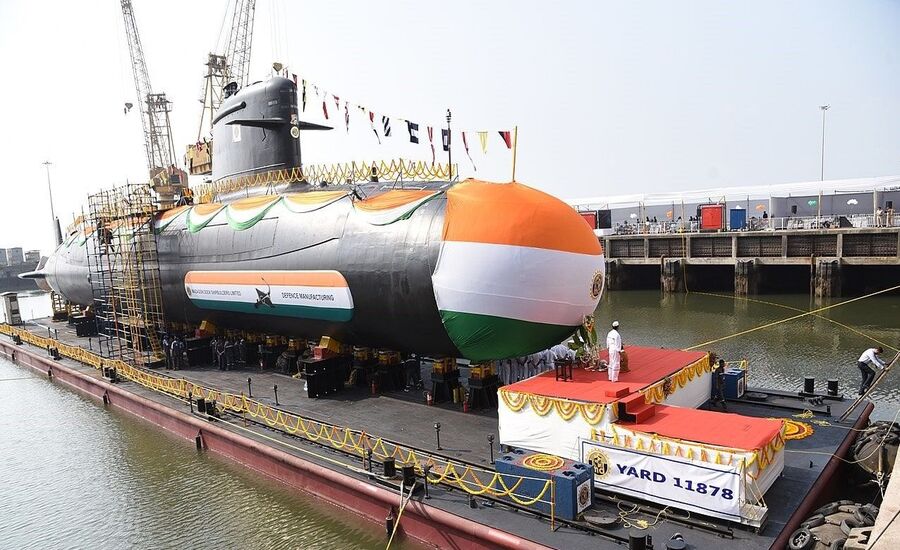
In a major strategic milestone, India has commissioned its third indigenous nuclear-powered ballistic missile submarine, INS Aridhaman, significantly strengthening the country’s sea-based nuclear deterrence capability.
Though the commissioning ceremony in Visakhapatnam remained low-profile, Defence Minister Rajnath Singh signaled the induction through a brief social media post:
“It’s not words but power, Aridhaman.”
Defence sources later confirmed that the submarine, designated S4, has formally joined India’s strategic fleet.
Third Submarine Under India’s Strategic SSBN Programme
INS Aridhaman is the third nuclear-powered ballistic missile submarine under India’s highly classified SSBN programme.
It follows:
- INS Arihant (commissioned in 2016)
- INS Arighaat (commissioned in 2024)
The SSBN programme operates under India’s Strategic Nuclear Command and forms the most survivable leg of the nuclear deterrence system.
Bigger, More Powerful Than Earlier Arihant-Class Submarines
INS Aridhaman is larger and more capable than its predecessors.
Key Specifications:
- Approximate displacement: 7,000 tonnes
- Length: about 130 metres
- Reactor: upgraded 83 MW compact light water reactor
- Lower acoustic signature for enhanced stealth
The larger design allows greater endurance, more missile capacity, and improved survivability.
Double Missile Capacity: 8 Launch Tubes
A major upgrade in INS Aridhaman is its missile launch capability.
Missile Capacity:
- 8 vertical launch tubes (double the earlier 4 tubes)
- Up to 8 K-4 ballistic missiles
- Or 24 K-15 Sagarika missiles
Missile Ranges:
- K-4: 3,500 km
- K-15 Sagarika: 750 km
The platform is also expected to support future long-range K-5 missiles.
Stronger Nuclear Second-Strike Capability
As a nuclear-powered submarine, INS Aridhaman can remain submerged for months, limited mainly by crew logistics.
This capability is critical for:
- Assured retaliation capability
- Survivability after first strike
- Continuous nuclear deterrence patrols
It forms the backbone of India’s No First Use nuclear doctrine.
India Moves Closer to Continuous At-Sea Deterrence
With three SSBNs now operational, India can rotate deployments and maintain at least one nuclear submarine at sea at all times, enabling:
- 24/7 strategic patrol capability
- Uninterrupted deterrence posture
- Stronger regional strategic stability
India’s Nuclear Triad Gets Operational Depth
India completed its nuclear triad earlier with INS Arihant, but INS Aridhaman significantly strengthens operational reliability.
Nuclear Triad Launch Capability From:
- Land-based missiles
- Aircraft
- Submarines
Countries with a full nuclear triad:
- United States
- Russia
- China
- United Kingdom
- France
- India
Fourth SSBN Under Trials, Fifth Already Under Construction
- Fourth SSBN of same class is in sea trials, commissioning expected next year
- Fifth SSBN already under construction, larger than Aridhaman
India’s strategic submarine programme is entering a new expansion phase.
Strategic Base Near Visakhapatnam
INS Aridhaman is expected to operate from the eastern naval complex linked to Project Varsha near Visakhapatnam under Strategic Forces Command.
Future Nuclear Attack Submarines Planned
India is also developing nuclear attack submarines (SSN), separate from ballistic missile submarines.
- Government approval granted for first two SSNs
- First indigenous SSN expected around 2036–37
Why INS Aridhaman Matters Strategically
INS Aridhaman provides India with:
- Deeper strategic reach
- Improved stealth
- Stronger deterrence in the Indo-Pacific
- Technological maturity in nuclear shipbuilding
Its induction signals India’s rise among advanced naval powers.
Read also: India Defence Exports Hit Record ₹38,424 Crore in FY 2025-26, Up 62.66%; DPSUs Lead with 151% Growth