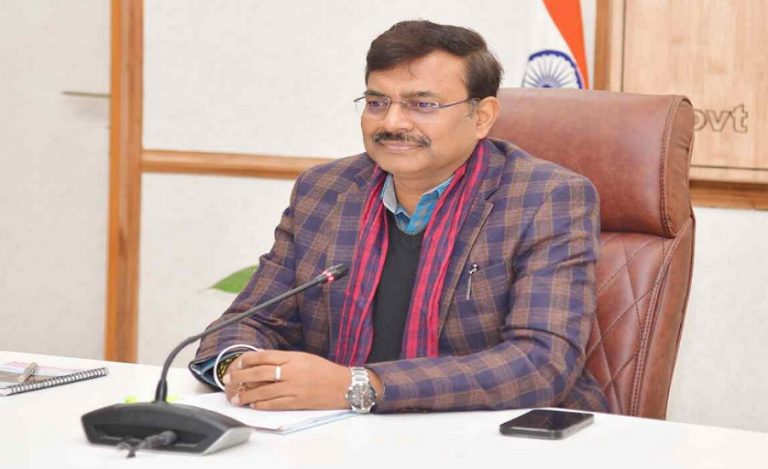
New Delhi: Over the last five years, a higher number of candidates from OBC, SC, and ST categories have been appointed to the Indian Police Service (IPS) compared to the Indian Administrative Service (IAS) and Indian Forest Service (IFS), according to a written reply in the Rajya Sabha by Dr. Jitendra Singh, Minister of State (Independent Charge) for Personnel, Public Grievances and Pensions.
The information highlights both progress in representation of socially disadvantaged groups in civil services and the continuing shortage of officers across key services.
Appointment Trends (2020–2024)
Between 2020 and 2024, a total of 255 OBC, 141 SC, and 71 ST candidates were appointed to the IPS after clearing the Civil Services Examination. During the same period, 245 OBC candidates were appointed to the IAS, while 231 OBC, 95 SC, and 48 ST candidates were appointed to the IFS. This shows that more OBC, SC, and ST candidates were allocated to the IPS than to the IAS or IFS over the last five years.
Read also: Uttarakhand Govt Transfers 11 PCS & IAS Officers, Vishal Mishra Takes Charge as Rudraprayag DM
Officer Shortages Across Services
Despite these appointments, all three services continue to face significant shortfalls. The IAS has a deficit of 1,300 officers against a sanctioned strength of 6,877, with 5,577 officers currently in position. The IPS has a shortage of 505 officers out of 5,099 posts, while the IFS faces a deficit of 1,029 officers against 3,193 sanctioned posts, with 2,164 officers in position as of January 1, 2025.
These numbers indicate that while representation for OBC, SC, and ST candidates has improved, the gap between sanctioned posts and actual officers remains a critical challenge for administrative, policing, and forest management efficiency in India.
Context
The figures reflect ongoing efforts to improve representation of OBC, SC, and ST communities in central services through the Civil Services Examination.
However, the persistent shortages highlight the need for more appointments and recruitment initiatives to ensure smooth functioning of key administrative and governance institutions.
Dr. Jitendra Singh’s reply underscores the dual challenge of enhancing social representation while addressing manpower deficits in India’s top civil services.