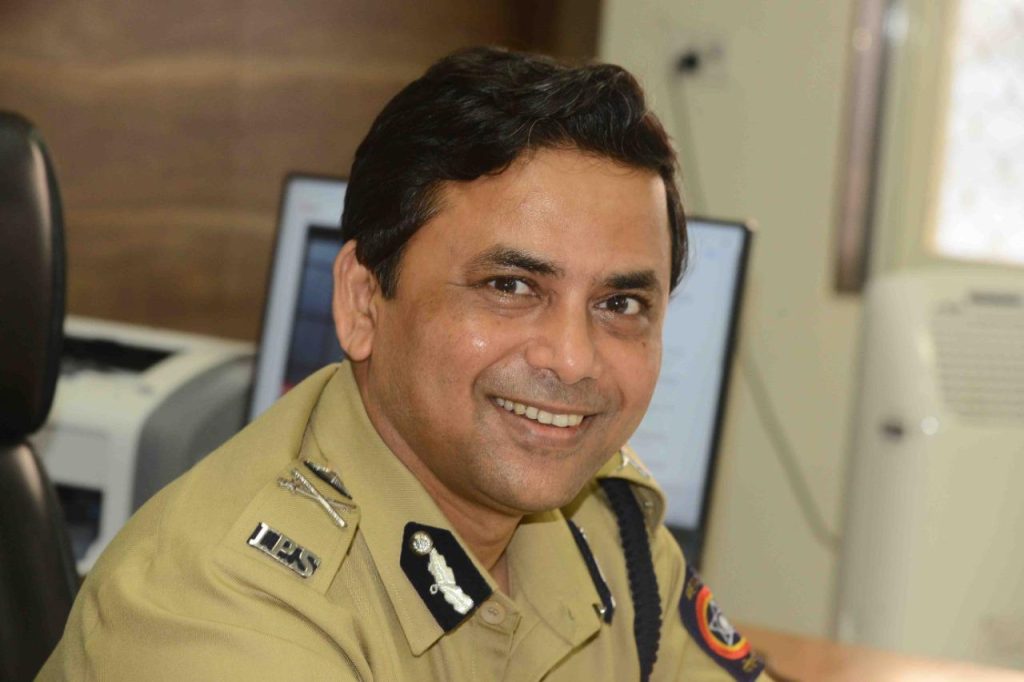
Mumbai: A Maharashtra government-appointed inquiry panel investigating the deadly Ghatkopar hoarding collapse has held senior police officer Quaiser Khalid (1997 batch), civic officials, private company representatives and others responsible for a chain of illegalities and regulatory violations that culminated in one of Mumbai’s deadliest infrastructure-related tragedies in recent years.
The 854-page report, tabled in the Maharashtra Legislative Assembly on Tuesday by Chief Minister Devendra Fadnavis, concluded that collusion between officials and private entities enabled the erection and continued operation of a massive illegal hoarding that collapsed during a dust storm on May 13, 2024, killing 17 people and injuring 74 others.
Deadly Collapse Triggered Major Public Scrutiny
The tragedy occurred in Ghatkopar when a giant hoarding measuring approximately 120 feet by 140 feet collapsed onto a petrol pump during severe weather conditions.
The billboard crashed onto vehicles and people gathered at the site, triggering a massive rescue operation.
The incident immediately raised serious concerns over illegal hoardings, regulatory oversight and administrative accountability across Mumbai.
Committee Headed by Former Chief Justice Examined Entire Approval Chain
The state government constituted an inquiry committee headed by Dilip Bhosale, former Chief Justice of the Allahabad High Court, to examine the permissions, land ownership records, structural safety approvals and administrative decisions connected to the hoarding.
The panel found that former Government Railway Police Commissioner Quaiser Khalid had allowed the installation of the structure without following tendering procedures.
Quaiser Khalid Accused of Granting Illegal Permissions Without Tender
According to the report, Khalid unilaterally permitted the installation of the giant hoarding and granted operating rights to advertising company Ego Media for a period of 30 years without inviting tenders.
The report said this decision directly violated civic norms governing public advertisement infrastructure.
It further noted that permissions were also granted for increasing the size of three additional hoardings without obtaining mandatory approvals, thereby multiplying safety risks.
Violation of BMC Hoarding Size Rules
The panel pointed out that the hoarding violated size restrictions prescribed by the Brihanmumbai Municipal Corporation, which caps permissible hoarding dimensions at 40 feet by 40 feet.
The committee concluded that these limits were bypassed by incorrectly presenting the site as railway land.
Land Was Not Railway Property, Panel Says
Rejecting Khalid’s defence that the land fell under railway jurisdiction and was therefore exempt from municipal regulation, the panel found that the site actually belonged to the Maharashtra government and the Police Welfare Corporation.
- The report stated that describing the land as railway property was a deliberate mechanism used to evade BMC regulations.
- It observed that this treatment of land as railway property was a “clever device” designed to bypass municipal oversight.
Private Players and Officials Named in Suspected Conspiracy
The report named Ego Media directors Bhavesh Bhinde and Janhavi Marathe, BMC official Sunil Dalvi, and businessman Arshad Khan as key actors in the illegal chain of approvals.
- According to the panel, the sequence of events strongly suggests criminal conspiracy among these individuals.
- The report stated that their coordinated actions helped circumvent municipal regulations and directly contributed to the fatal consequences.
Successor Officer Given Clean Chit
The panel gave a clean chit to Ravindra Shisve, who was serving as Government Railway Police Commissioner when the collapse took place.
The committee found no evidence linking him to the original permissions granted for the hoarding.
Questions Raised Over Contract Award to Ego Media
The inquiry also found irregularities in awarding the advertisement rights.
It stated that Ego Media was granted the contract even though another firm, Qicom, had earlier been denied permission for the same site.
Importantly, Qicom was reportedly not even invited to submit a commercial proposal.
The report noted that the decision was taken despite objections from both the BMC and Bharat Petroleum Corporation Limited.
Structural Engineer Also Held Responsible
Structural engineer Manoj Sanghu was also held responsible for issuing a structural stability certificate.
The committee stated that Sanghu either knew the design was deficient or failed to properly examine the structure before certifying it.
The report held that he failed in his professional responsibility to ensure structural safety.
Major Regulatory Reforms Recommended
The panel proposed wide-ranging reforms for hoarding regulation in Maharashtra.
It recommended that hoarding height should not exceed 100 feet and display dimensions must remain within 40 feet by 40 feet.
Ban Recommended on Rooftop Hoardings
The committee strongly advised banning hoardings on terraces and rooftops of buildings.
According to the report, such installations weaken building strength and create additional public safety risks.
It recommended that no existing rooftop hoarding licence should be renewed.
Smaller Hoardings Suggested for Dense Urban Areas
For densely populated zones, the panel proposed even stricter safety provisions.
It suggested smaller hoardings in high-density areas where risks to human life are significantly higher.
The report emphasized that special safety norms must be designed for such localities.
About Quaiser Khalid
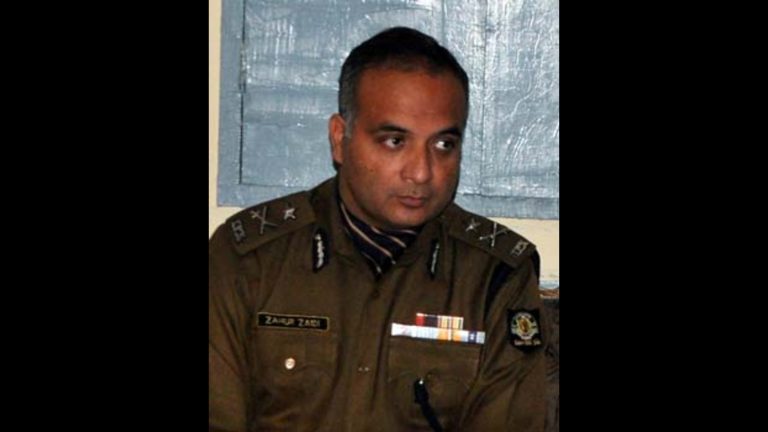
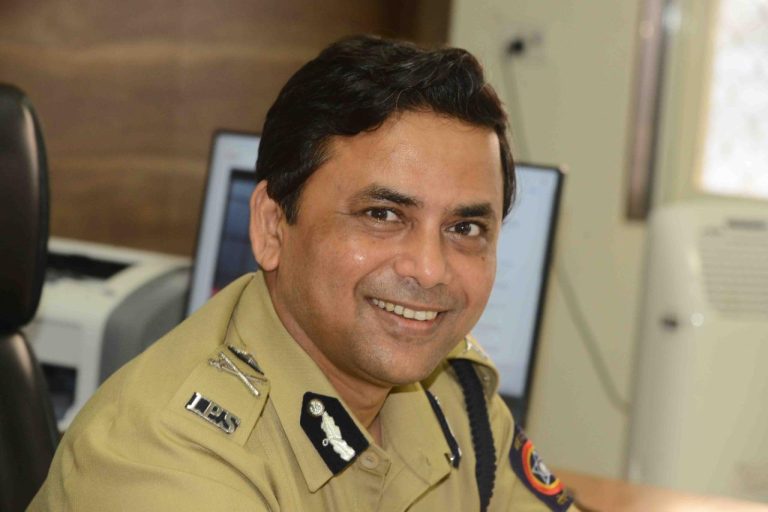
Mr Khalid, born on 19 July 1971 in Araria, is a senior IPS officer of the 1997 batch from Maharashtra cadre who has built a distinguished career in policing across Maharashtra. After schooling in Araria and higher education at Patna Science College and Patna College in Patna, he underwent advanced professional training at Charles Sturt University and University College London.
He began as trainee ASP in Solapur and went on to serve in districts such as Jalgaon, Gadchiroli, Sindhudurg, and Wardha, besides holding major posts in Mumbai including Additional Commissioner of Police (Traffic), Additional Commissioner of Police (East Region), Commissioner of Railway Police, and Inspector General of Police (Motor Transport), Maharashtra. He also contributed to the creation of the India Reserve Battalion (SRPF Group 15, Aurangabad).
Alongside policing, Khalid is a respected literary figure known for writing in Urdu and Hindi. His poetry collections Shaoor-e-Asr and Dasht-e-Jaan earned him recognition in contemporary Urdu literature, with Shaoor-e-Asr receiving the Maharashtra State Urdu Sahitya Academy award. He also edited Deewane-Shaad Azeemabadi and founded Pasbaan-e-Adab and Jashn-e-Adab, which organize literary festivals such as Anubhuti, Izhaar, Kaavyanjali, and Sahitya Utsav to promote Indian languages and cultural harmony. A TEDx speaker, teacher, and motivational mentor, he is also a 5th Dan Black Belt in Taekwondo and is noted for his work in peace and environmental advocacy.