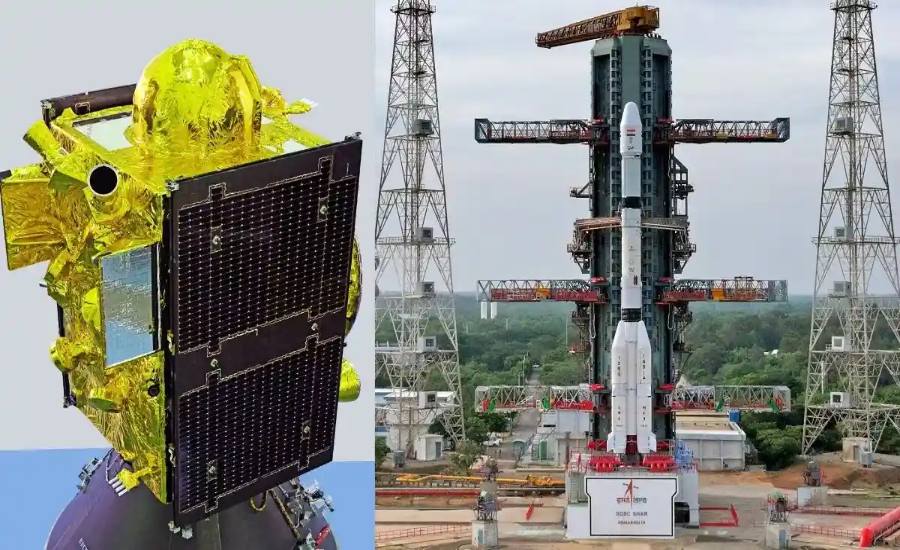
New Delhi: The successful GSLV-F18/NVS-03 mission marks an important step in strengthening India’s indigenous satellite navigation system. The new satellite carries an Indian-made atomic clock and introduces the L1 navigation signal, helping improve the capabilities and continuity of NavIC services.
Details of ISRO NVS-03 Mission
The Indian Space Research Organisation (ISRO) has successfully launched its next-generation navigation satellite, NVS-03, aboard the GSLV-F18 rocket.
Read also: IAF GSAT-7C Satellite Deal: 5 Ways It Could Strengthen the Indian Air Force
The launch took place at 11:51 PM IST on October 30, 2026, from the Second Launch Pad at the Satish Dhawan Space Centre in Sriharikota, Andhra Pradesh.
The satellite was successfully separated from the launch vehicle and placed into its intended Geosynchronous Transfer Orbit (GTO). This mission marks the 20th flight of India’s Geosynchronous Satellite Launch Vehicle (GSLV).
The successful launch is an important achievement for India’s space programme and its efforts to strengthen independent satellite navigation capabilities.
ISRO NVS-03 Mission: Key Features And Technology
NVS-03 is the third satellite in ISRO’s second-generation navigation satellite series. It has been developed to improve the availability and continuity of navigation services under the Navigation with Indian Constellation (NavIC) system.
The satellite carries an indigenous atomic clock along with procured atomic clocks. These clocks help maintain highly accurate time, which is essential for satellite-based navigation and positioning.
Another important feature is the addition of the L1 frequency signal alongside the existing L5 and S-band signals.
These technological improvements are expected to make NavIC more compatible with modern navigation receivers and consumer devices.
How ISRO NVS-03 Mission Will Strengthen India’s NavIC System
NavIC, previously known as the Indian Regional Navigation Satellite System (IRNSS), is India’s independent satellite navigation system.
It provides Position, Navigation and Timing (PNT) services across India’s landmass and a region extending approximately 1,500 kilometres beyond the country’s geographical boundaries. The system supports several important applications, including:
- Road and vehicle navigation.
- Maritime navigation and tracking.
- Aircraft navigation.
- Disaster management and emergency response.
- Precision agriculture.
- Military and strategic operations.
With the addition of NVS-03, ISRO aims to improve the reliability and continuity of India’s regional navigation services.
What Is New In NVS-03
Two major technological features make NVS-03 an important addition to India’s navigation satellite programme.
1. Introduction Of The L1 Frequency Signal
NVS-03 introduces the L1 frequency signal alongside the existing L5 and S-band signals.
The L1 signal is widely used by modern satellite navigation systems and consumer navigation devices.
Its addition is expected to improve compatibility with modern navigation receivers and smartphones that support the required NavIC signals.
2. Indigenous Atomic Clock Technology
The satellite carries an Indian-developed atomic clock along with procured atomic clocks.
Atomic clocks are essential for accurately measuring time in satellite navigation systems. Even small timing errors can affect the accuracy of location and positioning services.
The inclusion of indigenous technology is another step towards reducing India’s dependence on foreign systems and strengthening its technological self-reliance.
Why Is The NVS-03 Launch Important For India
The NVS-03 mission is important because India needs a reliable independent navigation system for civilian, commercial and strategic applications.
Satellite navigation services play a major role in transportation, communication, agriculture, infrastructure and national security.
A stronger NavIC system can also reduce India’s dependence on foreign navigation systems such as the United States’ GPS and Russia’s GLONASS.
According to ISRO Chairman Dr. V. Narayanan, the satellite was successfully placed into its intended orbit with high precision.
He also highlighted that the mission was completed with a turnaround time of just 56 days between two successive GSLV missions. This was the shortest turnaround time achieved by the launch vehicle.
ISRO Achieves Another Milestone In Space Technology
The successful GSLV-F18/NVS-03 mission represents another important achievement for India’s space programme.
The mission also highlights the growing contribution of Indian industries to the country’s space technology sector.
ISRO has been working to strengthen the NavIC constellation through its second-generation navigation satellites.
Further satellites, including NVS-04 and NVS-05, are planned to support the development of the navigation system.
With NVS-03 successfully placed in orbit, India has taken another important step towards maintaining a reliable and independent regional navigation network. The satellite will undergo further orbital operations and commissioning before its navigation services become operational.
Read also: What is the ISRO Santulan Programme? How This Non-Tech Space Programme Will Boost Gaganyaan Mission?
FAQs
ISRO successfully launched NVS-03 aboard the GSLV-F18 rocket at 11:51 PM IST on October 30, 2026, from the Satish Dhawan Space Centre in Sriharikota, Andhra Pradesh.
NVS-03 is the third satellite in ISRO’s second-generation navigation satellite series. It is designed to strengthen India’s NavIC navigation system and improve the continuity of satellite navigation services.
NavIC is India’s independent regional satellite navigation system. It provides positioning, navigation and timing services across India and approximately 1,500 kilometres beyond its geographical boundaries.