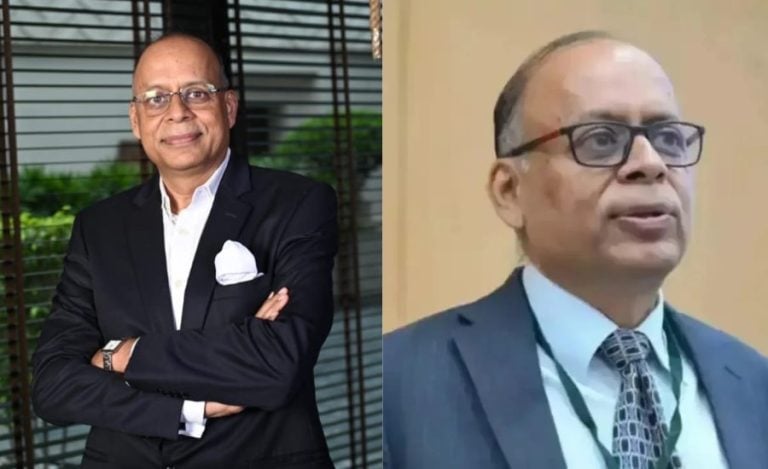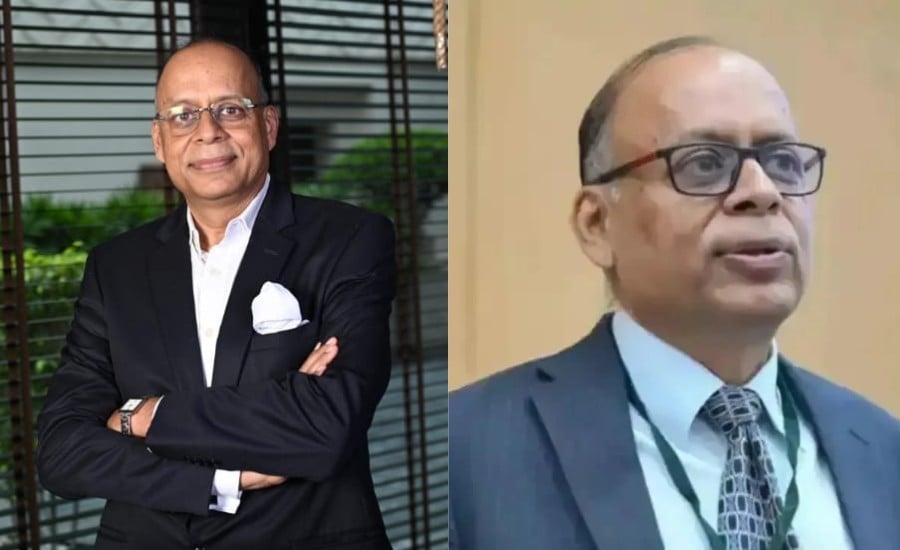
New Delhi: Union Public Service Commission (UPSC) Chairman Dr Ajay Kumar (IAS: 1985: KL), has clarified that the Commission has no plans to introduce artificial intelligence (AI) for evaluating candidates, even as it expands the use of technology in its administrative and recruitment processes.
In an interview, Dr Kumar explained that although AI is helping UPSC handle large volumes of applications, verify candidate information and improve examination security, the assessment of candidates will continue to rely on human evaluation.
He also discussed India’s potential to emerge as a global AI leader, highlighting the importance of regional language models, domestic data infrastructure, advanced AI skills and changes in the employment landscape.
UPSC Uses AI for Recruitment Processes, But Evaluation Will Remain Manual
Dr Kumar explained that UPSC has already incorporated AI into several administrative functions to improve efficiency and manage the large volume of applications and documents received by the Commission.
Some of its technology-driven applications include:
- Duplicate Application Detection: AI is being used to identify multiple applications submitted by the same candidate.
- Document Scrutiny: Technology assists in examining the large number of documents submitted by applicants.
- Face Authentication: Digital face verification at examination centres helps prevent impersonation.
- Knowledge Management: Technology assists in comparing similar disciplinary cases from previous years to maintain consistency in decision-making.
However, the Chairman made a distinction between administrative automation and the actual assessment of candidates.
He said the Commission does not consider currently available AI solutions sufficiently robust to replace its established human evaluation systems.
He further clarified that AI-related subjects may feature in recruitment examinations as technological developments become increasingly relevant, but the evaluation process itself will remain manual.
India’s AI Ambitions: Focus on Regional Languages and Small Language Models
Discussing India’s position in the global artificial intelligence ecosystem, Dr Kumar argued that the country should identify areas where it has a competitive advantage rather than attempting to match the United States and China solely in the scale of AI development.
He identified India’s linguistic diversity as one such opportunity.
According to him, developing AI capabilities for Indian regional languages could help the country establish a distinctive position in the global technology landscape.
He pointed to initiatives such as BHASHINI and companies such as Sarvam as examples of efforts to develop language-based AI capabilities.
He also highlighted the potential of Small Language Models (SLMs), which can operate on edge devices and support decentralised applications.
India’s existing strengths in chip design, its extensive smartphone user base and its expanding consumer electronics market could provide opportunities to develop AI-powered solutions for future smart devices.
Other areas where India could develop specialised AI capabilities include:
- Healthcare applications addressing challenges such as tuberculosis.
- Agricultural solutions for India and other developing economies.
- AI applications designed for resource-constrained environments.
- Small language models for decentralised and device-based applications.
- Participation in shaping international AI governance standards, particularly from the perspective of the Global South.
Dr Ajay Kumar Flags India’s Data Infrastructure Gap
Dr Kumar also emphasised that data infrastructure will be critical to India’s ability to compete in the global AI ecosystem.
He highlighted a disparity between India’s contribution to global data generation and its share of worldwide data storage capacity.
Citing estimates, he said India generates approximately 20% of the world’s data but accounts for only around 1–2% of global data storage capacity.
He referred to India’s data centre capacity of approximately 900 MW and stressed the need to expand domestic infrastructure to retain and utilise more of the data generated within the country.
However, he said building storage capacity alone would not be sufficient. India must also establish mechanisms through which individuals and organisations can securely share data and derive value from it.
In this context, he highlighted two important frameworks:
- Digital Personal Data Protection (DPDP) Act: Provides the legal framework for protecting personal data and regulating its processing.
- Data Empowerment and Protection Architecture (DEPA): Provides a consent-based mechanism through which individuals can securely share their data with service providers.
He noted that DEPA has gained visibility in the financial sector through account aggregators, but its adoption needs to expand into areas such as agriculture, healthcare and education.
He called for a mission-oriented approach to scaling these frameworks, similar to the expansion of digital payment infrastructure in India.
AI Literacy Must Reach Schools; India Needs Millions of Skilled Professionals
On whether India’s education system is prepared for the AI revolution, Dr Kumar drew parallels with the introduction of computer education in schools.
During his tenure as IT Secretary in Kerala, the state introduced computer education through the IT@School project in 2008–09, making it a mandatory part of school education.
He said the initial concerns about extending computer education across schools in different geographical and economic settings did not prevent technology adoption from expanding over time.
Drawing from that experience, he expressed confidence that educational institutions would adapt to AI, just as they had gradually incorporated computers and internet-based learning.
However, he identified a much larger challenge: developing advanced AI skills at scale.
According to him, India should aim to become a major supplier of AI talent globally while also meeting its domestic requirements.
He stressed that the country needs to move beyond training a few hundred or thousand specialists and work towards developing a skilled workforce running into millions.
He also drew a parallel with India’s IT outsourcing industry’s expansion, which was supported by coding education reaching smaller cities and communities.
A similar broad-based effort, he suggested, is required to develop expertise across different advanced AI domains.
Will AI Take Away Jobs? UPSC Chairman Explains the Changing Employment Landscape
Addressing concerns about AI replacing human workers, particularly in entry-level positions, Dr Kumar offered a nuanced assessment.
He said some existing jobs would disappear, while new employment opportunities would emerge. Certain professionals would also need to retrain and adapt to changing workplace requirements.
He explained that the introduction of AI and automation would create demand not only for technology specialists but also for non-technical professionals capable of managing and operating these systems.
However, he argued that the larger opportunity lies in using AI to address problems that were previously difficult or impossible to solve.
He identified healthcare, space exploration, ocean research and the study of the human body as areas where AI could open new possibilities.
Thus, he suggested that the impact of AI should not be measured only through the number of jobs created or displaced, but also through its potential to generate solutions to longstanding human challenges.
Why Creativity and Critical Thinking Will Matter in AI-Driven Education
Dr Kumar also underlined the importance of changing the way students are taught as AI becomes more widely accessible.
He said educational institutions must move beyond simply providing information and focus on developing students’ ability to ask meaningful questions, think independently and generate original ideas.
With AI making information retrieval and processing easier, he believes that creativity, originality and critical thinking will become increasingly important qualities.
His message to education policymakers and institutional leaders was that AI should remain a tool serving human objectives rather than determining them.
Who Is Dr Ajay Kumar?
Dr Ajay Kumar is the Chairman of the Union Public Service Commission and a 1985-batch Indian Administrative Service (IAS) officer of the Kerala cadre.
He assumed charge as UPSC Chairman on May 15, 2025, after serving as India’s Defence Secretary.
An alumnus of the Indian Institute of Technology (IIT), Kanpur, he holds a B.Tech degree in Electrical Engineering. He also earned an MS in Applied Economics and a PhD in Business Administration from the University of Minnesota, USA.
During his administrative career spanning more than 35 years, he held several important positions in the Central and Kerala governments, including Secretary, Department of Defence Production, Director General of the National Informatics Centre and senior positions in the Ministry of Electronics and Information Technology.
He is also the author of AI Nation: Bharat’s Path to AI Power, in which he examines India’s opportunities and challenges in developing its artificial intelligence capabilities.