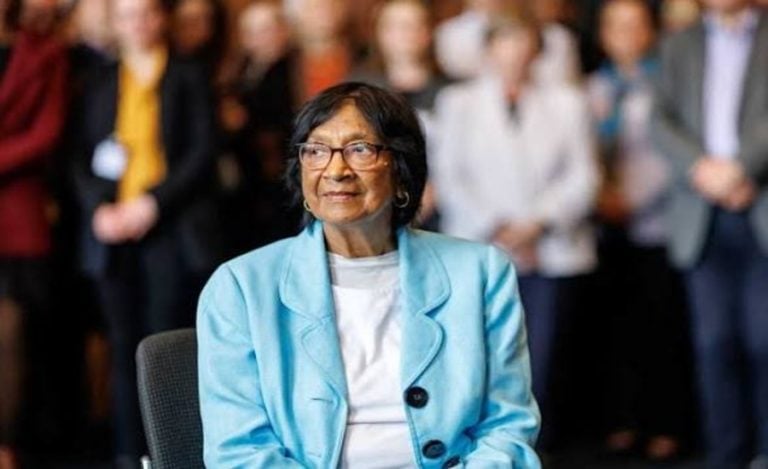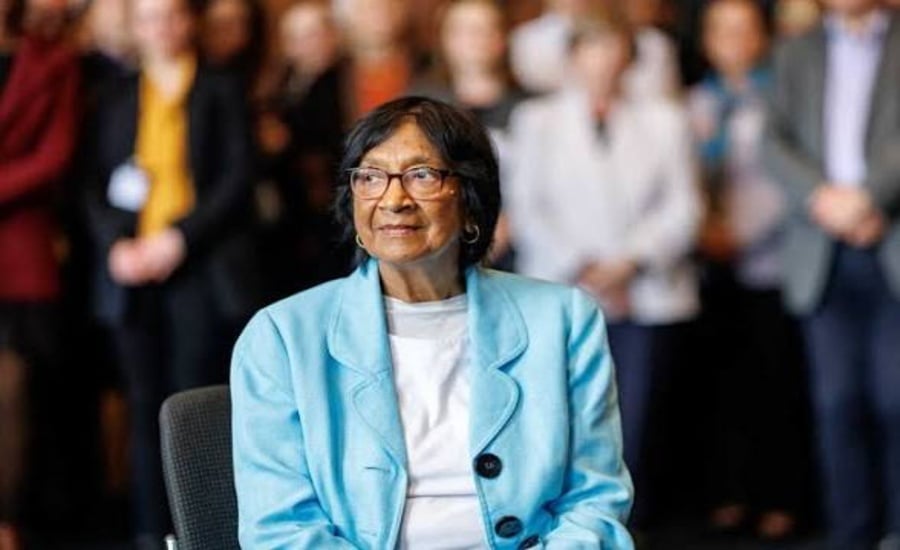
New Delhi: Navanethem “Navi” Pillay has won the 2026 Nobel Peace Prize for her efforts to promote peace, human rights and international law. The Norwegian Nobel Committee announced the award on October 9, 2026, recognising her long career in fighting discrimination and strengthening international justice.
Pillay, a South African lawyer and former United Nations High Commissioner for Human Rights, has helped shape important legal decisions involving genocide, war crimes and crimes against humanity. Her journey from apartheid-era South Africa to global leadership in international law is an inspiring story of courage, equality and justice.
Why Did Navi Pillay Win The 2026 Nobel Peace Prize
According to the Nobel Peace Prize announcement, Navi Pillay received the 2026 award for her efforts to promote peace and international law.
Read also: Justice for All: CJI Surya Kant Launches Victim Rights Centre and Transgender Helpline in Bihar
The committee recognised her contribution to building a stronger international legal system where people responsible for serious crimes can be held accountable. Her work has helped strengthen the role of courts and international institutions in protecting victims of violence and human rights abuses. The award also highlights the importance of international law in preventing violence and resolving conflicts peacefully.
Who Is Navi Pillay
Navanethem Pillay, widely known as Navi Pillay, was born in 1941 in Durban, South Africa. She grew up during apartheid, a system that enforced racial separation and discrimination against non-white people.
Pillay comes from a family of Indian Tamil origin. Her early life exposed her to the unfair treatment faced by people because of their race and background. These experiences helped shape her commitment to equality, justice and human rights. She studied law at the University of Natal and later earned advanced legal qualifications from Harvard University in the United States. Her education and determination helped her build a career that would eventually influence international law and human rights protection.
Navi Pillay’s Legal Career And Fight Against Apartheid
In 1967, Pillay became the first woman to establish a law practice in South Africa’s Natal Province. During apartheid, she worked as a lawyer and defended people who opposed racial discrimination. Her work supported individuals who faced injustice under the country’s former political system. She also contributed to efforts to protect the rights of prisoners and other vulnerable people.
In 1995, she became a judge of South Africa’s High Court. She was widely recognised as the country’s first non-white woman to hold this judicial position. Her appointment marked an important step towards greater representation and equality in South Africa’s legal system.
Her Landmark Work On The Rwanda Genocide
One of the most important stages of Pillay’s career came when she served as a judge at the International Criminal Tribunal for Rwanda (ICTR). The tribunal was established to prosecute people responsible for genocide and other serious crimes committed during the 1994 Rwandan genocide.
Pillay later became its president, serving from 1999 to 2003. During her time at the tribunal, she contributed to landmark legal decisions involving sexual violence and genocide. The tribunal’s landmark Akayesu judgment recognised that rape and sexual violence could constitute acts of genocide when committed with the required intent and circumstances.
This was an important development in international criminal law. It helped establish that sexual violence could be used as a means of destroying a protected group. Her work helped strengthen the recognition of survivors’ experiences and the responsibility of courts to address serious crimes.
Navi Pillay’s Role At The International Criminal Court
After her work at the Rwanda tribunal, Pillay became a judge at the International Criminal Court (ICC) in 2003.
The ICC is an international court that prosecutes individuals accused of certain serious international crimes, including genocide, crimes against humanity and war crimes, when the legal requirements for its jurisdiction are met. Her judicial experience contributed to her wider work in international justice. Her career across different courts showed the importance of applying legal principles fairly, regardless of a person’s political position or power.
Navi Pillay Served As UN Human Rights Chief From 2008 To 2014
From 2008 to 2014, Pillay served as the United Nations High Commissioner for Human Rights.
The position placed her at the centre of international efforts to promote and protect fundamental human rights. During her tenure, she worked on issues involving discrimination, freedom, equality and the protection of vulnerable communities.
The Office of the High Commissioner for Human Rights supports the protection of human rights around the world and works with governments, international organisations and civil society. Pillay used her international experience to highlight the importance of accountability and the need to protect the rights of every person. Her work in this role became another major part of her long public service career.
FAQs
Navi Pillay received the award for her contributions to international justice, human rights and the prosecution of serious crimes, including genocide and crimes against humanity.
Navanethem “Navi” Pillay won the 2026 Nobel Peace Prize for her efforts to promote peace and international law.
Navi Pillay served as the United Nations High Commissioner for Human Rights from 2008 to 2014. She worked to promote human rights, equality and accountability worldwide.