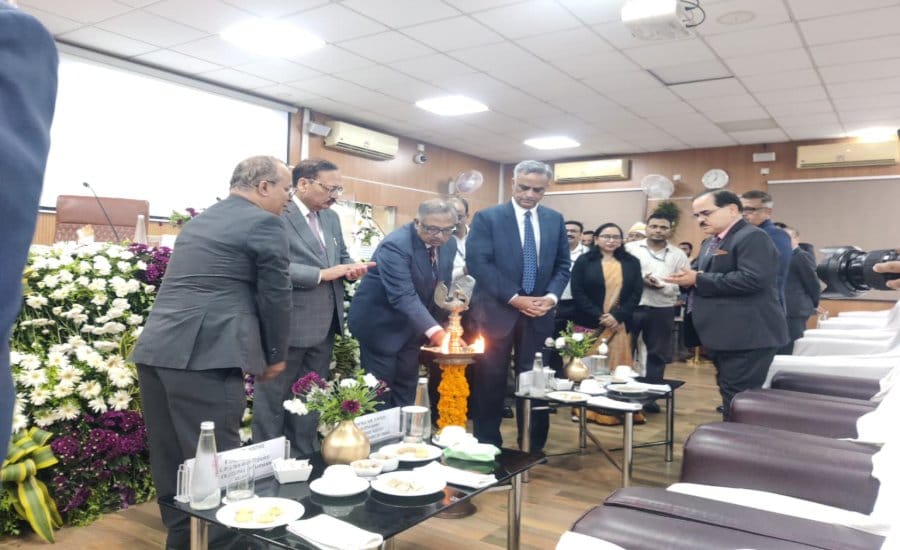
Patna: Chief Justice of India Justice Surya Kant has called for a justice system that is simple, accessible and equal for every section of society, particularly poor and vulnerable people.
Addressing a programme at the Bihar State Legal Services Authority (BSLSA) office on Budh Marg in Patna, the CJI said access to justice should not become difficult because of financial, social or procedural barriers.
The programme also marked the launch of the Victim Rights Centre and a dedicated Transgender Helpline. The Victim Rights Centre is a first-of-its-kind initiative in the country designed to bring legal information, assistance and coordination for victims under one roof. The centre has been launched as a pilot project in Patna.
CJI Surya Kant: Justice Must Reach Those Who Need It Most
Justice Surya Kant said the most important aspect of the justice system is that every person should be able to access it without unnecessary difficulty.
He particularly highlighted the needs of poor and socially vulnerable people, who may struggle to understand legal procedures or approach different institutions for assistance.
Speaking about the new Victim Rights Centre, the CJI said the single-window facility would allow victims to receive important information and legal assistance at one place. It would also help them document their cases and understand the judicial process.
He stressed that it is the responsibility of the system to ensure that no victim feels abandoned or helpless while seeking justice.
According to the model, the centre will maintain a coordinated record of a victim’s case and work with relevant agencies so that available assistance can reach the person concerned.
Read Also: From AI to 20,477 Placements: Bihar’s Government Technical Colleges Gain Momentum
Single-Window Support for Victims
The Victim Rights Centre seeks to reduce the difficulties victims often face while dealing with different offices and institutions.
Instead of repeatedly approaching multiple agencies, the centre will act as a single point of entry and coordinate with organisations involved in victim support. These include the police, hospitals, Child Welfare Committees, One Stop Centres, government departments and other organisations.
The centre will also monitor cases through defined internal timelines. A case is intended to remain open until relief is obtained and verified, or until the victim formally seeks closure.
Justice Surya Kant said the initiative could help citizens understand the technical aspects of the justice system and make the process of seeking legal assistance easier.
He noted that while changes to the law may not always be possible, the way people access their legal rights can be improved. The objective, he said, should be to ensure that justice reaches the person who needs it most.
Transgender Helpline to Provide Legal Support
The CJI also launched a dedicated Transgender Helpline during the programme.
Justice Surya Kant said the helpline would help members of the transgender community understand their legal rights and navigate the judicial process.
He emphasised that the facility should not function merely as a conventional call centre. It is intended to provide information related to the legal process and help a particularly vulnerable community access available rights and support.
The helpline is linked with Bihar’s existing framework for the consolidation, rehabilitation and access to justice of transgender persons. The initiative can assist transgender persons in accessing services and benefits related to identity documentation, healthcare, housing, employment and welfare.
Patna High Court Chief Justice Highlights Wider Impact
Patna High Court Chief Justice Justice V. Kameswar Rao said the justice process involves several important stages beyond investigation, trial and the final judgment.
He pointed out that criminal proceedings can affect not only the accused or victim but also their families. Court cases can consume significant amounts of time and money, while prolonged legal proceedings can create additional difficulties for family members.
Justice Rao said timely legal advice and support could reduce some of these difficulties.
He also highlighted the different forms of assistance required by vulnerable groups, including children, elderly people and transgender persons. In cases involving human trafficking, for example, legal assistance alone may not be enough and victims may need several other forms of support.
He noted that even a person who is eventually acquitted after spending years facing a criminal trial may require considerable time and additional assistance to recover from the experience.
The Victim Rights Centre, he said, could provide a more comprehensive response to these wider needs.
Justice Sudhir Singh: Centre Will Strengthen Legal Services
Justice Sudhir Singh, Executive Chairman of BSLSA, said the Victim Rights Centre and the helpline would strengthen the authority’s ability to assist people who need legal support.
He said the centre would provide victims with access to different forms of assistance and make justice meaningful by helping it reach those who need it.
Justice Singh also acknowledged the contribution of Senior Advocate Shama Sinha, who conceptualised the two projects. He said her vision had helped create initiatives aimed at supporting poor and vulnerable people.
The centre’s model has been developed under the guidance of Justice V. Kameswar Rao and Justice Sudhir Singh, and the project is being coordinated by advocate Shama Sinha.
Legal, Health and Psychological Support Under One Roof
Senior Advocate Shama Sinha said the new system would reduce the need for poor people, Scheduled Caste and Scheduled Tribe communities, children, elderly people and women to move from one office to another for legal assistance.
The centre will coordinate with different departments and institutions so that victims can receive the assistance they require.
This can include coordination involving legal services, health support, police assistance and psychological or counselling support, depending on the needs of the case.
The wider objective is to make victim support more coordinated instead of leaving individuals to navigate multiple systems on their own.
Mobile Vehicles to Take Legal Awareness to Remote Areas
Before the main programme, Justice Surya Kant and other dignitaries flagged off a fleet of multi-utility vehicles.
The vehicles are intended to strengthen legal outreach in remote and distant areas of Bihar. They will travel to communities and provide information about basic laws, legal rights and available assistance.
The initiative is aimed at taking legal awareness beyond the offices of legal services authorities and closer to people who may otherwise find it difficult to access such information.
A Pilot That Could Expand Across Bihar
The Victim Rights Centre has initially been introduced as a 12-month pilot project in Patna district. Its performance will be evaluated before the model is considered for expansion through District Legal Services Authorities in other parts of Bihar.
The programme was attended by judges of the Patna High Court, registrars and other judicial officials. Judicial officer Sakshi Prakhar conducted the programme, while Purushottam Mishra delivered the vote of thanks.
The initiative represents a broader effort to make legal services more accessible by bringing information, coordination and assistance closer to victims and vulnerable communities. Its success in the pilot phase could determine how the model develops across Bihar and potentially offers a framework for improving victim-centred legal assistance.
Read Also: Bihar’s Youth Step Up: Patna Women’s College Pushes Tobacco-Free Campus Drive