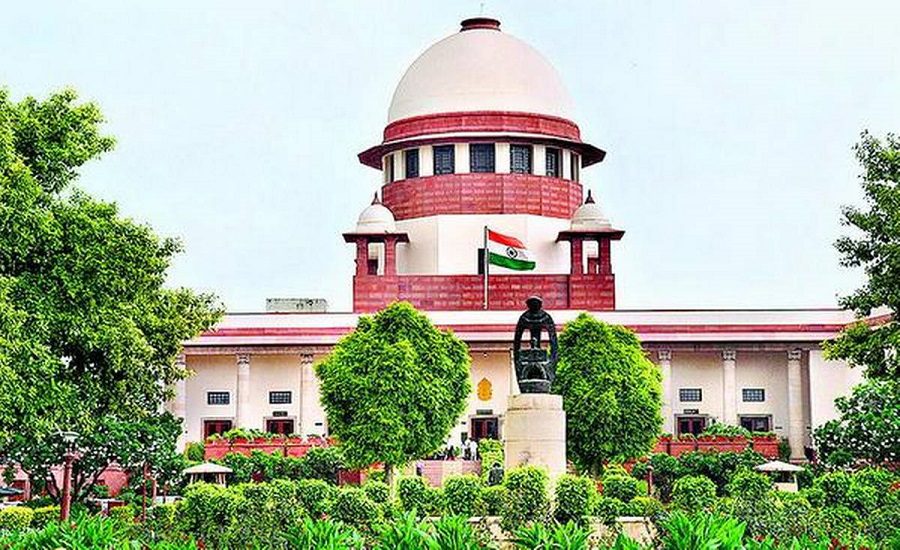
New Delhi: The Supreme Court notified new senior designation guidelines for designating Senior Advocates in India, replacing the 2023 rules. The new framework, titled “Guidelines for Designation of Senior Advocates by the Supreme Court of India, 2026”, abolishes the old points-based evaluation and interview system that was deemed unworkable by the Court.
Background of the Senior Designation Guidelines for Senior Advocates
For years, the Supreme Court used a points system and interviews to evaluate advocates for senior designation. The system awarded scores for years in practice, reported judgments, legal publications, and a personality interview. However, the Court found this method ineffective and not truly reflective of merit or professional ability.
In Jitender Kalla vs State of NCT of Delhi, the Supreme Court ruled that such point-based and interview-based assessments were unworkable and lacked meaningful objectivity. This led to a fundamental rethinking of how senior advocates are recognised in India’s highest court.
Key Features of Senior Designation Guidelines for Senior Advocates
Here are the key features of senior designation guidelines for senior advocates;
1. Permanent Committee for Designation
Under the 2026 guidelines, a specialised body known as the Committee for Designation of Senior Advocates will oversee all matters related to selecting senior advocates.
Committee Composition:
- Chief Justice of India (Chairperson)
- Two senior-most judges of the Supreme Court
This marks a shift from earlier policies that included members of the Bar Council or legal representatives in the selection committee.
2. Annual Application Process
The process to designate new senior advocates will be initiated at least once every year. A notice inviting applications will be published on the official Supreme Court website.
The Court will also notify key legal bodies such as the Supreme Court Bar Association (SCBA) and the Supreme Court Advocates-on-Record Association (SCAORA). Applicants will have at least 21 days to submit their forms online.
After applications are received, the Secretariat will compile data related to reputation, conduct, and integrity. The list of proposals will then be published for public and stakeholder feedback for at least 15 days.
3. Eligibility Criteria
To be eligible under the new guidelines, advocates must meet the following criteria:
- Minimum 10 years standing as an advocate, or 10 years combined as an advocate and as a District & Sessions Judge or qualified tribunal judge.
- Practice primarily in the Supreme Court, though concessions may apply to specialists practising before tribunals.
- Minimum age of 45 years, unless relaxed by the Full Court.
- The applicant’s request for designation must not have been rejected in the last 2 years or deferred within the last 1 year by the Supreme Court or any High Court.
Focus on Merit, Integrity, and Reputation
The new guidelines emphasise qualitative assessment over numerical scoring. Instead of ticking boxes based on points, the Full Court will consider multiple factors including:
- Legal ability and expertise
- Professional standing at the Bar
- Knowledge and specialisation in areas such as arbitration, corporate law, or tax law
- History of ethical conduct and absence of criminal convictions or disciplinary actions
Decisions will be taken by consensus, where possible. If consensus is not achieved, the majority view will prevail. In limited situations, a secret ballot may be used with clear reasons recorded.
Designation Without Application
An important addition to the new framework allows the Full Court to designate an advocate even if they have not applied, provided the advocate consents to the honour. This flexibility acknowledges exceptional legal professionals who may not participate in formal application cycles.
Review and Removal Provisions
The guidelines also provide for the review of applications not approved by the Full Court, which can be reconsidered after a two-year period. Further, the Court retains authority to revoke the designation if a senior advocate engages in conduct that undermines the dignity or integrity of the legal profession.
Impact of Senior Designation Guidelines for Senior Advocates
Senior Advocate designation remains one of the most prestigious recognitions in India’s legal community. These changes mark a critical shift towards a more transparent, merit-based approach and aim to reduce perceived biases in earlier procedures. Legal experts believe the new framework could improve fairness and enhance public confidence in the judicial appointment process.