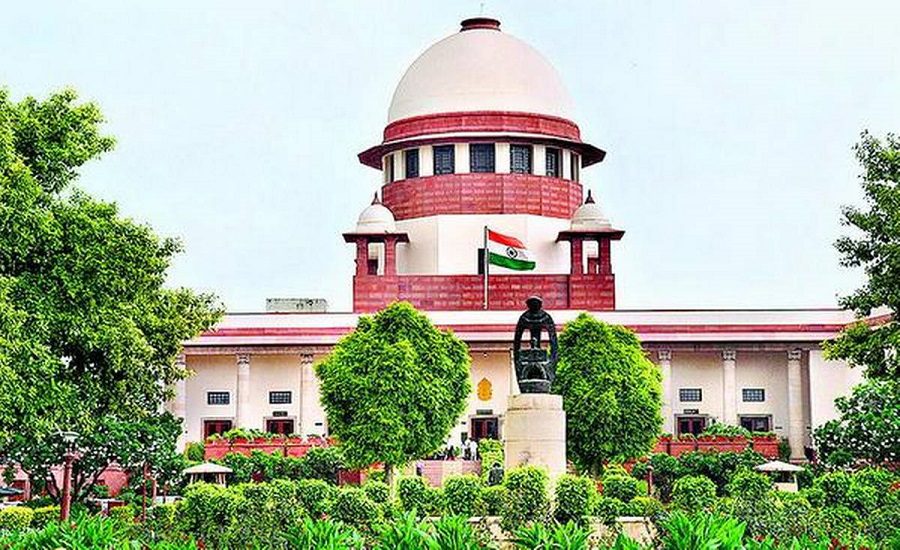
New Delhi: The Supreme Court of India has taken significant judicial notice of ongoing disputes surrounding the Bankey Bihari Ji Temple in Vrindavan, Uttar Pradesh, issuing notices to both the Uttar Pradesh Government and the High-Powered Temple Management Committee over objections to changes in darshan timings and temple practices, including the controversial special pujas and discontinuation of traditional rituals.
The apex court’s intervention has reignited a contentious debate involving religious tradition, administrative control, and the role of statutory committees in managing one of India’s most revered temples.
Background of Bankey Bihari Temple Practices Row
The Bankey Bihari Temple, a major Vaishnavite shrine in Mathura’s Vrindavan, has been governed by a traditional management structure dating back decades.
Read also: UP Police Officer Hate Speech Case: Supreme Court Orders Forensic Test of Mobile Phone
In 2025, the Uttar Pradesh Shri Bankey Bihari Ji Temple Trust Ordinance, 2025 was introduced, aiming to replace the 1939 management framework with a state-controlled trust. This legislative move generated widespread opposition from temple sevayats (service providers), devotees, and legal representatives, who argued it interfered with sacred customs and long-established operational norms.
Earlier, in August 2025, while declining to immediately hear a direct challenge to the ordinance, the Supreme Court appointed a High-Powered Temple Management Committee — headed by a former High Court judge — to oversee temple administration on an interim basis. This committee was entrusted with improving infrastructure, managing crowds, and regulating day-to-day temple operations.
Core Issues of the Bankey Bihari Temple Practices Row : Darshan Timings, Dehri Puja, and Special Pujas
At the heart of the current dispute are several key concerns raised in a writ petition by the Management Committee of Thakur Shree Bankey Bihari Ji Maharaj Temple, represented by lawyers including Senior Advocate Shyam Divan and lawyer Tanvi Dubey:
1. Modified Darshan Timings
The petition challenges recent alterations to the temple’s darshan timings — the scheduled hours when devotees can have a vision of the deity. Petitioners argue these adjustments disrupt deeply rooted ritualistic schedules that define when the deity “wakes up,” remains accessible to devotees, and retires for rest.
2. Discontinuation of Dehri Puja
Another contentious change is the stoppage of the traditional Dehri Puja — an age-old ritual performed between the guru and shishya (teacher and disciple) when the temple is closed to the public during certain hours.
Petitioners argue this practice is essential to the temple’s spiritual continuity and should not have been discontinued without consensus from traditional custodians.
3. Paid ‘Special Pujas’ and Resting Time of the Deity
Perhaps the most striking concern raised before the apex court relates to “special pujas” allowed for affluent devotees in exchange for payment. Multiple reports indicate that the Supreme Court expressed strong reservations about this practice, asserting that it disrupts the deity’s prescribed resting time and privileges wealthy visitors over ordinary devotees.
Chief Justice Surya Kant, presiding with Justices Joymalya Bagchi and Vipul M. Pancholi observed that “after the temple closes at 12 noon, they do not allow the deity to rest even for a minute … All affluent people who can pay hefty amounts are allowed to do special pujas.” The court’s remarks underscored concerns that such practices prioritize revenue and privilege over religious sanctity and tradition.
Supreme Court Proceedings: Notices and Directions on Bankey Bihari Temple Practices Row
During the December 15, 2025 hearing, the Supreme Court:
- Issued notices to the Uttar Pradesh government and the High-Powered Temple Committee, seeking their responses on changes to temple operations.
- Directed that the Member-Secretary of the High-Powered Committee be impleaded as a respondent in the case.
- Listed the matter for further proceedings in the first week of January 2026.
The bench emphasized that the issues raised are not merely administrative but involve deeply ingrained religious traditions and community sentiments that require sensitive and deliberate adjudication.