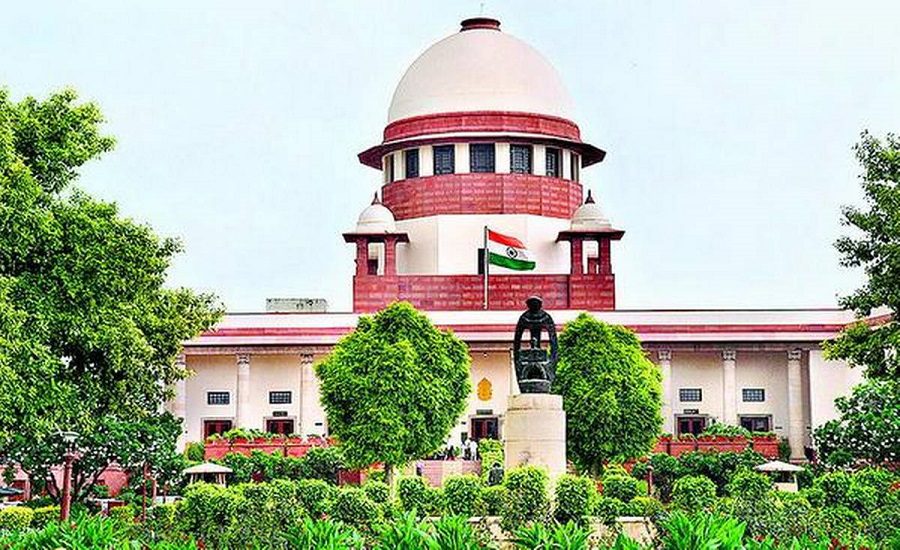
New Delhi: The Supreme Court has sought detailed responses from key Union ministries on a bold proposal to shift coal-based industries from the Delhi-NCR region as part of long-term strategies to improve the area’s deteriorating air quality. This development marks another significant step in judicial efforts to tackle chronic pollution issues affecting the National Capital Region (NCR).
The top court’s direction, delivered by a bench led by Chief Justice Surya Kant, also included Justices Joymalya Bagchi and Vipul M. Pancholi. It asked the Ministry of Environment, Forest and Climate Change (MoEFCC), the Ministry of Petroleum and Natural Gas (MoPNG), and the Ministry of Power to submit responses on the feasibility of relocating coal-dependent industries currently operating in and around Delhi.
Details of New Delhi Coal Industries Shifting
The Supreme Court noted that the Commission for Air Quality Management (CAQM) has recommended relocating all coal-based industries out of Delhi-NCR to reduce harmful emissions and improve air quality in the capital region.
It also asked the ministries to comment on a proposal recommending that no new coal-based thermal power plant be established within 300 kilometres of Delhi, due to the significant contribution of thermal emissions to the air pollution crisis.
New Delhi Coal Industries Shifting: Supreme Court Directions
In addition to Union ministries, the court directed the governments of Uttar Pradesh, Haryana, and Rajasthan to issue public notices inviting suggestions and objections from affected stakeholders, including coal-based industries operating in the NCR. These notices are expected to be included in the states’ “Action Taken Plans”, to detail feedback before the next hearing.
Delhi Government Action Plan Required
The Supreme Court also asked the Government of NCT of Delhi (GNCTD) to prepare and submit a specific action plan to implement the long-term solutions recommended by the CAQM. This includes addressing pollution caused not only by industries but also by construction, demolition, and vehicular emissions.
March 12 Hearing on Vehicular Pollution
Alongside industrial relocation, the court has listed vehicular pollution control as a key focus for the next hearing scheduled on March 12, 2026. The bench will examine additional recommendations from the CAQM aimed at controlling emissions from vehicles, which are another major contributor to Delhi’s air quality problems.
As Delhi-NCR continues to struggle with poor air quality, this court-mandated review of industrial policy and planning could reshape environmental governance in one of India’s most polluted regions.