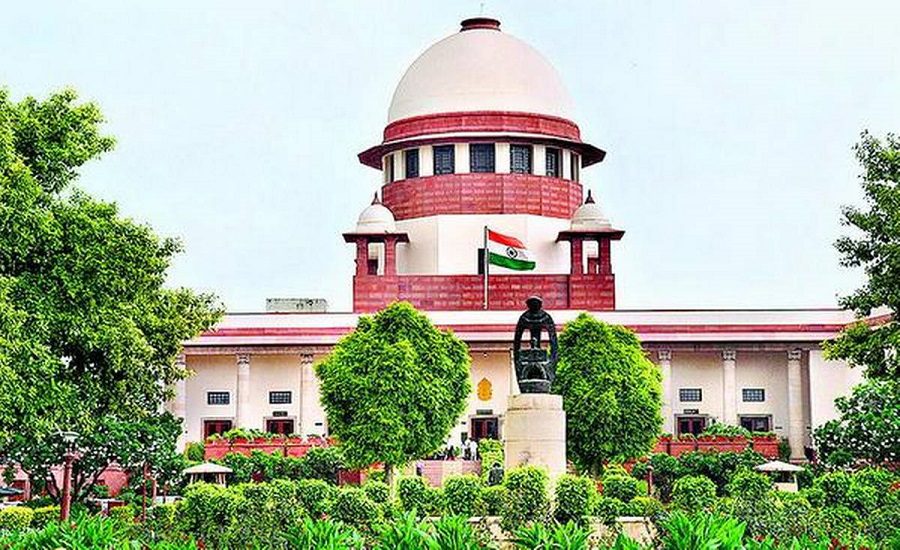
New Delhi – The Supreme Court of India has taken a serious procedural step by seeking the Tamil Nadu government’s response to a Public Interest Litigation (PIL) concerning alleged defamatory remarks against Madras High Court Judge Justice G.R. Swaminathan.
The move comes after protests and social media campaigns followed the Judge’s order on the Karthigai Deepam decision, prompting a legal challenge to protect judicial independence.
Justice GR Swaminathan Controversy: Bench Directs Status Report from Tamil Nadu Government
On January 28, 2026, a two-judge bench of the Supreme Court — comprising Justice Aravind Kumar and Justice P.B. Varale — issued notices to the Tamil Nadu government, directing it to file a detailed status report. The report must outline the steps taken by state authorities regarding the complaints made in the PIL.
Read also: Massive Relief for Karnataka: Supreme Court Rules Tamil Nadu Cannot Block Mekedatu Dam Yet
The Supreme Court has fixed the next hearing for February 2, 2026, underscoring the urgency of the matter. State Standing Counsel Advocate Sabarish Subramanian accepted the notice on behalf of Tamil Nadu and confirmed that certain actions have been initiated.
Justice GR Swaminathan Controversy: What Triggered the PIL?
The PIL was filed by Advocate G.S. Mani, a leader associated with the Bharatiya Janata Party (BJP) legal cell, who alleged that unauthorised protests and defamatory statements were made against Justice Swaminathan. These protests, Mani said, were triggered by the Judge’s ruling in the Karthigai Deepam controversy — a sensitive matter involving religious customs in Tamil Nadu.
Mani claimed that protesters, said to be affiliated with political parties including the Dravida Munnetra Kazhagam (DMK)-supported groups and certain left-leaning parties, held demonstrations outside court premises as well as inside the Madras High Court and its Madurai Bench. In some instances, remarks made against the Judge included allegations of bias and misrepresentation of his judicial order.
Judicial Independence and Constitutionality at Stake
The core concern raised in the PIL is the independence of the judiciary. According to the petition, judges must be free from public intimidation and defamatory campaigns, whether on the streets or online. The only lawful methods to challenge a judicial order, the petition states, are through appeal or review mechanisms provided by law — not public protests, threats, or defamatory media content.
Mani’s plea argues that defamatory social media posts and news reports have been circulated through platforms like X, Facebook, YouTube, and WhatsApp. It claims these actions not only scandalize the judge but may also disturb social harmony and public order, especially in a diverse state like Tamil Nadu.
Government’s Response So Far
In the Supreme Court hearing, Advocate Subramanian informed the bench that the Chennai Police Commissioner had requested various online service providers to preserve URLs linked to alleged defamatory content. The communication also sought details of individuals involved in disseminating this content. Additionally, a Community Service Register (CSR) entry has been recorded.
However, the Supreme Court found these responses insufficient without a full status report, which is now formally ordered to be submitted ahead of the next hearing.
Background of the Justice GR Swaminathan Controversy
The controversy stems from a contentious order by Justice Swaminathan in the Thirupparankundram hillock case. The Judge ruled that the traditional Karthigai Deepam (lamp lighting) ceremony could be held on a stone pillar known as the Deepathoon, a structure historically associated with lamp lighting during religious festivities in Madurai. His ruling stated that this practice did not infringe on Muslim religious rights despite proximity to a mosque.
The PIL claims that the protests against this order went beyond legitimate criticism and entered the realm of communal and defamatory rhetoric against the judge himself.
What Happens Next?
The Supreme Court will review the status report from the Tamil Nadu government on February 2, 2026. The focus will be on whether adequate legal and administrative measures have been taken to address the grievances raised in the PIL and to curb defamatory practices that could threaten judicial independence or public law and order.
Read also: Thirupparankundram Deepam Row: Supreme Court Issues Notice to Centre, Tamil Nadu on ASI Control Plea