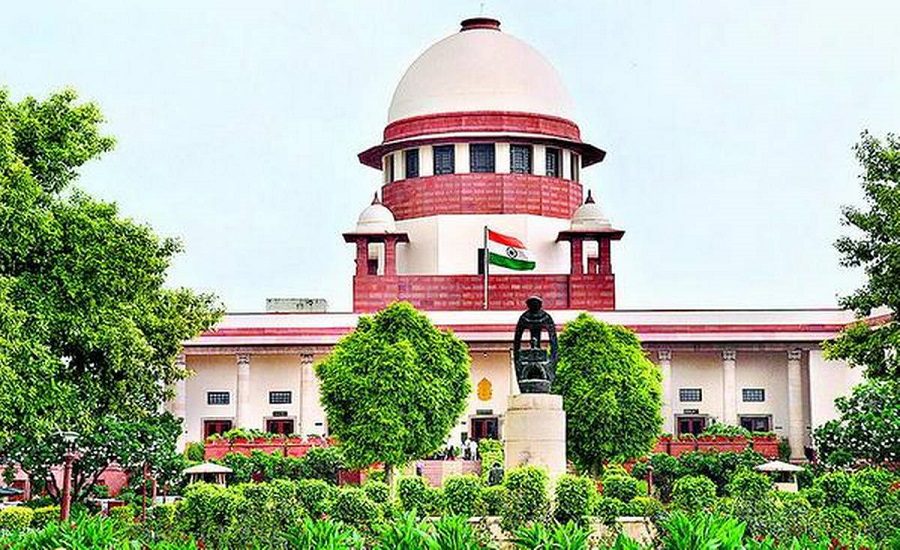
New Delhi: The Supreme Court of India has strongly criticised the Appellate Tribunal for Electricity (APTEL) for reviewing an earlier order that was already upheld by the Supreme Court. The Court said the Tribunal had crossed its legal limits and violated judicial discipline. It also imposed a total cost of ₹3.5 lakh on the parties who supported the review order.
Supreme Court Criticises APTEL For Ignoring Its Earlier Judgment
The Supreme Court strongly criticised APTEL on October 30, 2026, for reviewing its earlier decision in a dispute involving Damodar Valley Corporation (DVC) and Maithan Alloys Limited.
Read also: This Supreme Court Observation Could Redefine How Public Office Is Viewed In India
A Bench of Justice J.B. Pardiwala and Justice K. Vinod Chandran observed that the Tribunal had acted against a binding judgment of the Supreme Court.
The Bench expressed serious concern over the Tribunal’s actions and remarked that APTEL had “gone haywire“. The Court also described the Tribunal’s action as a blatant breach of judicial discipline.
APTEL Review Order: What Was The Dispute Between DVC And Maithan Alloys
The case relates to the electricity tariff determination of Damodar Valley Corporation for the period between 2009 and 2014.
The Central Electricity Regulatory Commission (CERC) had allowed DVC to treat contributions made to its Sinking Fund as recoverable expenditure through electricity tariffs. The Sinking Fund was maintained by DVC to repay or redeem its bonds.
Maithan Alloys Limited challenged this decision, leading to a dispute over whether DVC could recover these contributions through electricity tariffs.
APTEL’s 2019 Decision And The Supreme Court’s Earlier Judgment
In 2019, APTEL upheld the decision that allowed DVC to recover its Sinking Fund contributions through electricity tariffs.
While reaching its decision, the Tribunal relied on the Supreme Court’s judgment in Bhaskar Shrachi Alloys Limited v. Damodar Valley Corporation (2018).
However, the matter returned to APTEL in 2024 after Maithan Alloys filed a review petition more than five years after the earlier decision.
The Tribunal allowed the review and held that permitting both depreciation on assets created using bond proceeds and Sinking Fund contributions would result in double benefit. This decision prompted DVC to approach the Supreme Court.
Supreme Court Says APTEL Review Order Violated Judicial Discipline
The Supreme Court found that APTEL had acted beyond the limits of its review jurisdiction.
The Bench observed that the Tribunal had ignored a binding precedent of the Supreme Court while reviewing its earlier decision. The Court explained that a review can only be allowed on limited legal grounds.
An error must be clearly visible in the record. It should not require lengthy arguments or a detailed examination to identify it. The Supreme Court held that APTEL’s review exercise did not meet these legal requirements.
Supreme Court Sets Aside APTEL’s Review Order
Allowing DVC’s appeal, the Supreme Court set aside the Tribunal’s review order. The Bench held that APTEL had wrongly reopened an issue that had already been settled by its earlier decision, which was upheld in 2019.
The Court strongly objected to the Tribunal’s decision to revisit the matter despite the binding legal position. It emphasised that judicial discipline requires tribunals to follow the decisions of higher courts.
Supreme Court Imposes ₹3.5 Lakh Cost
The Supreme Court also imposed costs on the parties who supported the review order. The Court directed:
- Maithan Alloys Limited: To pay ₹2 lakh.
- Steel Authority of India Limited (SAIL): To pay ₹1.5 lakh.
The total cost imposed by the Supreme Court was ₹3.5 lakh. The decision sends a strong message that tribunals must follow binding judgments and cannot reopen settled issues without valid legal grounds.
FAQs
The dispute concerned DVC’s electricity tariff determination for 2009–2014. The main issue was whether DVC could recover contributions made to its Sinking Fund through electricity tariffs.
The Supreme Court criticised APTEL for reviewing its earlier decision despite a binding Supreme Court judgment. It held that the Tribunal had violated judicial discipline and exceeded the limits of its review jurisdiction.
The Supreme Court imposed ₹2 lakh in costs on Maithan Alloys Limited and ₹1.5 lakh on Steel Authority of India Limited (SAIL). The total amount was ₹3.5 lakh.