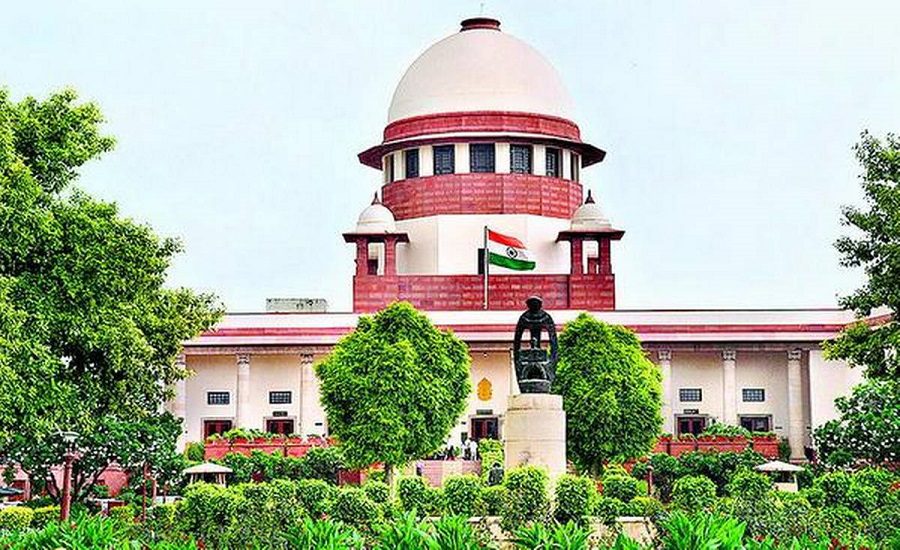
New Delhi: India AI deepfake regulation case in India has taken a significant turn after the Supreme Court stayed proceedings in a Public Interest Litigation (PIL) pending before the Gujarat High Court.
The case concerns growing concerns over AI-generated deepfake content and the need for a stronger regulatory framework to address its misuse on digital platforms.
The Central government has requested that the matter be transferred to the Supreme Court, arguing that similar cases are already being considered by the country’s highest court. The move could lead to a unified national approach toward regulating AI-generated content and deepfakes.
India AI Deepfake Regulation Case: Supreme Court Stays Gujarat High Court Proceedings
The Supreme Court has temporarily halted proceedings in a PIL filed before the Gujarat High Court that seeks stronger regulation of deepfake and AI-generated content.
A bench comprising Chief Justice Surya Kant, Justice Joymalya Bagchi, and Justice V. Mohana issued the order while hearing the Centre’s transfer petition. The Court also issued notice on the government’s request to move the matter to the Supreme Court.
According to the Centre, similar petitions concerning AI-generated content and intermediary responsibilities are already pending before the Supreme Court. The government argued that hearing the issues separately in different High Courts could result in conflicting directions.
Why Did The Centre Seek A Transfer
The Union government told the Supreme Court that multiple courts are examining similar legal questions related to deepfakes, AI-generated content, and social media platform responsibilities.
To avoid different courts issuing different rulings on the same issue, the Centre requested that the Gujarat High Court case be transferred and heard along with related matters already pending before the Supreme Court.
The government believes a centralized hearing would help create a uniform legal framework for addressing AI-generated misinformation and harmful synthetic content across the country.
What Is The Gujarat High Court PIL About
The PIL was filed over concerns regarding the increasing spread of deepfake videos and AI-generated content on social media and digital platforms.
The petition seeks stronger implementation of existing laws and more effective mechanisms to ensure quick action against unlawful AI-generated content. It also raises concerns about the misuse of technology to spread misinformation and potentially disturb public order.
Earlier, the Gujarat High Court had issued notices to major technology platforms and intermediaries, including X, Meta, Google, and Reddit, asking them to respond to issues relating to compliance with India’s Information Technology Rules.
India AI Deepfake Regulation Case: Focus On The SAHYOG Portal
One of the important aspects discussed in the case is the government’s SAHYOG Portal. The Centre informed the courts that the portal was developed to help law enforcement agencies and digital platforms coordinate more efficiently when dealing with unlawful online content.
The portal enables quicker communication regarding takedown requests and helps authorities identify users responsible for illegal content. According to government submissions, hundreds of intermediaries have already joined the system.
The Gujarat High Court had earlier encouraged intermediaries to onboard the portal to improve coordination and ensure faster compliance with legal notices.
Why Deepfakes Are Becoming A Major Concern
Deepfakes are AI-generated images, videos, or audio recordings that can make people appear to say or do things they never actually did.
Experts and policymakers worldwide have raised concerns that such content can be used to spread misinformation, damage reputations, influence elections, commit fraud, and create social unrest.
As AI technology becomes more advanced and accessible, governments are facing increasing pressure to create effective safeguards while also protecting freedom of expression.
FAQs
The Supreme Court stayed the proceedings after the Central government argued that similar matters are already pending before the apex court and should be heard together.
The case is a PIL seeking stronger regulation and enforcement against AI-generated deepfake content circulating on digital and social media platforms.
SAHYOG is a government-developed platform that helps law enforcement agencies and digital intermediaries coordinate on content takedown requests and compliance-related actions.