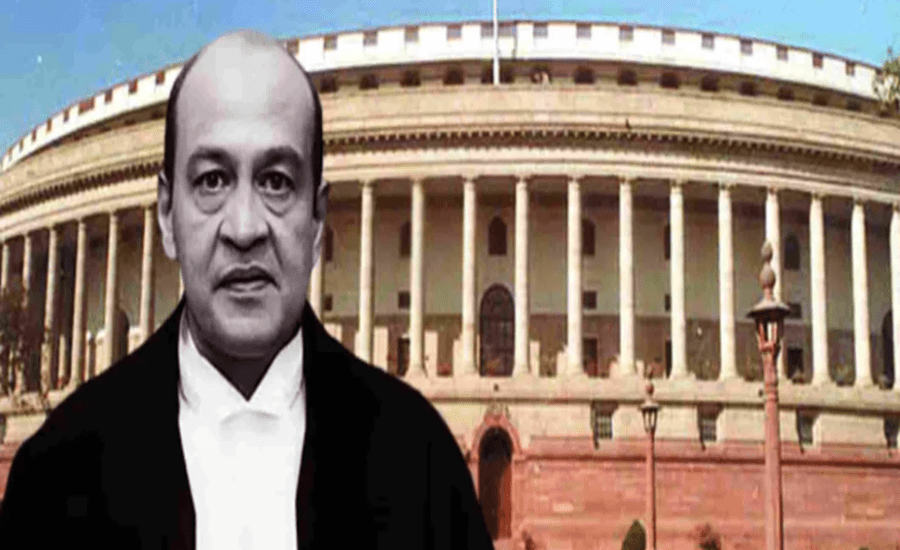
New Delhi: In a major judicial development, the Supreme Court of India has dealt a significant setback to Allahabad High Court judge Yashwant Varma, dismissing his petition challenging the Lok Sabha Speaker’s decision to admit a motion seeking his removal and questioning the legality of the parliamentary committee probing allegations of corruption against him.
SC Bench Pronounces Verdict
A two-judge bench comprising Justices Dipankar Datta and SC Sharma, which had reserved its decision on January 8, 2026, pronounced the verdict, effectively rejecting Justice Varma’s plea.
The petition filed by Justice Varma contended that the Lok Sabha Speaker had “unilaterally” constituted a committee under the Judges (Inquiry) Act, 1968 to investigate him, allegedly violating his right to equality and fair treatment under the law.
Justice Varma, represented by Senior Advocate Mukul Rohatgi, argued that although notices of motion for his removal were given in both Houses of Parliament on the same day, the Speaker’s action of constituting the committee without parliamentary consensus was illegal.
Background of the Case: ‘XXX’ vs Union of India
The controversy surrounding Justice Varma erupted on March 15, 2025, when firefighters responding to an emergency at his Delhi residence discovered piles of money burnt in a fire. This incident triggered allegations of corruption at the highest levels of the judiciary.
Justice Varma denied any involvement, describing the allegations as “preposterous”. Subsequently, the Supreme Court set up an in-house panel, which recommended his impeachment. The panel’s report was forwarded to President Droupadi Murmu and Prime Minister Narendra Modi by then Chief Justice of India Sanjiv Khanna, with the recommendation for removal.
Following this, Justice Varma filed a writ petition challenging the in-house panel’s recommendation. During court proceedings, he maintained anonymity and was referred to as ‘XXX’ in official documents.
Justice Varma’s Arguments
In his petition, Justice Varma presented five reasons questioning why he could not be removed, including:
- Jurisdiction and authority of the in-house panel to investigate a sitting judge
- Alleged procedural irregularities in constituting the parliamentary inquiry committee
Despite these arguments, the Supreme Court rejected the challenge, stating that the petition was “not worth entertaining” and criticized Justice Varma for what it described as “not confidence-inspiring conduct”.
Significance of the Verdict
The verdict reinforces the authority of the Lok Sabha Speaker and parliamentary committees under the Judges (Inquiry) Act to probe allegations of misconduct against sitting judges.
Legal analysts note that this decision may have wider implications for judicial accountability, signaling that parliamentary and in-house mechanisms for investigating judicial misconduct will be robustly upheld by the apex court.
The ruling also emphasizes the limited scope for sitting judges to challenge the formation or proceedings of parliamentary inquiry committees, particularly in cases where high-level allegations of corruption are involved.