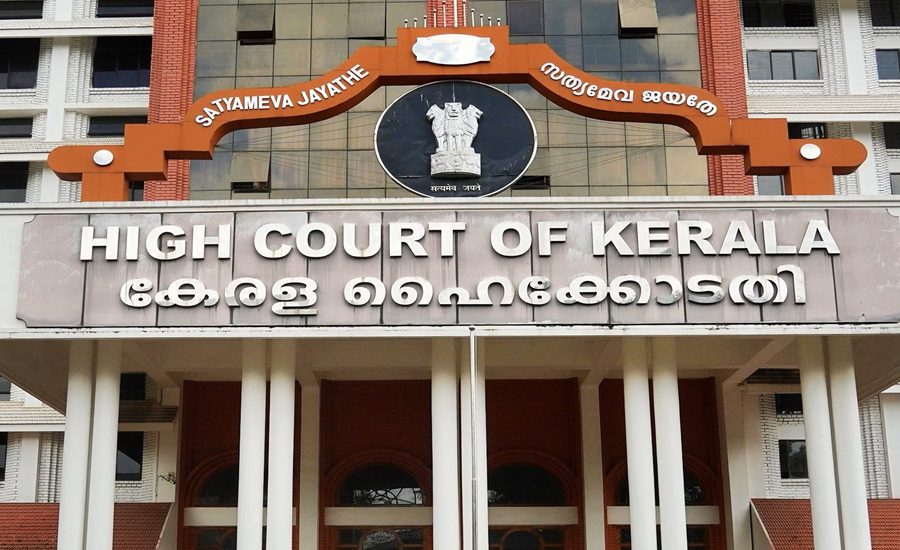
Kerala, India — In a significant judicial interpretation affecting the contours of contempt law in India, the Kerala High Court has held that judges of constitutional courts — such as the High Courts and Supreme Court — are not liable under Section 16 of the Contempt of Courts Act, 1971. The bench also upheld key provisions of the Act against constitutional challenges.
The judgment was delivered on 6 January 2026 by a Division Bench comprising Chief Justice Nitin Jamdar and Justice S. Manu in Mathews J. Nedumpara v. Union of India & Ors. (WP(C) No. 14564 of 2016).
What is Contempt of Courts Act
The Contempt of Courts Act, 1971 governs how courts — including the Supreme Court and High Courts — can punish acts that scandalise the court or undermine its authority.
It draws a statutory line between lawful expression and contemptuous conduct.
- Section 2(c)(i) defines criminal contempt — including publications or acts that scandalise or lower the authority of a court.
- Section 14 sets procedures for contempt in the face of the Supreme Court or High Court.
- Section 16 makes a judge, magistrate or other judicial person liable for contempt of their own or any other court in the same manner as any other individual.
- Section 17(5) governs the procedural scope allowing an affidavit in defence when contempt proceedings are initiated.
The petitioner in this case argued that Sections 2(c)(i), 14, 16 and 17(5) were unconstitutional, and specifically that Section 16 should apply to judges of superior courts — a point hotly contested in the judgment.
Kerala High Court Contempt Act Ruling: Key Findings
Here are the key findings of Kerala High Court Contempt Act ruling;
1. Constitutional Validity of the Contempt Act Upheld
The Court upheld the constitutional validity of the contested provisions. It reiterated that the Supreme Court has already affirmed the Act’s intra vires nature with respect to Article 19(1)(a) — the right to free speech — since reasonable restrictions under Article 19(2) apply here.
Key Takeaway: The Constitutionally permissible balance between free speech and judicial dignity remains intact.
2. Section 17(5) & Claim of Self-Incrimination Rejected
The petitioner contended that Section 17(5), which deals with procedural defence rights, violated the constitutional guarantee against self-incrimination under Article 20(3).
The Court disagreed, stating that contempt proceedings are quasi-criminal and the provision allows a fair opportunity to defend, rather than producing compulsory self-incriminating evidence.
Legal nuance: A contemnor in contempt proceedings is not an “accused” in the strict criminal sense, making Article 20(3) safeguards inapplicable in the conventional manner.
3. Section 16 Does Not Apply to Judges of Constitutional Courts
Addressing the core legal question, the Court ruled that ‘judge’ under Section 16 refers only to the subordinate judiciary and not to judges of constitutional courts (High Courts or Supreme Court).
In its reasoning, the Court:
- Read Section 16 in the context of the constitutional scheme, which confers distinct privileges and immunities on constitutional judges.
- Relied on earlier precedents including a Patna High Court Special Bench (1985) and a three-judge Supreme Court bench (1998), which indicated that Section 16 did not contemplate judges of superior courts within its ambit.
- Observed that if the legislature had intended to include constitutional judges, it would have clearly stated so, especially given their special status and constitutional protections.
Implication: Judges of superior constitutional courts enjoy statutory immunity from contempt liability under Section 16, preserving their unique constitutional role.
What are the Implications of Kerala High Court Contempt Act ruling
Here are the major implications of Kerala High Court Contempt Act ruling;
Judicial Independence and Accountability
The ruling reinforces judicial independence for higher judiciary members by confirming that contempt proceedings under Section 16 do not apply to them — a point that separates constitutional office-holders from subordinate judicial functionaries.
At the same time, this may raise questions about uniform accountability, especially where judicial conduct is publicly debated but not strictly governed under contempt law for superior judges.
Free Speech vs. Judicial Dignity
This judgment aligns with the broader legal backdrop emphasizing that while freedom of expression is fundamental, it may be restricted when it threatens the administration of justice.